Daily Forex Signals: How They Save Beginners Time and Money
Posted On - September 21, 2026 | By - FXProfitBuilder | Categories - Choosing & Buying Signals (High Intent)

Introduction

Forex trading can be extremely time-consuming for beginners.
Before placing a single trade, a new trader may need to study currency pairs, analyse charts, understand technical indicators, identify potential entry points, calculate stop-loss levels and decide where to take profit. Then there is the challenge of monitoring the market after the trade has been opened.
For someone learning forex alongside a full-time job, business, studies or family commitments, doing all of this every day can quickly become overwhelming.
This is where daily Forex signals can become useful.
A Forex signal provides traders with a structured trading idea, typically including information such as the currency pair, entry level, stop-loss and take-profit levels. Instead of spending hours searching the market for potential opportunities, beginners can start with a clearly defined trade setup and then decide whether it fits their own trading plan and risk tolerance.
However, signals should not be viewed as a shortcut to guaranteed profits. Forex trading involves substantial risk, and regulators warn investors to be particularly cautious of services promising guaranteed or unrealistic returns. The CFTC notes that about two out of three retail forex traders lose money each quarter based on the data cited in its consumer guidance.
So, how can daily Forex signals potentially save beginners time and money?
Let’s take a closer look.
What Are Daily Forex Signals?
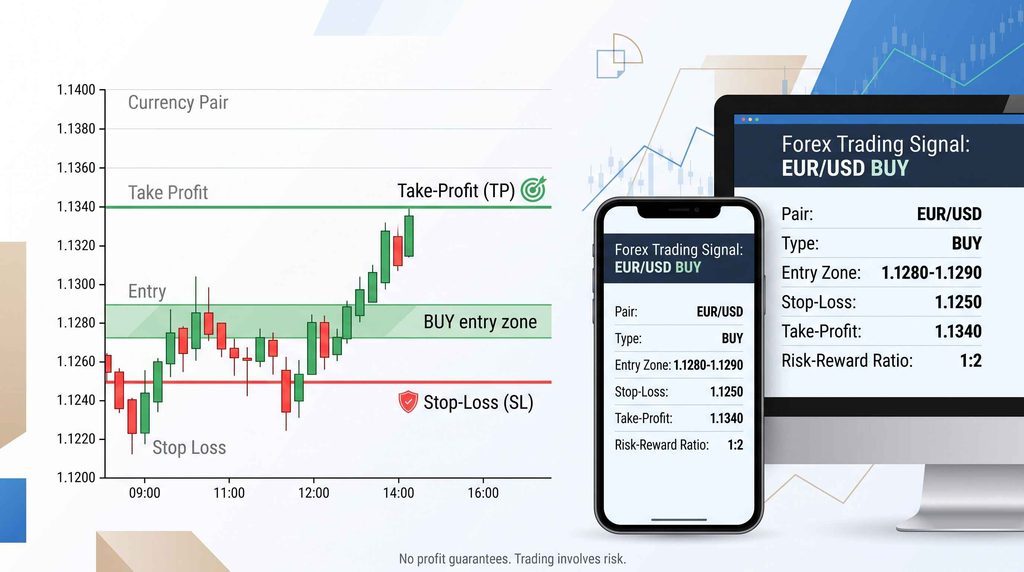
Daily Forex signals are trading alerts designed to identify potential opportunities in the foreign exchange market.
Depending on the provider, a signal may include:
- Currency pair
- Buy or sell direction
- Entry price or entry zone
- Stop-loss level
- Take-profit level
- Risk or trade-management information
- Additional market commentary
For example, a simplified signal could look something like:
EUR/USD – BUY
Entry: 1.0800
Stop Loss: 1.0760
Take Profit: 1.0880
The exact format varies between providers, and traders should always understand how the signal is generated and how risk should be managed before following it.
The main purpose is to turn market analysis into a more structured trading opportunity.
Rather than starting every morning with a blank chart and asking, “What should I trade today?”, a beginner can review the available signals and decide whether a particular setup is appropriate for them.
Why Forex Analysis Takes So Much Time for Beginners

Experienced traders may be able to analyse a chart relatively quickly.
For a beginner, however, even a single currency pair can involve a long list of questions.
They may need to understand:
- Current market direction
- Support and resistance
- Trend structure
- Price momentum
- Volatility
- Technical indicators
- Economic news
- Entry levels
- Stop-loss placement
- Take-profit levels
- Position size
- Risk-to-reward considerations
Now multiply that analysis across several currency pairs.
It is easy to spend hours looking at charts without actually finding a trade that fits the trader’s plan.
This is one of the biggest potential advantages of daily Forex signals: they can reduce the amount of market research a beginner has to perform before identifying a potential setup.
That does not eliminate the need for learning. Instead, it can give beginners a more structured starting point.
How Daily Forex Signals Can Save Beginners Time
1. Less Time Searching Through Charts
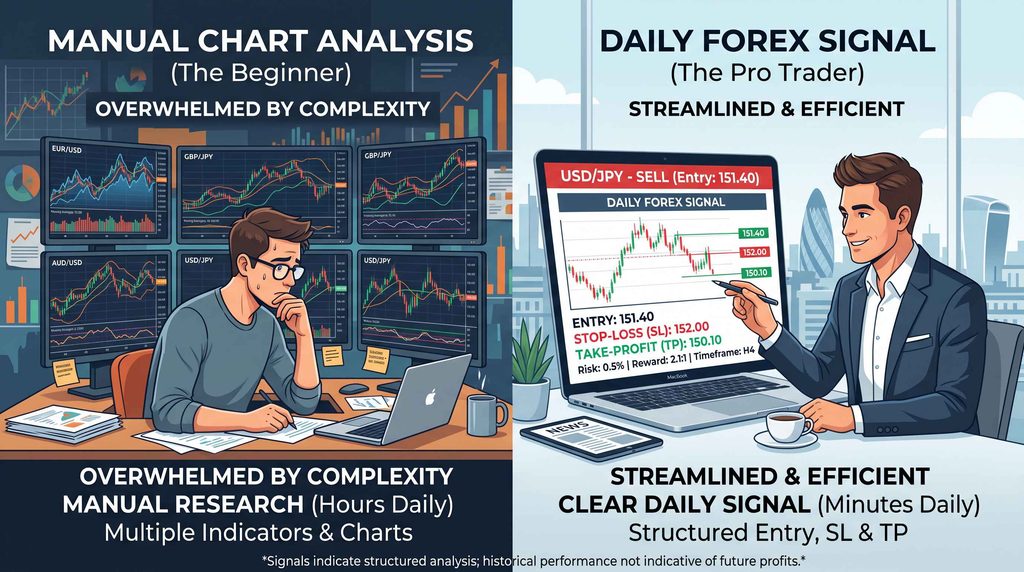
One of the most obvious benefits of Forex signals is reduced chart-searching time.
A beginner does not necessarily need to open dozens of charts every morning and attempt to identify every possible trading opportunity.
A signals provider may already have a defined process for analysing the market and identifying potential setups.
This means the trader can focus on reviewing the signal rather than spending the entire morning searching for one.
For people with limited free time, this can be particularly useful.
2. A More Structured Trading Process
Beginners often struggle because their trading process changes from one day to another.
One day they might trade based on a moving average.
The next day they might follow a news event.
Another day they might enter because a currency pair “looks like it is about to move.”
This lack of consistency can make it difficult to understand what is actually working.
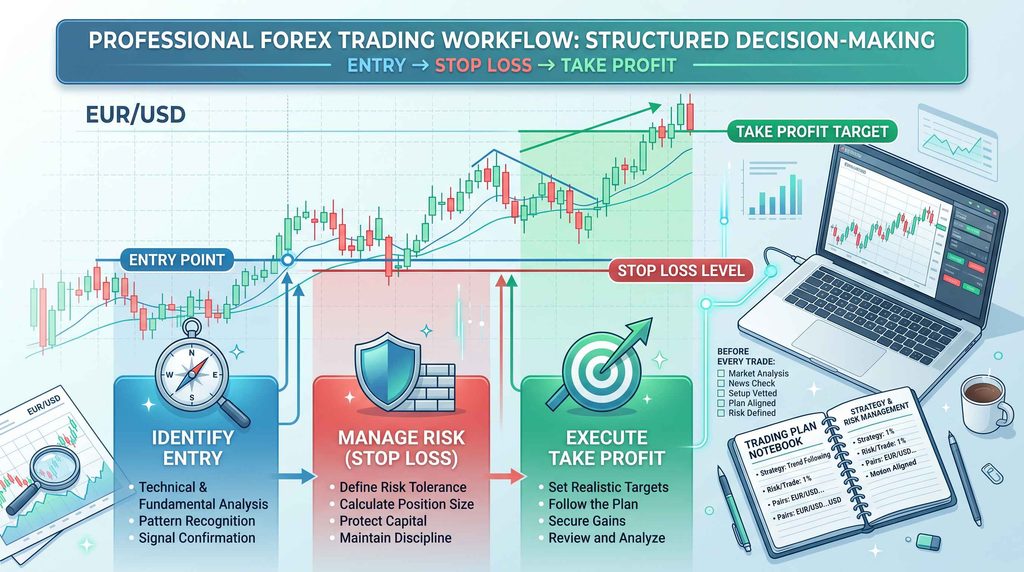
A structured Forex signal can provide predefined information such as:
Entry → Stop Loss → Take Profit
That gives the trader a framework for evaluating the trade before entering.
Instead of making every decision from scratch, beginners can follow a repeatable process.
3. Less Time Spent Learning Every Indicator at Once
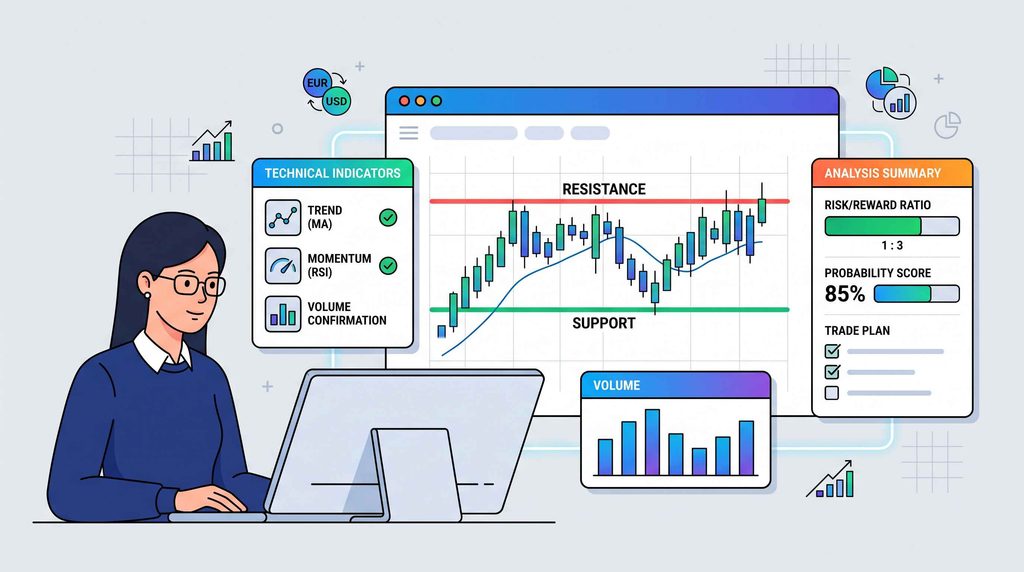
There are hundreds of technical indicators and trading tools available.
A beginner can easily fall into the trap of believing that they need to understand all of them before they can trade.
They don’t.
Learning the basics is important, but trying to combine too many indicators can create confusion.
A signal service can simplify the process by providing the result of a particular analysis methodology.
For example, FXProfitBuilder states that its Forex signals are developed using tools including volume indicators, support and resistance analysis and a mathematical model.
The idea is to perform the underlying analysis before presenting the trading opportunity to the subscriber.
Can Daily Forex Signals Actually Save Money?

This is where the subject becomes more complicated.
Daily Forex signals have a subscription cost, so they are obviously not automatically cheaper than trading without a signals service.
The potential financial benefit comes from what the service replaces or helps reduce.
For example, a beginner may spend money on multiple trading courses, indicators, charting tools and other resources while trying to develop a trading process independently.
A signals service may provide a more focused approach.
However, a signal subscription is still an additional cost, and there is no guarantee that the trading results will exceed the subscription fee.
The CFTC specifically warns that traders should consider subscription costs, fees and taxes when evaluating trading strategies and that past performance does not guarantee future success.
So the better question is not:
“Will Forex signals make me money?”
A more useful question is:
“Does this signals service provide enough value, structure and time savings to justify its cost for my trading situation?”
Daily Signals Can Help Reduce Emotional Trading

Emotions are another major challenge for beginners.
After a losing trade, a trader may want to immediately recover the loss.
After a winning trade, they may become overconfident and increase their position size.
This can lead to inconsistent decisions.
A structured signal containing an entry, stop-loss and take-profit level can help create predefined rules.
The trader knows what the original plan was before entering the position.
That can make it easier to avoid decisions such as:
- Moving a stop loss because a trade is losing
- Taking profit too early because of fear
- Entering a trade because of FOMO
- Increasing risk after a winning trade
- Increasing position size to recover a previous loss
Signals cannot remove emotion from trading completely, but having a defined plan can make emotional decision-making easier to manage.
Daily Forex Signals and Risk Management
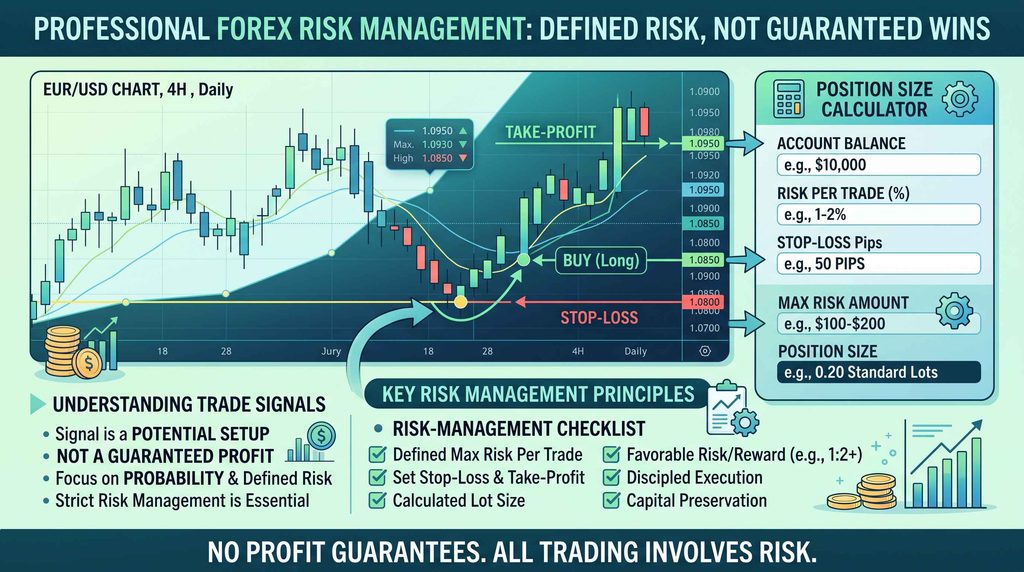
A Forex signal is only one part of a trading strategy.
Risk management is equally important.
Suppose a signal identifies a potentially attractive setup but a trader risks an excessively large percentage of their account on it.
Even a successful signal cannot make that risk appropriate.
A sensible approach is to determine the amount of money that can be risked before entering the trade.
The CFTC advises traders to determine how much risk capital they can afford to use and not to use money needed for living expenses or savings. It also recommends developing a risk-management plan and sticking to it.
This is particularly important for beginners.
A signal should never be interpreted as:
“This trade will win.”
Instead, it should be interpreted as:
“This is a potential trading setup with a defined risk.”
That difference is extremely important.
How Signals Can Potentially Save Money by Reducing Random Trades
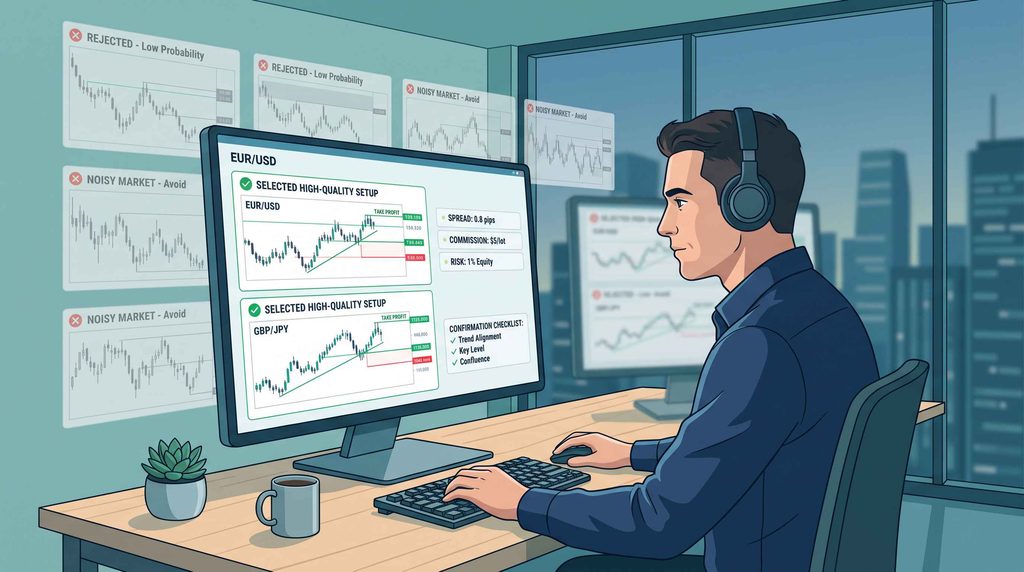
One of the hidden costs of beginner trading is overtrading.
A new trader might open several positions simply because the market is moving.
More trades can mean:
- More spreads
- More commissions where applicable
- More exposure to market risk
- More opportunities for emotional mistakes
- More chances to enter low-quality setups
A structured signals approach may encourage traders to wait for specific setups instead of trading simply because they are watching the market.
The CFTC notes that fees, spreads, commissions and other expenses can materially affect retail forex trading results.
This means that reducing unnecessary activity can matter.
However, fewer trades are not automatically better either. The objective should be quality and consistency within a defined strategy, rather than simply trading as little as possible.
Why Daily Signals Can Be Useful for People With Full-Time Jobs

Imagine a beginner working from 9 AM to 5 PM.
They want to learn Forex but cannot spend several hours each day analysing charts.
Doing everything independently could require:
- Checking multiple currency pairs
- Studying price action
- Checking technical indicators
- Reviewing relevant market information
- Finding potential entries
- Calculating risk
- Setting stop-loss and take-profit levels
- Monitoring open trades
That can become a second job.
A daily signal service can potentially reduce the research workload.
Instead of spending hours searching for opportunities, the trader can review the signals when they become available and determine whether they want to participate.
This makes signals particularly interesting for traders who want exposure to a structured Forex strategy without spending their entire day analysing charts.
Manual Trading vs Mechanical Trading
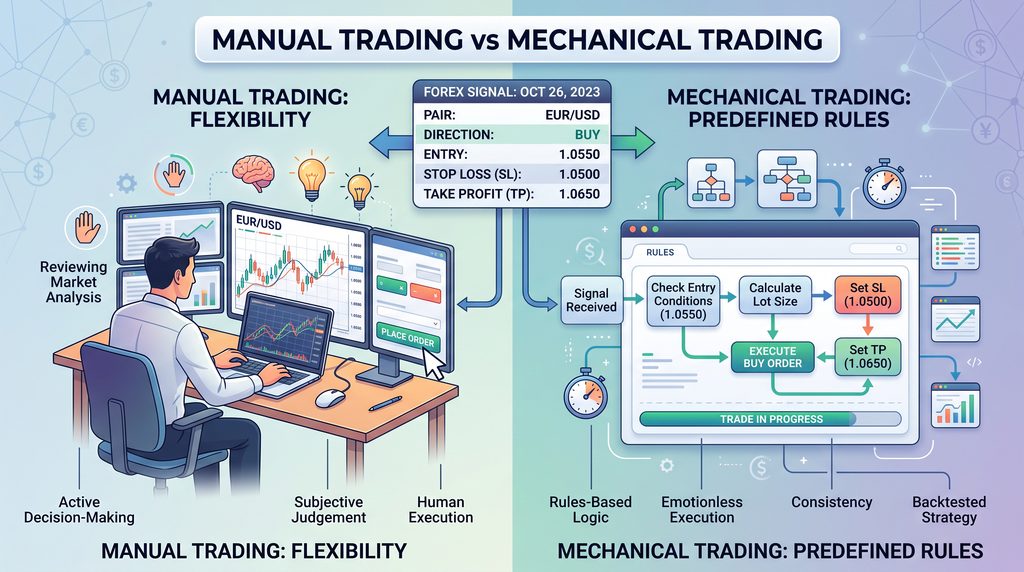
One important advantage of a structured signal is flexibility.
Some traders prefer to receive the signal and manually place the trade.
Others may use a more mechanical approach where predefined instructions are followed consistently.
FXProfitBuilder describes its alert system as suitable for manual or mechanical trading.
Manual trading
With manual trading, the trader receives the alert and places the order themselves.
This provides an opportunity to review:
- The current market conditions
- Available spread
- Account risk
- Position size
- Whether the trade fits their personal rules
Mechanical trading
A mechanical approach focuses on following predefined rules with less discretionary decision-making.
This can reduce the temptation to change the strategy based on emotions.
However, automation or mechanical execution does not remove market risk. The CFTC specifically warns that automated systems and trading signals cannot consistently predict the future.
What Makes a Daily Forex Signal Useful for Beginners?
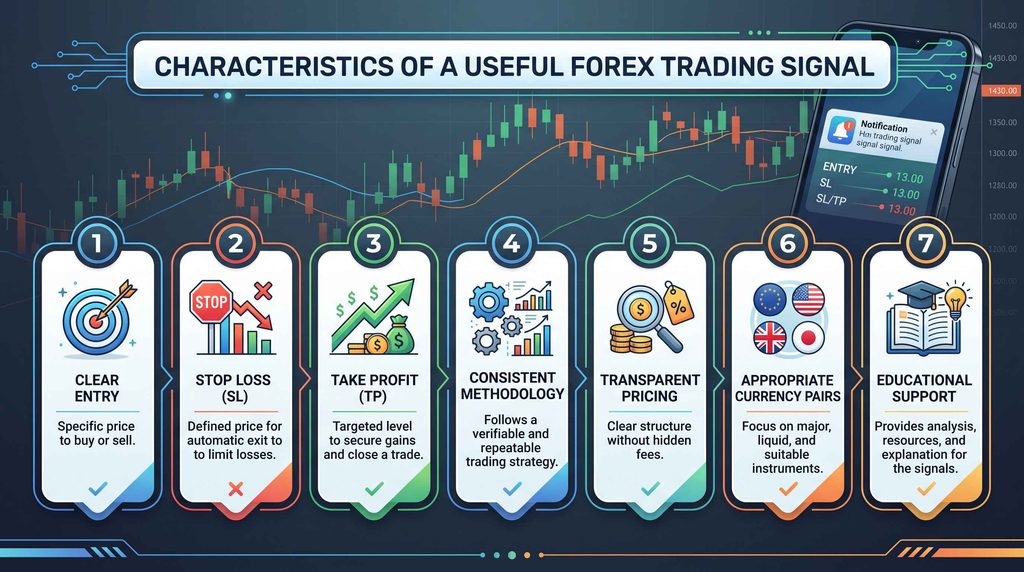
Not all signals are created in the same way.
Before subscribing to a Forex signals service, beginners should look at several factors.
Clear Entry Information
The signal should make it clear where the potential trade begins.
Stop-Loss Information
A signal without clear risk parameters can leave beginners unsure about where to exit if the market moves against them.
Take-Profit Information
A defined target can help traders understand the original trade plan.
Consistent Methodology
A provider should be able to explain, at least at a reasonable level, how its signals are generated.
Transparent Pricing
Beginners should understand the subscription cost before committing.
Appropriate Currency Pairs
It is useful to know which markets the provider covers and whether those pairs fit the trader’s interests.
Educational Support
A service can be more useful when it helps subscribers understand why a signal exists rather than simply sending a BUY or SELL message.
Why FXProfitBuilder Uses Three Currency Pairs
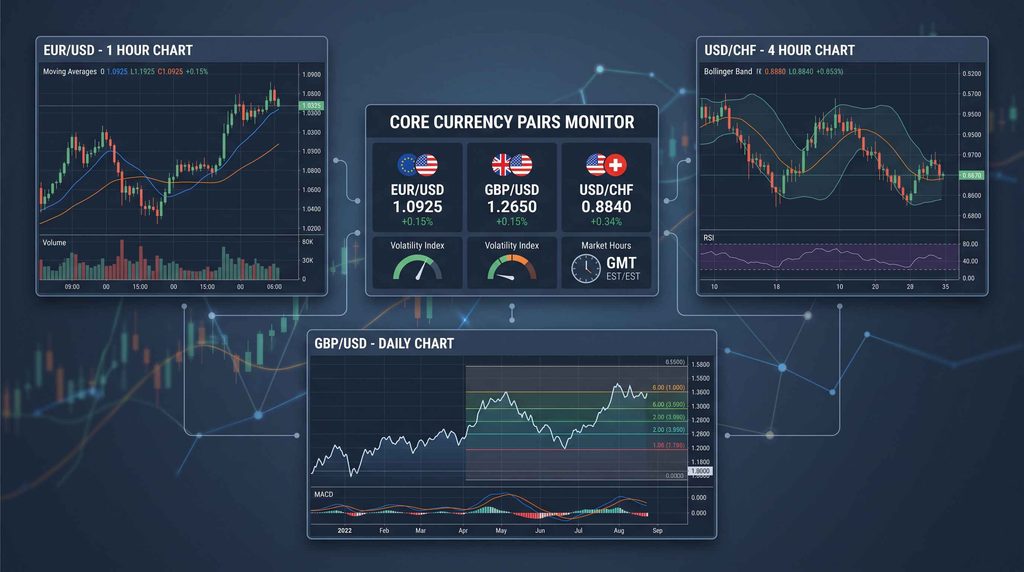
FXProfitBuilder’s signals focus on three major currency pairs:
- EUR/USD
- GBP/USD
- USD/CHF
The service states that its best monthly results are achieved when all three pairs are traded with equal risk.
This should be treated as the provider’s stated methodology rather than a guarantee of future results.
The benefit of focusing on a defined group of currency pairs is that beginners do not necessarily need to monitor the entire Forex market.
Instead, they can concentrate their attention on a smaller selection of markets.
That can make the learning process more manageable.
How FXProfitBuilder Can Help Beginners Save Time

FXProfitBuilder is built around the idea of simplifying the process of finding and following Forex opportunities.
The company’s system states that it uses volume indicators, support and resistance analysis and a mathematical model to develop its signals.
The alerts are designed to provide specific entry and exit information rather than requiring subscribers to independently analyse every currency pair.
This can be particularly useful for beginners who are still learning how Forex markets work.
FXProfitBuilder also provides training material designed to help users understand charts and trading strategies.
That creates an important distinction:
A useful signal service should not simply tell beginners what to trade; it should also help them understand the process they are following.
The company’s system can be followed manually or mechanically, giving traders different ways to use the alerts depending on their preferred approach.
What Daily Forex Signals Cannot Do

It is equally important to understand the limitations.
Daily Forex signals cannot:
- Guarantee profitable trades
- Predict every market movement
- Remove trading risk
- Prevent losses
- Replace sensible position sizing
- Guarantee that a subscription will pay for itself
- Make an unsuitable broker safe
- Turn a beginner into an experienced trader overnight
Forex markets can move unexpectedly because of economic data, central-bank decisions, geopolitical developments, liquidity changes and other factors.
Even a well-researched trading setup can lose.
The CFTC warns against services or individuals making guaranteed-profit claims and states that past performance does not guarantee future results.
Be Careful With Cheap or “Guaranteed” Signal Services

The price of a Forex signal service should not be the only consideration.
Extremely cheap services may provide little useful information, while expensive services may not necessarily provide better results.
More importantly, beginners should be cautious about services that promise:
- Guaranteed profits
- Risk-free trading
- Guaranteed monthly returns
- Huge profits in a very short period
- Secret strategies that supposedly cannot lose
- Pressure to deposit money immediately
The FCA warns consumers about forex and online trading scams, including firms that promise very high or guaranteed returns. It recommends checking whether a financial firm is authorised where applicable and using the FCA’s Firm Checker when dealing with UK financial services.
A signal provider should be evaluated based on transparency, methodology, pricing, risk information and the service actually being provided not simply the size of its marketing claims.
A Simple Daily Routine for Beginners Using Forex Signals
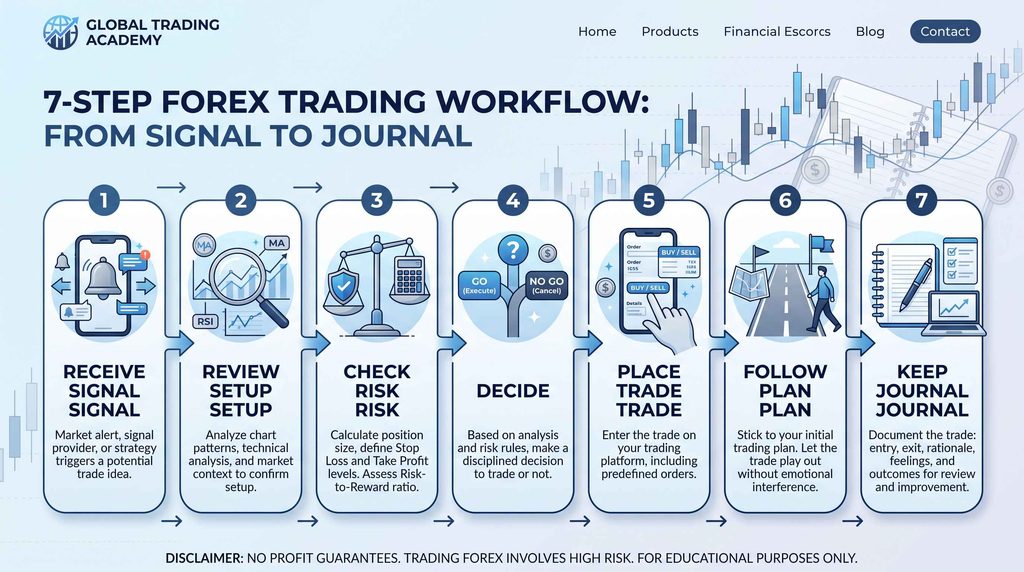
A beginner does not need to make Forex trading unnecessarily complicated.
A simple routine could look like this:
Step 1: Receive the Daily Signal
Check the available trading alerts.
Step 2: Review the Setup
Look at the currency pair, direction, entry, stop-loss and take-profit information.
Step 3: Check Your Risk
Determine whether the potential trade fits your personal risk limits.
Step 4: Decide Whether to Trade
A signal is information, not an obligation.
Step 5: Place the Trade
If you decide to participate, follow your broker’s execution process and your own risk rules.
Step 6: Avoid Constantly Changing the Plan
Once the trade is open, avoid making emotional changes simply because the market moves temporarily against you.
Step 7: Keep a Trading Journal
Record the trade, reason for entry, result and anything you learned.
This process can turn signals into a learning tool rather than simply a stream of BUY and SELL messages.
Daily Forex Signals vs Doing Everything Yourself
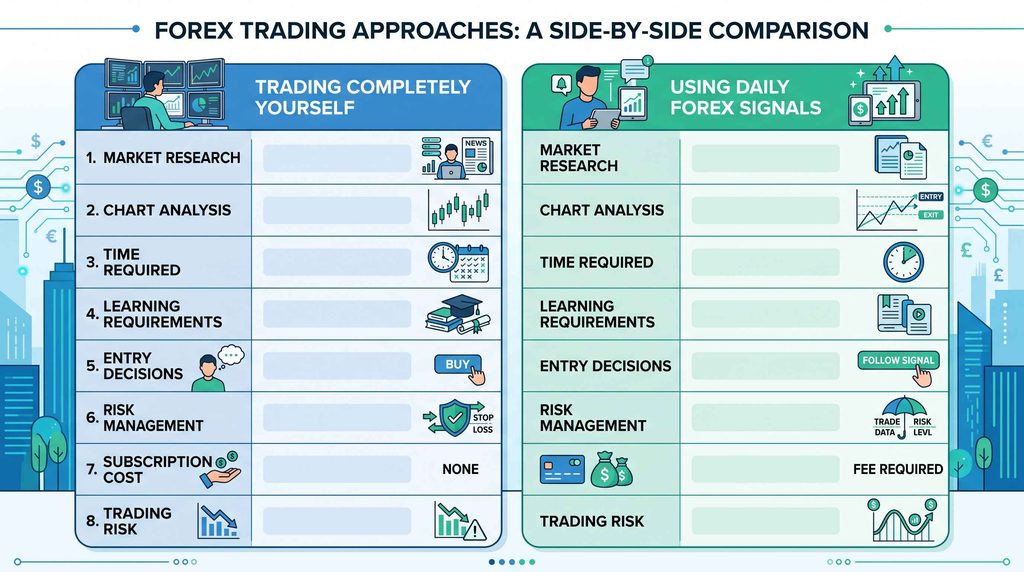
| Factor | Trading Completely Yourself | Using Daily Forex Signals |
| Market research | You do everything | Provider performs its signal analysis |
| Chart analysis | You are responsible | Signal provides a predefined setup |
| Time required | Potentially high | Potentially lower |
| Learning requirement | High | Still important |
| Entry decision | Your analysis | Based on provided signal |
| Risk management | Your responsibility | Should still remain your responsibility |
| Subscription cost | Usually no signal fee | Subscription may apply |
| Trading risk | High | Still high |
| Profit guarantee | None | None |
The important point is that signals change how much analysis you personally need to perform; they do not remove the underlying risk of Forex trading.
Who Can Benefit From Daily Forex Signals?
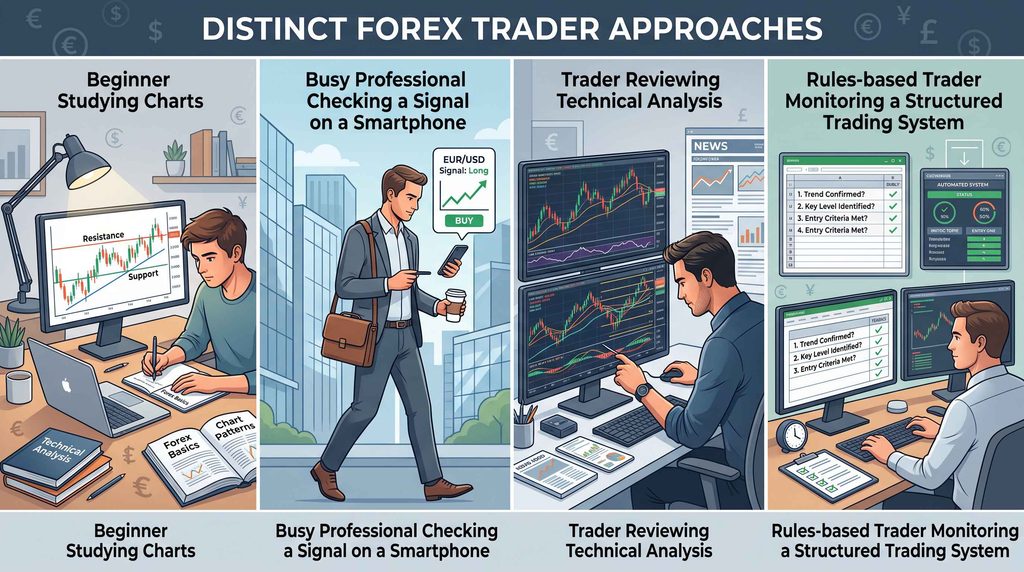
Daily Forex signals may be useful for:
Beginners
They can provide a structured introduction to how a trading setup works.
Busy Professionals
People with limited time may appreciate not having to spend hours searching charts.
Traders Who Struggle With Consistency
A predefined system can provide more structure.
Traders Learning Technical Analysis
Signals can be used alongside education to study why particular entries and exits were selected.
Traders Interested in Mechanical Rules
A clearly defined signal format can potentially fit a rules-based trading approach.
Who Should Think Carefully Before Paying for Signals?

A signals subscription may not be appropriate for everyone.
You should think carefully if:
- You cannot afford to lose the money used for trading
- You expect guaranteed returns
- You want to become rich quickly
- You are borrowing money to trade
- You do not understand the basic risks of leveraged Forex
- You plan to blindly follow every signal
- You are subscribing only because of social-media screenshots
- You have not researched the provider
The CFTC advises traders to use only risk capital and to understand the risks before participating in forex trading.
How to Decide Whether a Signals Service Is Worth the Cost
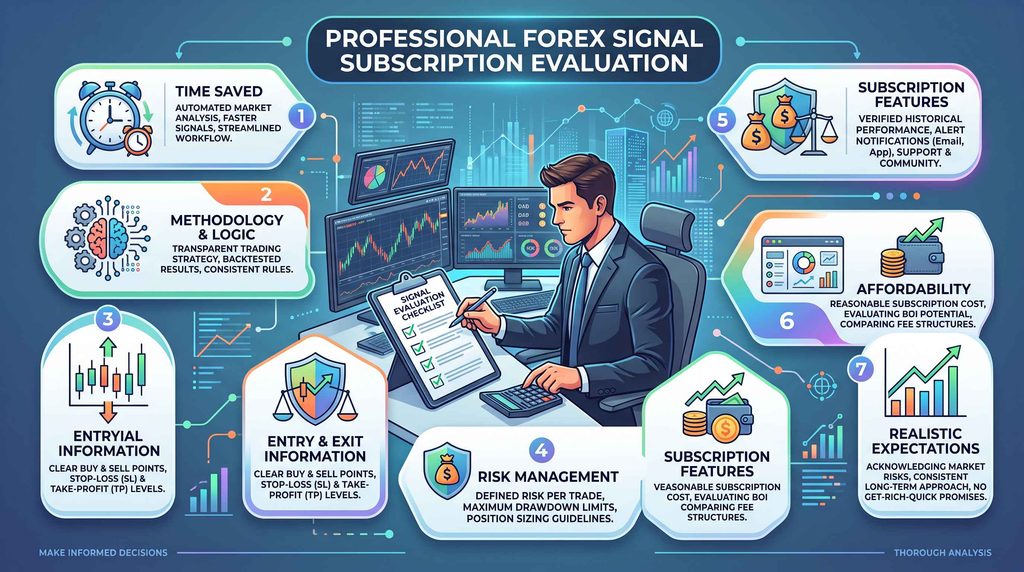
Before subscribing, ask yourself these questions:
1. How much time will the service actually save me?
If you currently spend two or three hours every day analysing charts, a structured service may have meaningful time value.
2. Does the provider clearly explain its methodology?
You should understand the general process behind the signals.
3. Are entry and exit levels clearly communicated?
Unclear instructions make a signal difficult to use consistently.
4. Is risk management explained?
A provider should not encourage reckless position sizing.
5. What exactly is included in the subscription?
Check the number of currency pairs, signals, educational material, support and delivery method.
6. Can I afford the subscription without relying on trading profits to pay for it?
A trading subscription should be an expense you can afford independently.
7. Am I expecting guaranteed results?
If the answer is yes, reassess your expectations before trading.
Final Thoughts

Daily Forex signals can potentially save beginners significant time by reducing the amount of market research and chart analysis they need to perform themselves.
They may also help reduce certain avoidable costs associated with random trading, overtrading and repeatedly purchasing disconnected tools and resources.
But the phrase “save money” needs to be understood carefully.
A signals subscription costs money, and following signals can still result in trading losses. The value comes from whether the service provides useful structure, saves meaningful time and fits the trader’s own risk-management approach.
For beginners, the most sensible approach is to treat Forex signals as a decision-support and learning tool, not as a guaranteed money-making machine.
FXProfitBuilder provides daily signals for EUR/USD, GBP/USD and USD/CHF and states that its system combines market analysis tools such as volume indicators, support and resistance studies and a mathematical model. Its alerts can be followed manually or mechanically, with training material available to help users understand the underlying approach.
Ultimately, a signal is only one part of the trading process.
Good risk management, realistic expectations, discipline and continuous learning remain essential.
FAQ
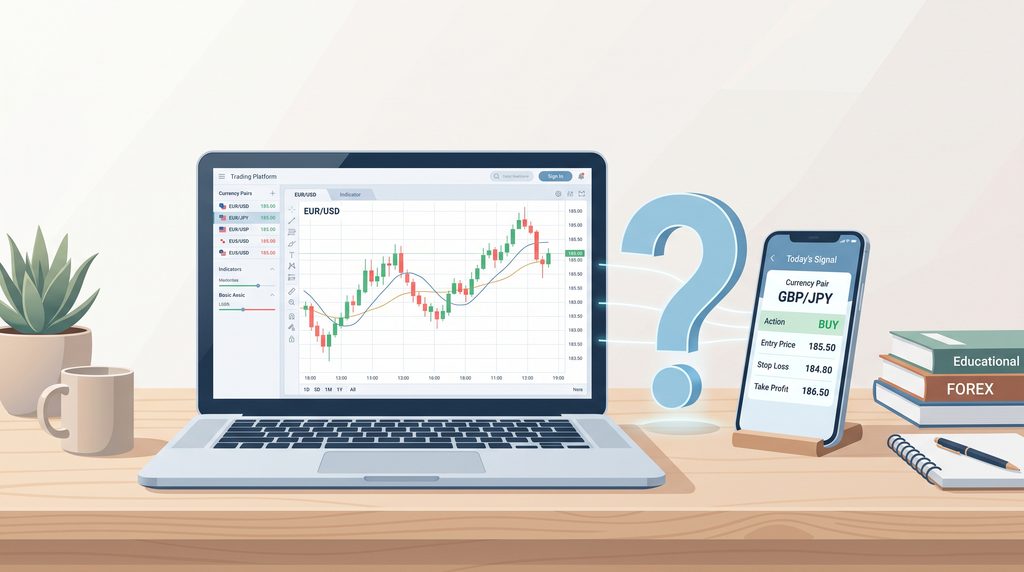
1. What are daily Forex signals?
Daily Forex signals are trading alerts that identify potential opportunities in the Forex market. They commonly include a currency pair, buy or sell direction, entry level, stop-loss and take-profit information.
2. Can Forex signals save beginners time?
Yes, they can potentially save time by reducing the amount of market research and chart analysis a beginner needs to perform independently. The amount of time saved depends on the provider and how much analysis the trader would otherwise do themselves.
3. Can Forex signals save money?
They can potentially reduce some costs associated with unnecessary trading, excessive research tools or repeated mistakes, but a signal subscription itself costs money and does not guarantee profitable trading.
4. Are daily Forex signals profitable?
No signal service can guarantee profitable results. Forex trading involves substantial risk, and past performance does not guarantee future results.
5. Do beginners need to understand Forex before using signals?
Yes. Beginners should understand basic Forex concepts, trading risks, position sizing and how stop-loss and take-profit orders work before risking real money.
6. How many Forex signals should beginners follow?
There is no universal number that is appropriate for every trader. Beginners should focus on a manageable strategy rather than trading simply because more signals are available.
7. Can Forex signals replace learning?
No. Signals can simplify the process of identifying potential trades, but learning the fundamentals of Forex and risk management remains important.
8. Can I manually trade Forex signals?
Yes. Many signals are designed to be followed manually. The trader receives the alert and decides whether and how to execute it.
9. Can Forex signals be used mechanically?
Some signal systems can be followed using predefined rules or mechanical execution. However, mechanical trading does not eliminate market risk or guarantee future results.
10. What currency pairs does FXProfitBuilder provide signals for?
FXProfitBuilder provides signals for EUR/USD, GBP/USD and USD/CHF.
11. What should I check before paying for a Forex signals service?
Check the provider’s methodology, pricing, signal format, risk-management information, currency pairs, educational resources, transparency and reputation. Be particularly cautious of guaranteed-profit claims.
12. Is Forex trading risky for beginners?
Yes. Forex trading can involve substantial losses, particularly when leverage is used. The CFTC advises traders to use only money they can afford to lose and to understand the risks before participating.
👉 Start your journey today—subscribe to our forex pip tips service and see the difference for yourself! Sign Up to get Exclusive Offers