USD/CHF Trading: What Beginners Need to Know
Posted On - October 28, 2026 | By - FXProfitBuilder | Categories - Choosing & Buying Signals (High Intent)
Introduction
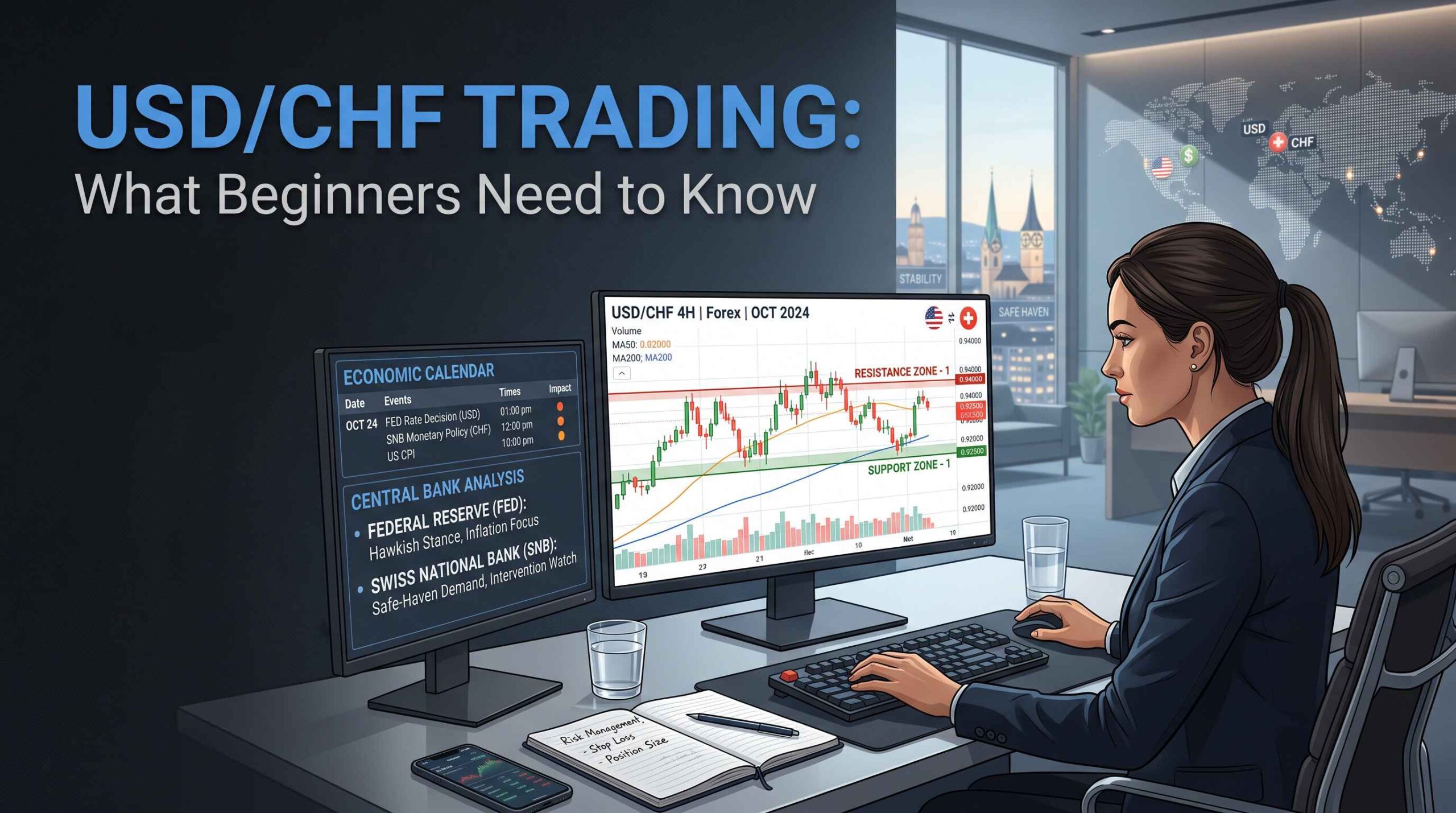
When learning Forex trading, you’ll come across several major currency pairs, including EUR/USD, GBP/USD and USD/CHF. While the first two receive plenty of attention, USD/CHF offers a different perspective on the currency market because it connects the US dollar with the Swiss franc.
The Swiss franc is often considered a safe-haven currency. This means investors may seek it during periods of financial uncertainty, geopolitical tension or market instability. However, the US dollar can also attract safe-haven demand, making the relationship between these two currencies particularly interesting.
So, what exactly is USD/CHF? What makes its price move, when is it most active, and how can beginners approach trading it?
In this guide, we’ll explain how USD/CHF works, why traders follow it, the economic factors that influence its price, common trading strategies and the risk-management principles every beginner should understand.
What Is USD/CHF in Forex Trading?
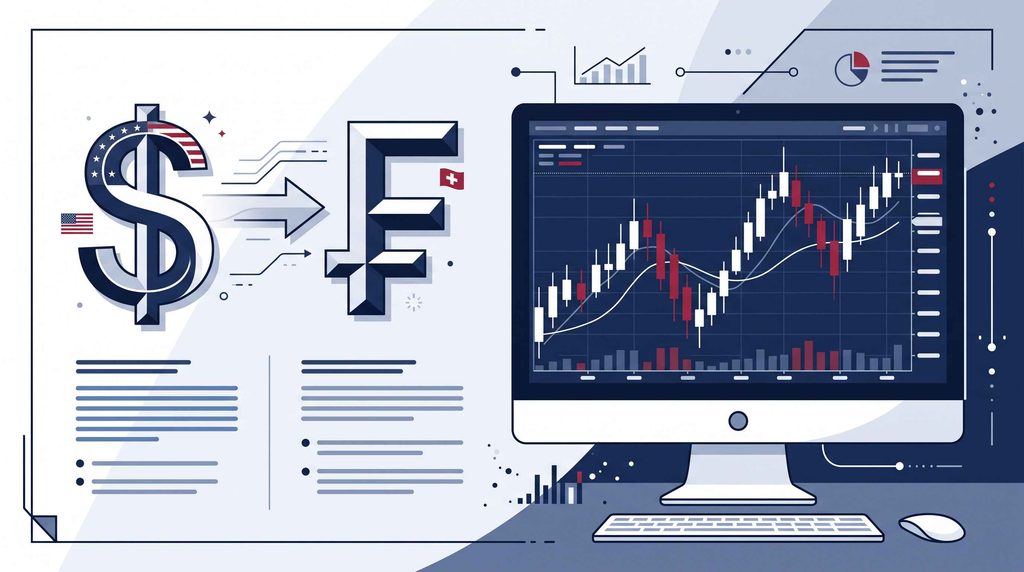
USD/CHF is a major Forex currency pair representing the exchange rate between the US dollar and the Swiss franc.
The pair consists of two currencies:
- USD: The US dollar, which is the base currency.
- CHF: The Swiss franc, which is the quote currency.
The currency code CHF comes from Confoederatio Helvetica franc, reflecting Switzerland’s Latin name.
For example, if USD/CHF is trading at 0.9000, one US dollar is worth 0.90 Swiss francs at that exchange rate.
The price changes according to the relative strength of the two currencies.
What happens when USD/CHF rises?
Suppose USD/CHF increases from 0.9000 to 0.9100.
This means one US dollar buys more Swiss francs than before. The dollar has strengthened relative to the franc, or the franc has weakened relative to the dollar.
A trader who bought USD/CHF at 0.9000 and closed the position at 0.9100 would have benefited from the price increase, before trading costs.
What happens when USD/CHF falls?
Suppose USD/CHF drops from 0.9000 to 0.8900.
One US dollar now buys fewer Swiss francs. The franc has strengthened relative to the dollar, or the dollar has weakened relative to the franc.
A trader who sold USD/CHF at 0.9000 and closed at 0.8900 would have benefited from the decline, before costs.
These examples illustrate how the pair works. They do not predict future price movements, and actual results depend on position size, execution, spreads, commissions and other trading costs.
Why Is USD/CHF Known as the ‘Swissie’?

USD/CHF is commonly nicknamed the Swissie in the Forex market.
The name refers to the Swiss franc, which has a long-standing reputation for relative stability and safe-haven appeal.
Switzerland’s political stability, established financial institutions and history of maintaining a strong currency have contributed to this reputation.
However, the Swiss franc is not immune to market volatility. It can strengthen or weaken significantly following central bank decisions, economic developments or unexpected changes in global risk sentiment.
For traders, understanding this behaviour is important because USD/CHF can react differently from currency pairs that do not include the franc.
Why Do Traders Watch USD/CHF?

USD/CHF attracts traders for several reasons, including its connection to two important currencies and its sensitivity to changes in economic expectations.
1. The Swiss Franc’s Safe-Haven Reputation
One of the most distinctive characteristics of USD/CHF is the Swiss franc’s traditional safe-haven role.
During periods of financial stress, some investors seek assets and currencies they perceive as relatively defensive. The franc may benefit from this demand, potentially pushing USD/CHF lower.
For example, if geopolitical uncertainty rises and investors increase their demand for Swiss francs, the franc may strengthen against the dollar.
However, this relationship is not automatic. The US dollar is also widely used as a reserve and safe-haven currency. During some crises, dollar demand may outweigh franc demand, causing USD/CHF to rise instead.
The important lesson: Never assume that every period of market uncertainty will cause USD/CHF to fall. Examine which currency is attracting greater demand and why.
2. Interest Rate Differences
The monetary policies of the US Federal Reserve and the Swiss National Bank play important roles in determining the pair’s direction.
If US interest rates are expected to remain higher relative to Swiss rates, the dollar may receive support, all else being equal.
If expectations shift toward lower US rates or tighter Swiss monetary policy, USD/CHF may come under pressure.
Interest rate differences are only part of the picture. Market expectations, inflation, economic growth and changes in investor confidence can all influence the final outcome.
3. Economic News From Two Countries
USD/CHF can react to economic announcements from both the United States and Switzerland.
Important releases include:
- Inflation figures.
- Employment data.
- Economic growth reports.
- Central bank decisions.
- Manufacturing and business activity.
- Trade and consumer spending data.
A surprising US economic report may change expectations for Federal Reserve policy. A Swiss inflation release may influence expectations for the Swiss National Bank.
Following both economies helps traders understand the forces affecting the exchange rate.
4. Opportunities for Different Trading Styles
Some traders analyse USD/CHF using technical indicators and price patterns. Others focus on economic developments, interest rate expectations or changes in market sentiment.
The pair can experience trends, breakouts and periods of sideways movement.
However, no currency pair consistently follows one pattern. Traders need to adapt their approach to current market conditions rather than assume a strategy will always work.
What Moves the USD/CHF Exchange Rate?

Understanding USD/CHF requires examining both currencies rather than focusing exclusively on the dollar or franc.
Here are the main factors to monitor.
1. Federal Reserve Decisions
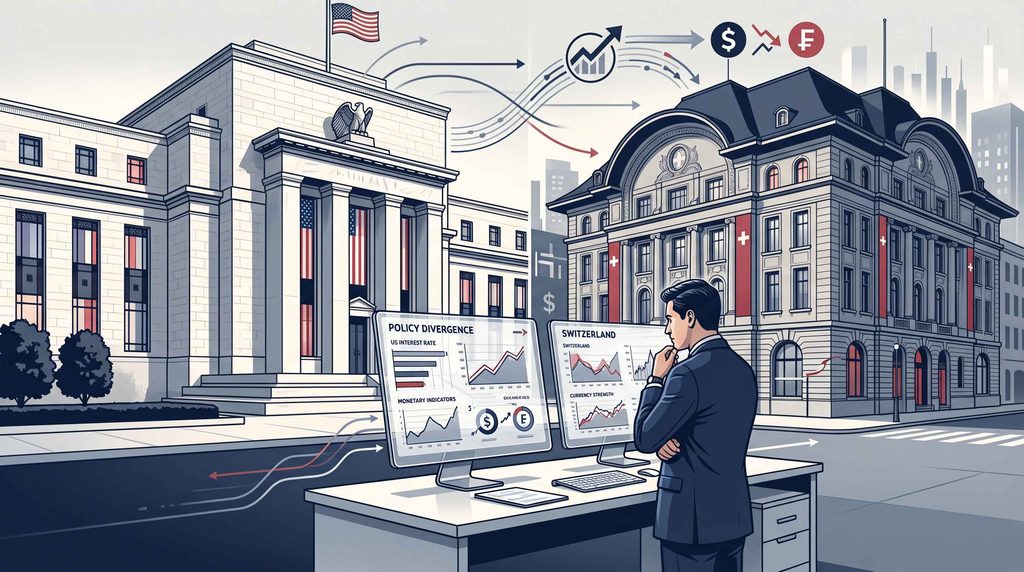
The US Federal Reserve influences the dollar through its monetary policy.
Its interest rate decisions and communications affect borrowing costs, bond yields and expectations about the American economy.
If the Fed signals that interest rates may remain higher for longer than expected, the dollar may strengthen, potentially pushing USD/CHF higher.
If markets anticipate lower US interest rates, the dollar may weaken, potentially pushing the pair lower.
The reaction depends on what traders expected before the announcement and how the decision compares with those expectations.
2. Swiss National Bank Policy
The Swiss National Bank (SNB) sets monetary policy for Switzerland.
Its decisions influence interest rates, inflation expectations and the attractiveness of Swiss-franc assets.
The SNB also has a history of intervening in currency markets under certain circumstances. Its policy decisions and communications can therefore have a substantial effect on the franc.
Traders should pay attention to SNB announcements, inflation assessments and statements about currency conditions.
Unexpected policy decisions can trigger sharp movements, so it is important to understand the risks of trading around major announcements.
3. US Inflation and Employment Data

US inflation and employment reports can significantly affect dollar expectations.
Important releases include:
- Consumer Price Index (CPI).
- Nonfarm payrolls.
- Unemployment and wage growth.
- Gross Domestic Product (GDP).
- Retail sales.
Suppose US inflation comes in above market expectations. Traders may anticipate that the Federal Reserve will keep monetary policy tighter for longer, potentially supporting the dollar and pushing USD/CHF higher.
But this is only one possible reaction. If the report was already anticipated or other economic information points in the opposite direction, the pair may behave differently.
4. Swiss Inflation and Economic Growth
Swiss inflation and growth data can influence expectations for SNB policy.
If inflation changes unexpectedly, markets may reassess the likely path of Swiss interest rates.
Economic growth, employment and trade developments can also affect the outlook for the Swiss economy and its currency.
Although US announcements often receive considerable attention, Swiss data should not be ignored when trading USD/CHF.
5. Global Risk Sentiment

Global risk sentiment describes how willing investors are to take financial risks.
During periods of uncertainty, investors may reduce exposure to riskier assets and seek currencies they consider more defensive.
The Swiss franc has historically attracted safe-haven demand in some of these periods. However, the dollar can also benefit from uncertainty because of its global financial role and deep markets.
Consequently, USD/CHF may rise or fall during a crisis, depending on which forces dominate.
6. Geopolitical and Financial Events
Unexpected developments such as geopolitical conflicts, banking stress or major political announcements can influence both currencies.
These events may produce sudden price movements, wider spreads and reduced liquidity.
Traders should avoid assuming that technical support and resistance levels will always hold during a major news event.
When Is the Best Time to Trade USD/CHF?
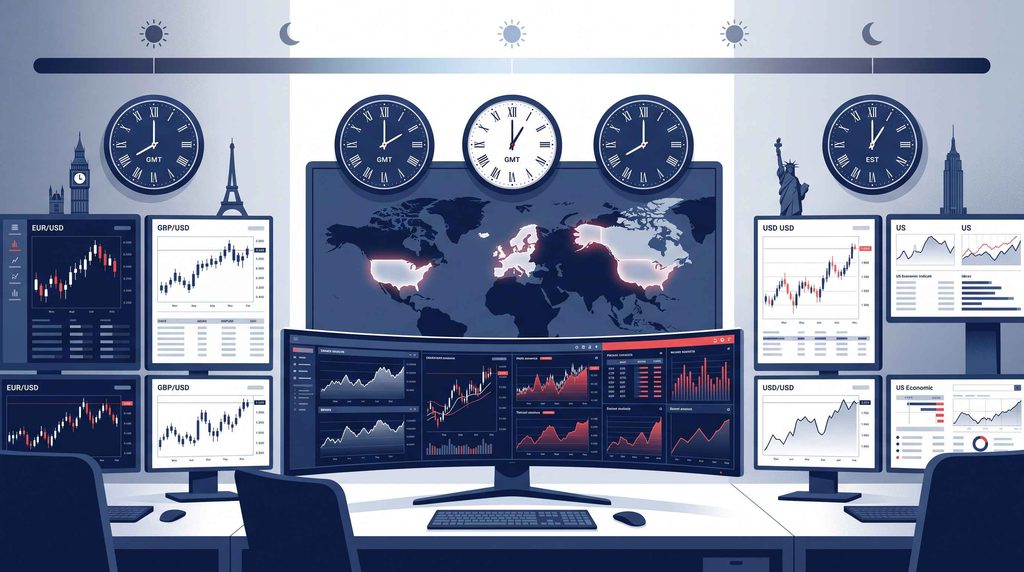
The global Forex market operates across different financial centres, and USD/CHF can be traded during most of the working week.
However, activity is not evenly distributed throughout the day.
The European Session
The European session is important because Switzerland is located in Europe and the Swiss franc is actively traded during European business hours.
Swiss economic announcements and changes in European market sentiment may influence the pair during this period.
Traders following SNB policy or Swiss economic data may find this session particularly relevant.
The New York Session
The New York session brings increased activity from US financial markets.
US inflation, employment reports and Federal Reserve announcements can cause substantial changes in USD/CHF.
For example, unexpectedly strong US employment data may support the dollar if it changes interest rate expectations. This could push USD/CHF higher, although the franc’s own performance also matters.
The London–New York Overlap
The overlap between London and New York is often an active period for major currency pairs, including USD/CHF.
During this time, European and US market participants are active simultaneously, and important US economic announcements may add to market movement.
Higher activity can create opportunities, but it can also increase volatility and the risk of sudden price changes.
Session times vary with daylight-saving changes. Check the current market schedule in your own time zone instead of relying on fixed hours throughout the year.
Should beginners trade during news announcements?
Not necessarily.
Major economic announcements can cause spreads to widen and prices to move rapidly. Orders may also experience slippage, meaning they execute at a different price than expected.
Beginners may prefer to observe these events or practise on a demo account before deciding whether news trading fits their strategy.
How to Analyse USD/CHF Before Trading
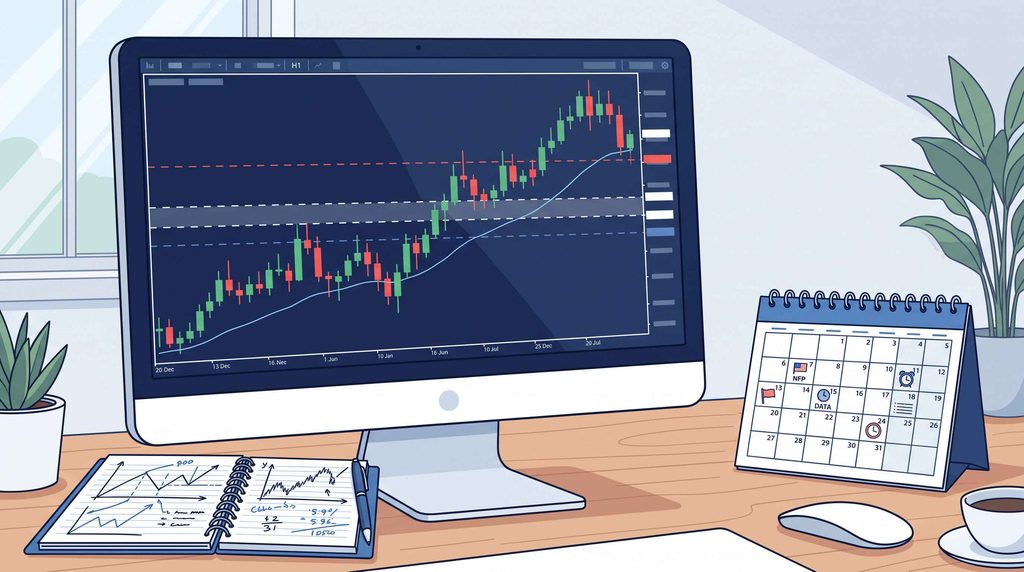
A structured approach can help traders avoid impulsive decisions.
Rather than relying on one indicator or prediction, consider combining economic analysis with chart-based techniques.
Step 1: Check the Economic Calendar
Identify upcoming US and Swiss economic announcements.
Pay particular attention to Federal Reserve and SNB decisions, inflation releases, employment data and GDP figures.
Ask yourself whether an important announcement is approaching and whether your strategy is suitable for the potential volatility.
Step 2: Assess Dollar and Franc Strength
Try to understand whether the market is responding primarily to dollar-related news, franc-related news or broader changes in risk sentiment.
For example:
- Stronger US rate expectations may support the dollar.
- Increased safe-haven demand may support the franc.
- Unexpected SNB policy changes may cause sharp franc movements.
Considering both currencies provides a more complete picture than looking at only one side of the pair.
Step 3: Identify the Trend
Examine the chart to determine whether USD/CHF is trending upward, trending downward or moving sideways.
Some traders use longer timeframes to understand the broader direction and shorter timeframes to identify possible entries.
For example, a daily chart may show the wider market structure, while a one-hour chart may help examine a shorter-term setup.
These timeframes are illustrative rather than universal recommendations. The appropriate timeframe depends on the strategy and intended holding period.
Step 4: Mark Support and Resistance
Support is an area where buying interest has previously emerged. Resistance is an area where selling pressure has previously appeared.
These zones can help traders plan potential entries and exits, but they do not guarantee reversals.
A trader might look for a possible buying opportunity near support if price action confirms a recovery. Alternatively, a trader might wait for a confirmed break above resistance before considering a breakout setup.
Step 5: Define the Trade Before Entering
Before placing an order, decide:
- The intended entry price or entry zone.
- The Stop Loss level.
- The Take Profit target or exit conditions.
- The position size.
- The maximum acceptable loss.
- The reason for taking the trade.
A clear plan can help you maintain discipline and avoid changing decisions impulsively after entering the market.
Three Common USD/CHF Trading Strategies
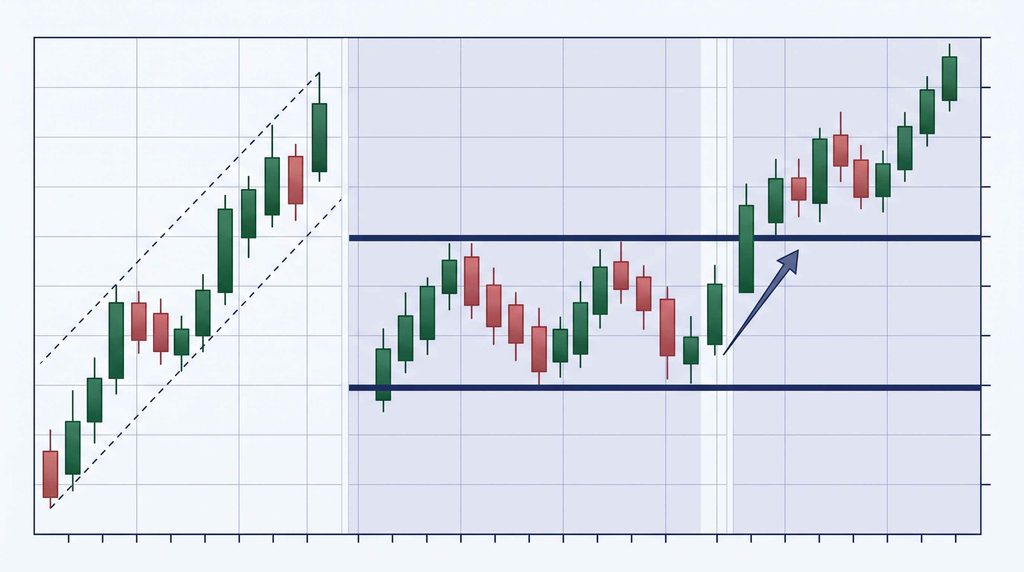
There is no single strategy that works in every market condition. These approaches are examples of how traders may structure their analysis.
1. Trend-Following Strategy
Trend-following traders look for sustained price movements.
If USD/CHF is forming higher highs and higher lows, a trader may look for a potential buying setup after a pullback.
If the pair is forming lower highs and lower lows, the trader may look for a potential selling setup.
Moving averages, trend lines and price structure can help organise the analysis. However, trends can reverse unexpectedly, especially after economic announcements.
2. Range-Trading Strategy
A range-trading strategy focuses on markets that move between identifiable support and resistance zones.
For example, if USD/CHF repeatedly moves between two price areas, a trader may watch for potential buying opportunities near support and selling opportunities near resistance.
The strategy depends on the range continuing. A breakout can invalidate the setup, so traders need to consider the possibility of price moving beyond either boundary.
3. Breakout Strategy
A breakout strategy looks for price to move beyond an established range or important price level.
If USD/CHF breaks above resistance, a trader may assess whether the move has enough confirmation to justify a potential long position.
If the pair breaks below support, a trader may assess a possible short position.
False breakouts are common enough to warrant caution. A brief move beyond a level does not guarantee that a new trend has begun.
Understanding Pip Values in USD/CHF
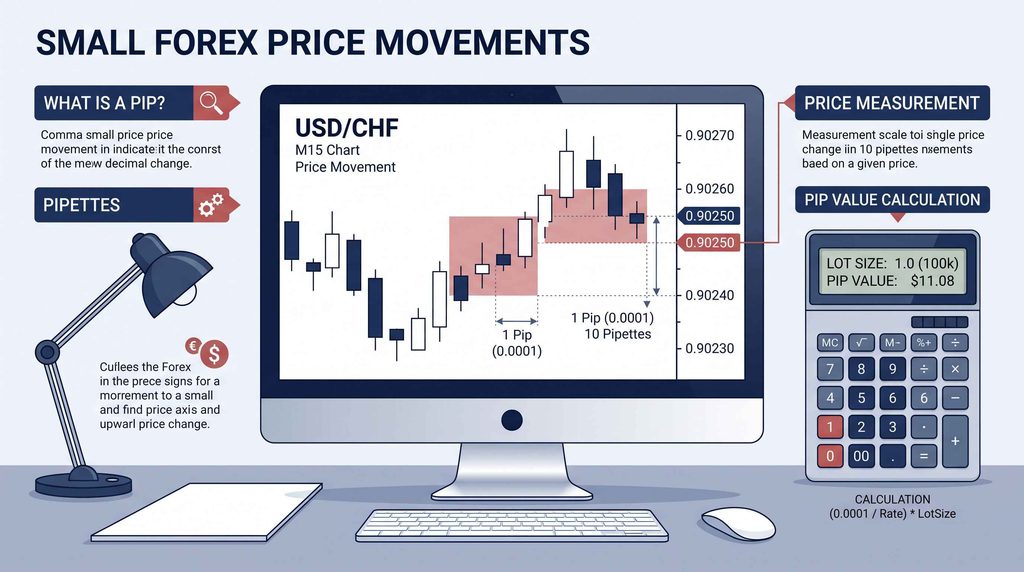
A pip is a standard unit used to measure price movements in Forex.
For most USD/CHF quotes, one pip equals 0.0001.
For example, a move from 0.9000 to 0.9010 is a 10-pip increase.
However, the monetary value of a pip depends on your position size and account currency.
Because CHF is the quote currency in USD/CHF, the pip value is initially calculated in Swiss francs and then converted if your account uses another currency.
For a standard lot of 100,000 USD, one pip is typically worth CHF 10 before any conversion into your account currency. Smaller position sizes have proportionally smaller pip values.
Understanding this calculation is important because it helps you estimate how much a price movement could affect your account.
Risk Management: What Beginners Must Understand
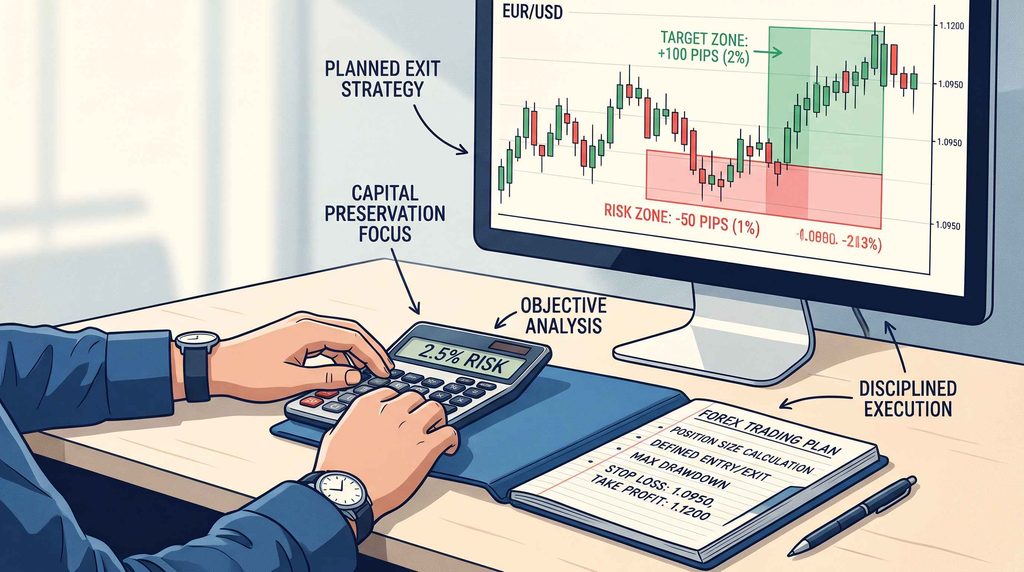
USD/CHF is a major currency pair, but that does not make it risk-free.
The Swiss franc can move sharply during periods of uncertainty or unexpected SNB announcements. The dollar can also experience significant movements following Federal Reserve decisions and major US economic releases.
Here are several principles to consider.
1. Use an Appropriate Position Size
Your position size determines how much money you gain or lose for a given price movement.
Choose it based on your account balance, Stop Loss distance and predefined risk limit.
Avoid increasing your position size simply because you feel confident about a trade.
2. Use Stop Losses Thoughtfully
A Stop Loss defines the price at which you intend to exit a losing trade.
However, it does not guarantee the exact execution price in every situation. Sudden market movements, gaps or slippage may cause an order to execute at a less favourable price.
Set your Stop Loss according to the trading setup and calculate the position size accordingly.
3. Understand Leverage
Leverage allows traders to control a larger position relative to the funds deposited.
It can magnify gains, but it can also magnify losses. Even a relatively small adverse movement can have a substantial effect when the position is too large.
Never assume that a major currency pair is safe to trade with excessive leverage.
4. Avoid Overtrading
Not every price movement represents a good trading opportunity.
Entering trades simply because the market is open can lead to poor decisions and unnecessary costs.
Wait for setups that meet your predefined conditions and be comfortable remaining out of the market when those conditions are absent.
5. Consider Your Total Currency Exposure
USD/CHF may sometimes move in the opposite direction to EUR/USD because both pairs are influenced by the US dollar and changes in demand for the franc and euro.
However, this relationship is not fixed.
If you hold positions across several dollar-related pairs, review your combined exposure rather than treating each trade as an independent risk.
Common Mistakes Beginners Make When Trading USD/CHF
Mistake 1: Assuming the Swiss Franc Always Strengthens During Crises
The franc has a safe-haven reputation, but the dollar can also attract strong demand during periods of uncertainty.
Consider the broader market conditions and avoid relying on a single assumption.
Mistake 2: Ignoring Swiss National Bank Announcements
SNB decisions can influence the franc significantly.
Make sure your economic calendar includes Swiss policy announcements and relevant economic releases.
Mistake 3: Focusing Only on US Economic Data
US news is important, but Swiss inflation, monetary policy and changes in franc demand can also influence the pair.
Assess both currencies before deciding on a trade.
Mistake 4: Assuming Support and Resistance Will Always Hold
Technical levels are useful reference points, not guarantees.
Unexpected economic news can push prices through levels that previously appeared strong.
Mistake 5: Using Excessive Leverage
A small adverse price movement can produce a large loss if your position is too large.
Calculate position size before entering and never risk money you cannot afford to lose.
Mistake 6: Treating Past Performance as a Guarantee
A strategy that performed well in one market environment may struggle when conditions change.
Review your results over a meaningful sample of trades and remember that past performance does not guarantee future outcomes.
How FXProfitBuilder Approaches USD/CHF

FXProfitBuilder provides Forex signals for three currency pairs:
- EUR/USD
- GBP/USD
- USD/CHF
The company describes its trading methodology as combining volume indicators, support and resistance analysis, and a mathematical model to identify potential trading opportunities.
Its signals provide entry and exit guidance and can be followed manually or mechanically. Educational modules are also available to help members learn about charts and trading strategies.
If you are considering using signals for USD/CHF, assess how the signals are delivered, whether the entry and exit guidance is clear, how trade updates are handled and whether the service fits your trading routine.
Always check the provider’s current website for its latest features, prices and terms. A description of a trading method is not independent proof of profitability, and no signal service can eliminate market risk.
Is USD/CHF Suitable for Beginners?

USD/CHF can be a useful currency pair to study because it connects two important currencies and responds to identifiable economic and financial factors.
It can also help beginners learn about safe-haven demand, interest rate differences and how central bank policy affects exchange rates.
However, its behaviour can be complicated, particularly when both currencies attract demand at the same time.
If you’re new to Forex trading, consider the following steps:
- Learn how currency pairs, pips and spreads work.
- Understand the difference between buying and selling USD/CHF.
- Follow Federal Reserve and Swiss National Bank announcements.
- Practise identifying trends and support and resistance.
- Learn to calculate position size and potential losses.
- Consider practising on a demo account before trading live.
- Keep a trading journal and review your decisions.
A demo account can help you practise without risking real money, although simulated results do not guarantee similar performance in live trading.
The goal is to build a repeatable process and understand the risks rather than trying to profit from every market movement.
Final Thoughts

USD/CHF, commonly known as the Swissie, is an important Forex pair that reflects the relationship between the US dollar and Swiss franc.
Its price is influenced by Federal Reserve and Swiss National Bank policy, economic data, interest rate expectations and changes in global risk sentiment.
The Swiss franc’s safe-haven reputation makes the pair particularly interesting, but traders should remember that both currencies can attract demand during uncertain periods.
For beginners, USD/CHF offers an opportunity to learn about fundamental analysis, technical setups and disciplined risk management. It is not automatically safer or easier to trade simply because it is a major currency pair.
FXProfitBuilder includes USD/CHF alongside EUR/USD and GBP/USD in its Forex signals offering. If you’re evaluating the service, review its current methodology, signal details and subscription terms before making a decision.
Above all, remember that understanding a currency pair is only one part of trading successfully. A structured plan, appropriate position sizing and realistic expectations are essential.
Forex trading involves significant risk, especially when leverage is used. No strategy, indicator or signal service can guarantee profits.
FAQ
1. What does USD/CHF mean in Forex?
USD/CHF represents the exchange rate between the US dollar and the Swiss franc. It shows how many Swiss francs are required to buy one US dollar.
2. Why is USD/CHF called the Swissie?
The nickname Swissie refers to the Swiss franc, the currency represented by CHF in the pair.
3. What makes USD/CHF rise or fall?
The pair is influenced by Federal Reserve and Swiss National Bank policy, interest rate expectations, US and Swiss economic data, and changes in global risk sentiment.
4. Is the Swiss franc a safe-haven currency?
The Swiss franc is widely regarded as a traditional safe-haven currency because investors may seek it during periods of uncertainty. However, its value can fall as well as rise, and safe-haven demand is not guaranteed.
5. When is the best time to trade USD/CHF?
The European session and the London–New York overlap are often active periods. The most suitable time depends on your strategy, current market conditions and the economic calendar.
6. How much is one pip in USD/CHF?
One pip is generally 0.0001. For a standard lot of 100,000 USD, one pip is typically worth CHF 10 before converting it into another account currency. Actual values depend on position size and contract specifications.
7. Is USD/CHF suitable for beginners?
Beginners can study USD/CHF, but they should understand leverage, pip values, trading costs and risk management before trading with real money. Demo practice can help build familiarity with the pair.
8. Which economic announcements should USD/CHF traders watch?
Important events include Federal Reserve and Swiss National Bank decisions, US inflation and employment reports, Swiss inflation data and major economic growth releases.
9. Does FXProfitBuilder provide USD/CHF signals?
Yes. FXProfitBuilder lists USD/CHF among the three currency pairs covered by its Forex signals, alongside EUR/USD and GBP/USD. Check the provider’s current website for its latest service information and terms.
10. Can USD/CHF trading guarantee profits?
No. Currency markets are unpredictable, and even a carefully planned trade can lose money. Neither a currency pair nor a trading signal can guarantee future profits.
👉 Start your journey today—subscribe to our forex pip tips service and see the difference for yourself! Sign Up to get Exclusive Offers