Understanding Currency Correlations: A Complete Guide
Posted On - September 19, 2025 | By - FXProfitBuilder | Categories - Forex Education
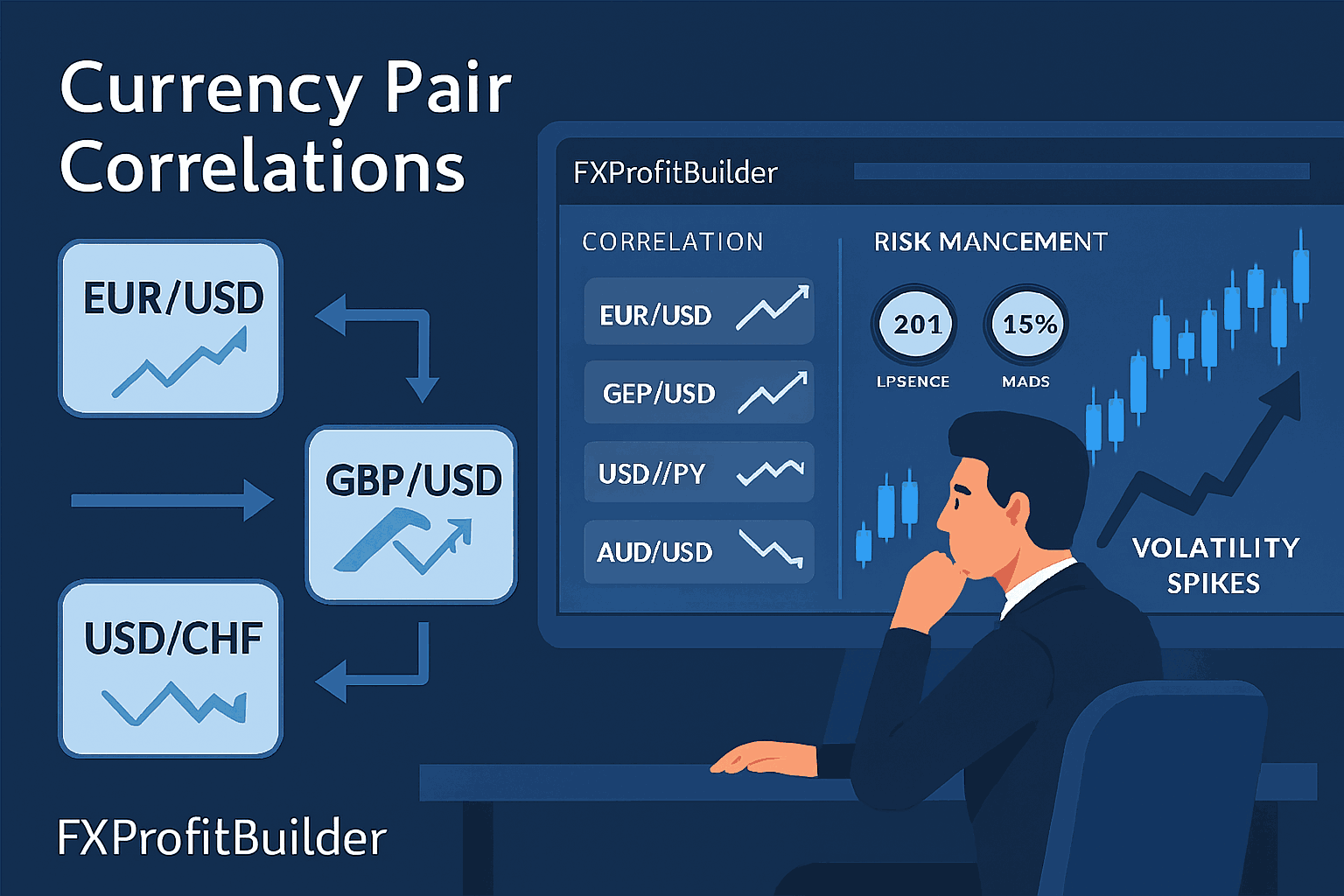
In Forex trading, currencies don’t move in isolation. Some rise and fall together, while others move in opposite directions. This relationship is called currency correlation, and mastering it can help you make smarter, more strategic trades.
At FXProfitBuilder, we take currency correlations into account to deliver high-probability signals that are not only technically sound, but strategically diversified.
🔗 What Is Currency Correlation?
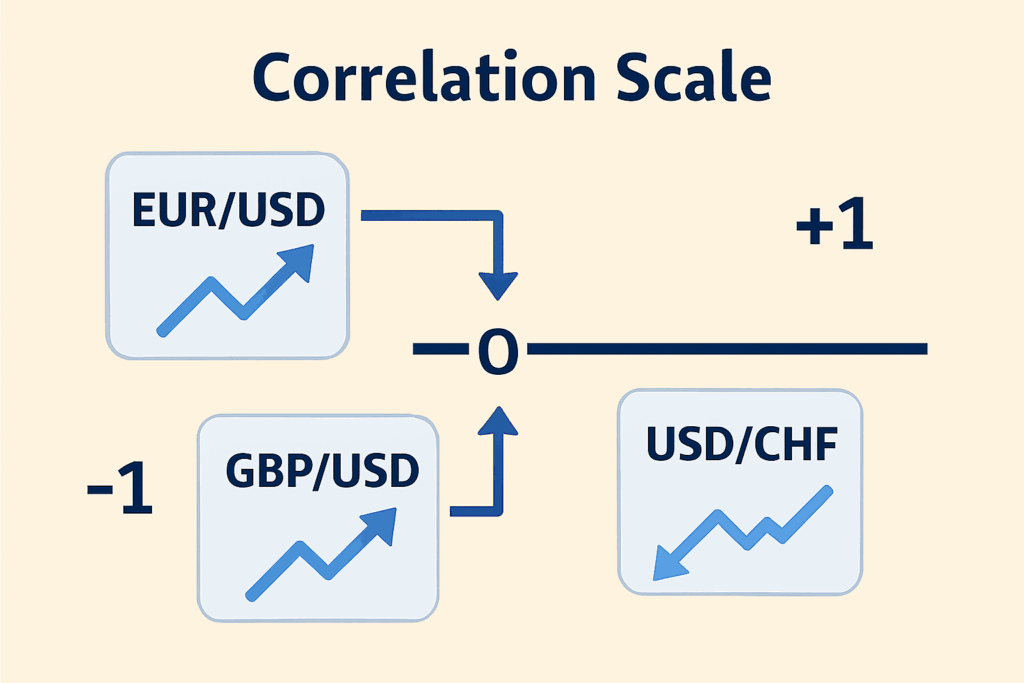
Currency correlation is the relationship between two currency pairs, showing how they move in relation to each other. Correlations are measured on a scale from +1 to -1:
- +1: The two pairs move in the same direction (positive correlation)
- -1: The two pairs move in opposite directions (negative correlation)
- 0: No consistent relationship
🧠 Why Currency Correlation Matters in Forex Trading
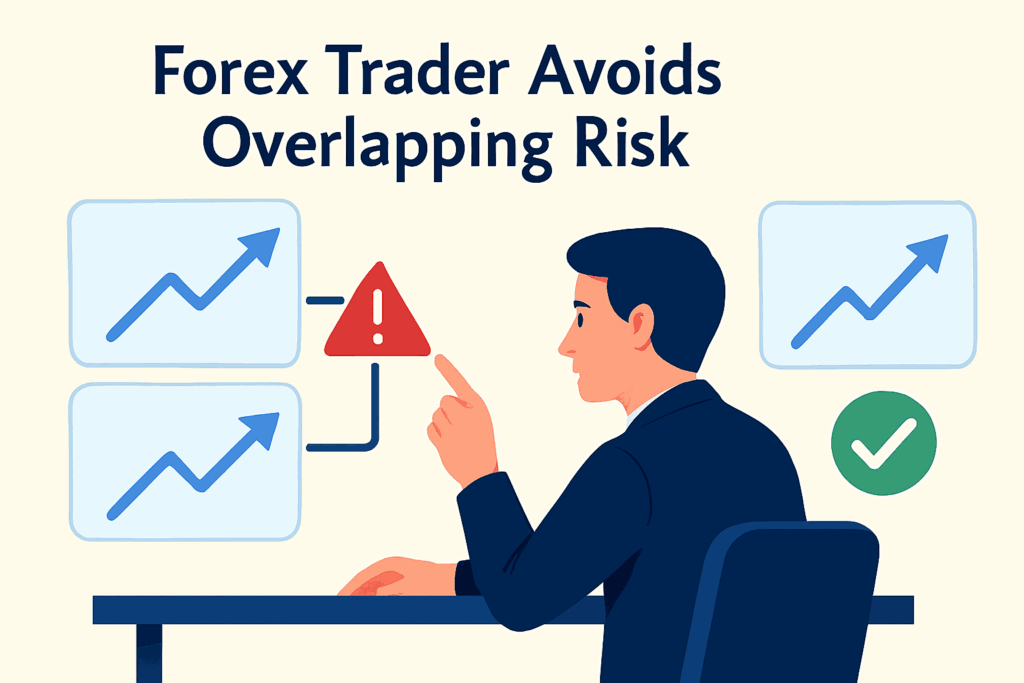
Understanding correlations helps you:
- Avoid overexposure or duplicating risk
- Diversify your trades more effectively
- Improve risk management
- Spot confirmation or contradiction between multiple trades
💡 Examples of Common Correlations
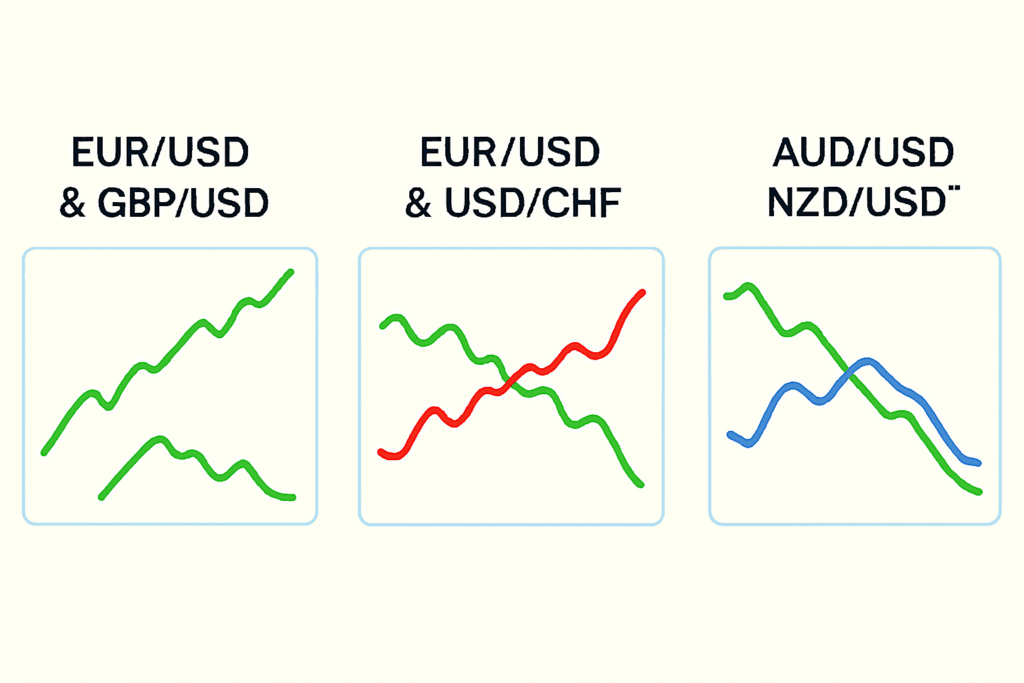
| Currency Pair | Correlation Type | Example Behavior |
| EUR/USD & GBP/USD | Positive (+) | Often move in the same direction |
| USD/CHF & EUR/USD | Negative (–) | When EUR/USD rises, USD/CHF tends to fall |
| AUD/USD & NZD/USD | Positive (+) | Strong correlation due to regional ties |
| USD/JPY & USD/CHF | Mixed | Often correlate, but influenced by news |
🧮 How FXProfitBuilder Uses Correlations in Signal Generation
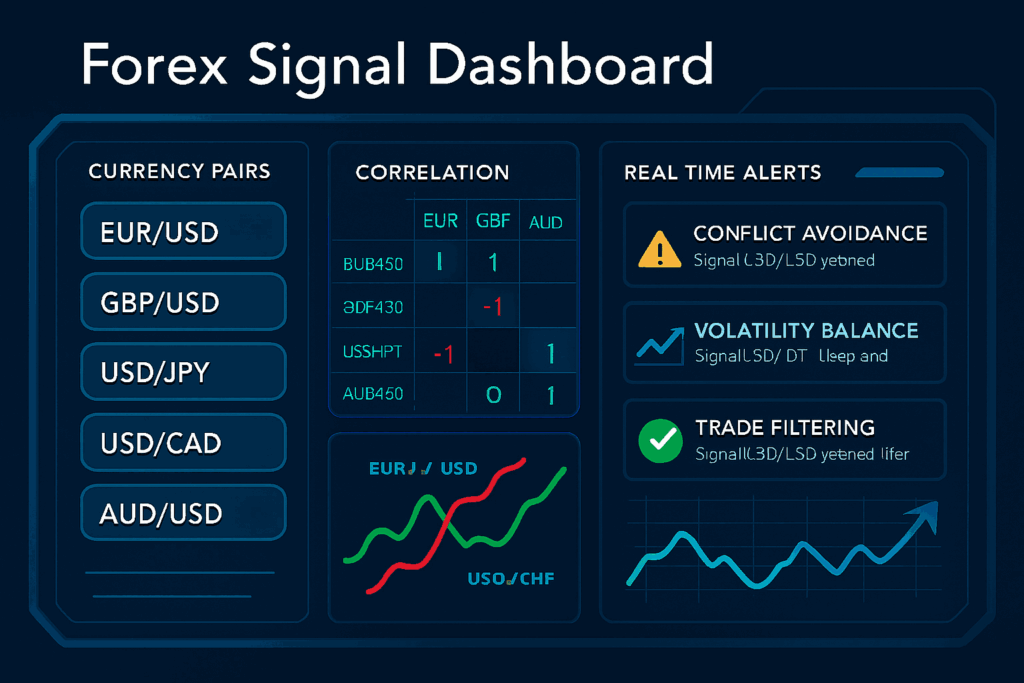
We analyze the correlation between the 3 currency pairs we focus on EUR/USD, GBP/USD, and USD/CHF and factor in:
- Volatility patterns
- Risk concentration
- Conflicting trade signals
This allows our system to:
- Prevent redundant signals
- Provide balanced exposure
- Maximize profit potential without doubling risk
📊 How to Use Currency Correlation in Your Own Trading
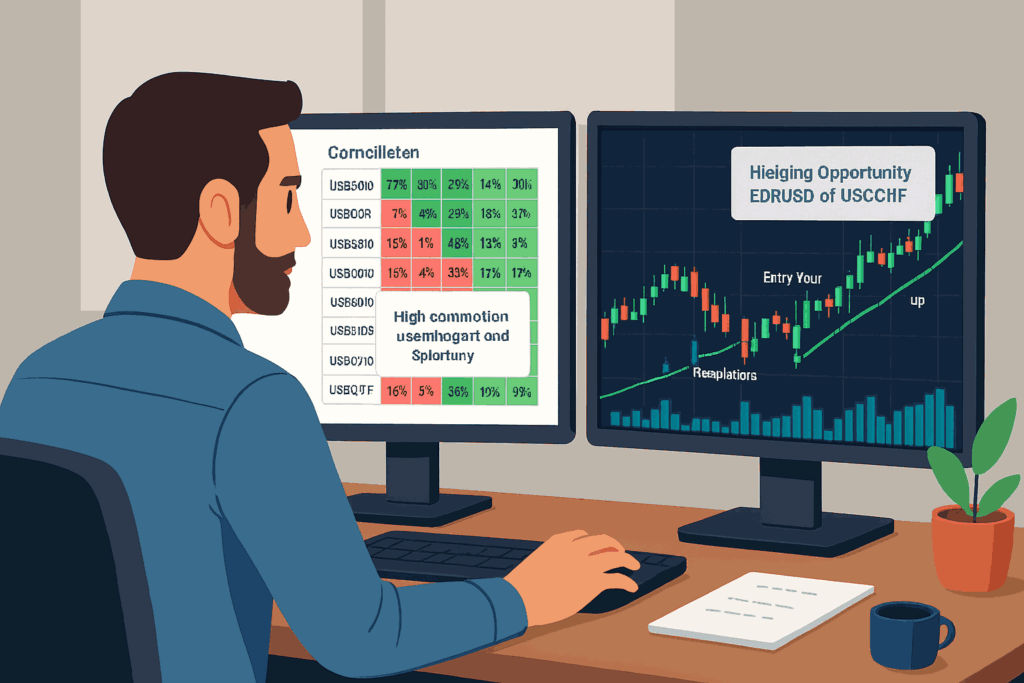
- Monitor a Currency Correlation Table
- Use tools like MyFXBook or OANDA to track current correlations.
- Avoid Doubling Risk
- Don’t open buy trades in both EUR/USD and GBP/USD at the same time unless your analysis supports it.
- Hedge With Negative Correlations
- If used wisely, negative correlations can serve as a risk-balancing strategy.
- Use Confirmations
- A signal on EUR/USD gains more strength if GBP/USD is showing a similar setup.
⚠️ Correlation Isn’t Always Constant
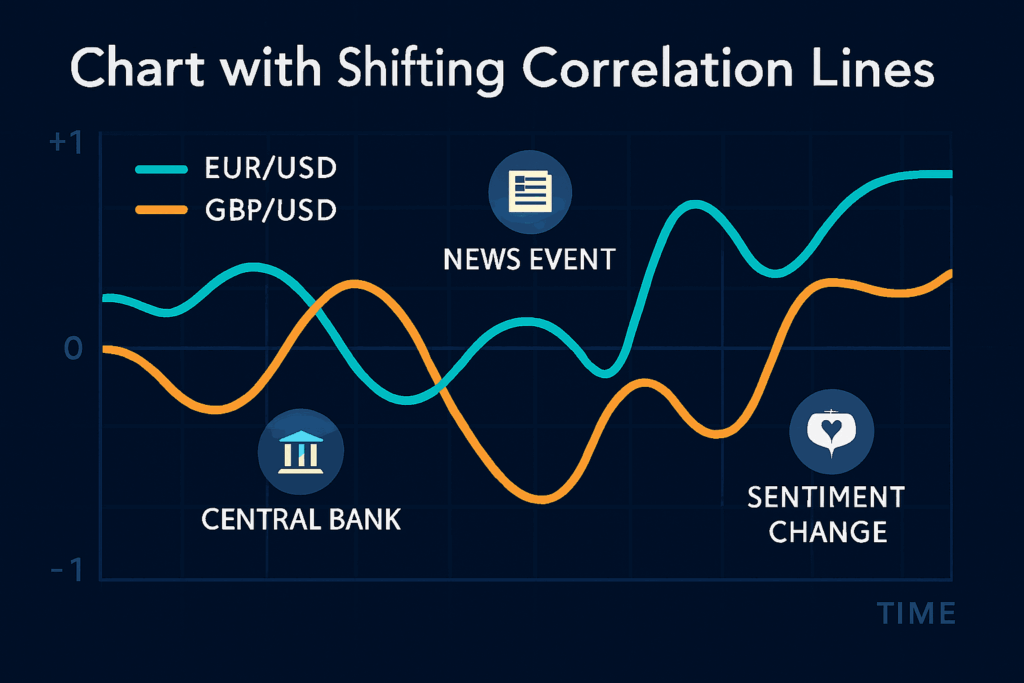
Correlations can change based on:
- Economic news
- Central bank policies
- Market sentiment
That’s why FXProfitBuilder constantly reviews and updates signal logic based on real-time market conditions.
👉 Start your journey today—subscribe to our forex pip tips service and see the difference for yourself! Sign Up to get Exclusive Offers