How to Trade Forex Using Divergence
Posted On - November 11, 2025 | By - FXProfitBuilder | Categories - Advanced Trading Concepts

Introduction
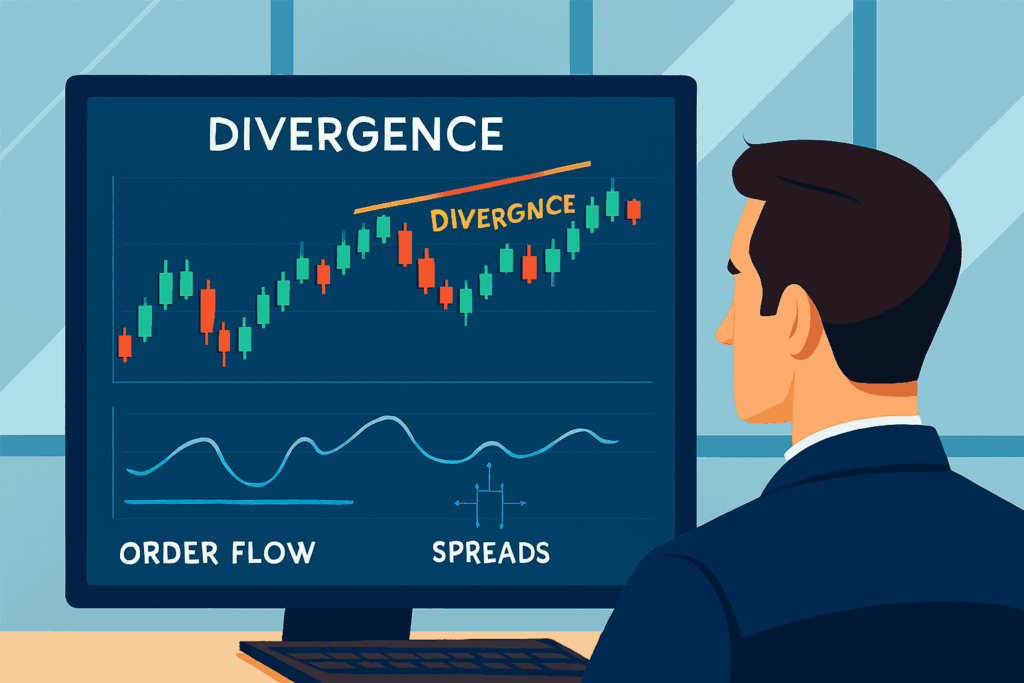
Divergence is one of the most reliable tools in a Forex trader’s arsenal a hidden signal that often appears before price reversals occur. It’s a subtle yet powerful concept that helps traders identify when momentum and price action are out of sync, providing early clues for potential trend changes.
Whether you’re a beginner or a seasoned trader, understanding how to identify and trade divergence can significantly improve your timing and risk management.
What Is Divergence in Forex Trading?
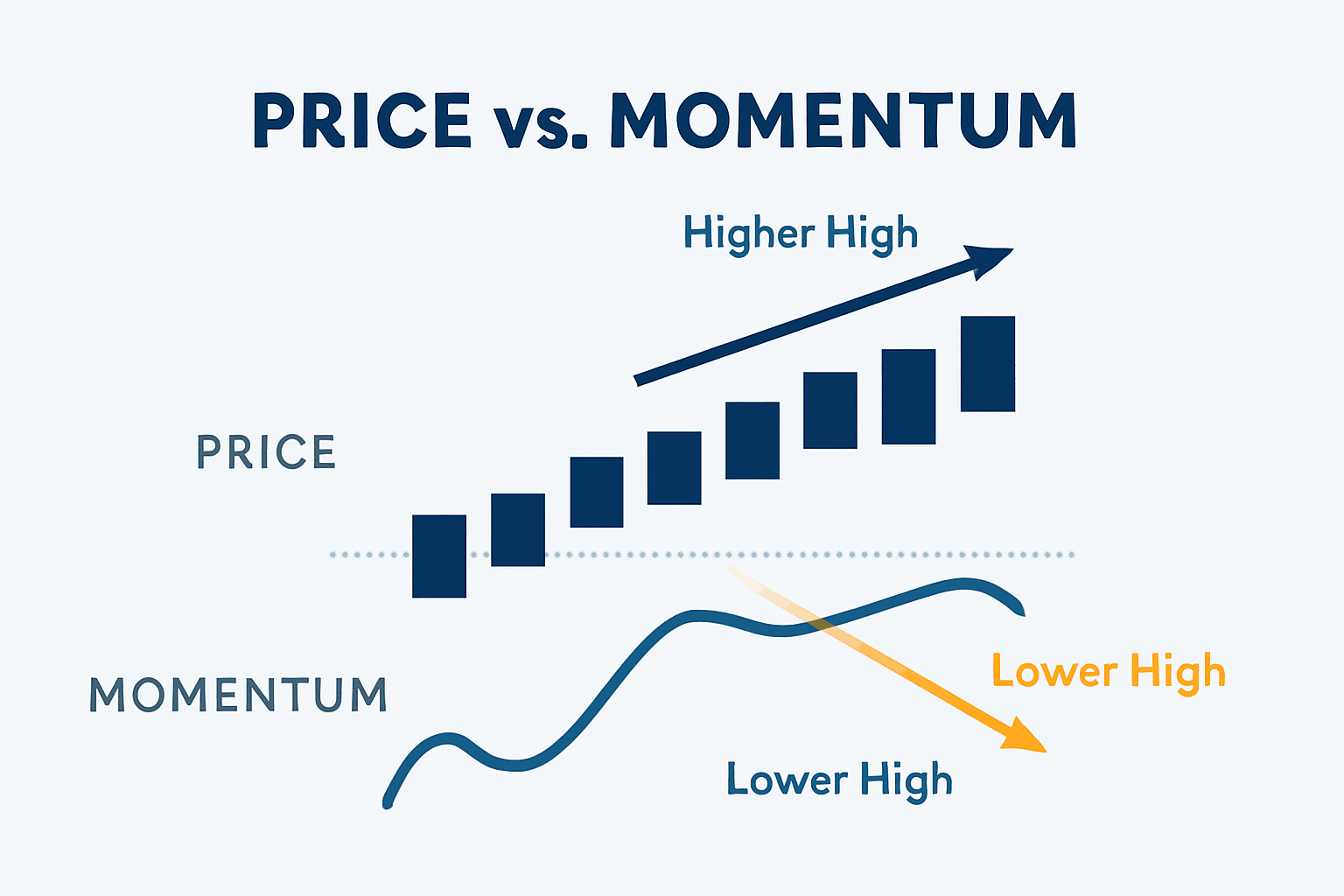
Divergence occurs when the price of a currency pair moves in one direction while an indicator (usually a momentum oscillator like RSI, MACD, or Stochastic) moves in the opposite direction.
This mismatch signals that momentum is weakening and that a possible reversal or correction may be near.
Types of Divergence

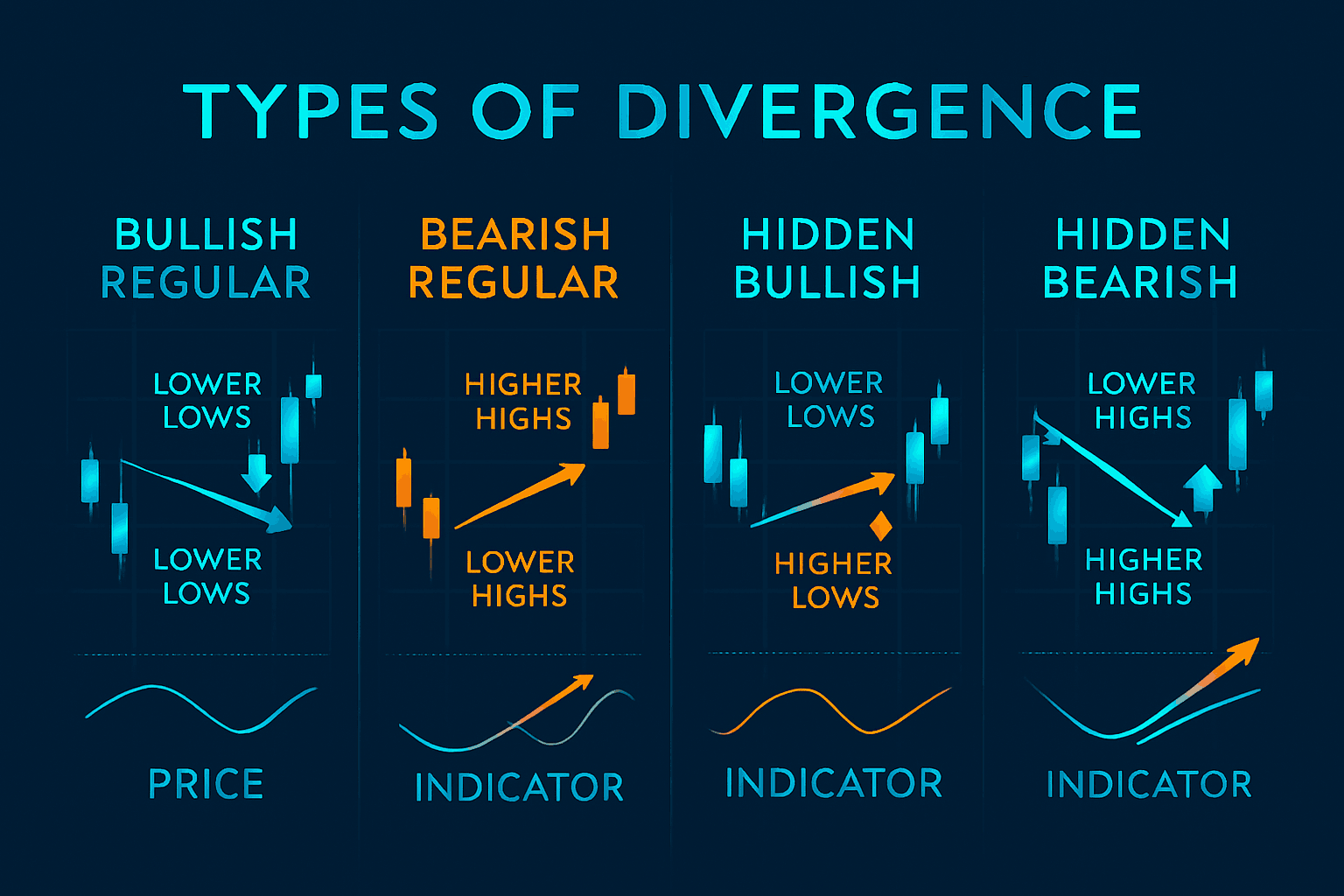
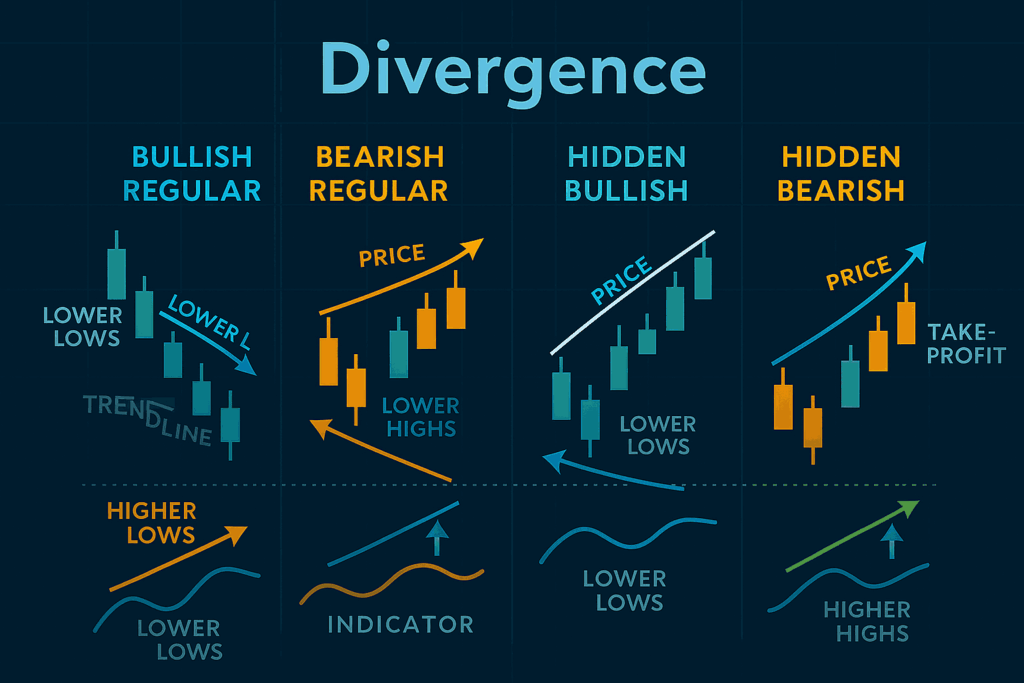
1. Regular Divergence
- Bullish Divergence:
Occurs when price makes lower lows, but the indicator makes higher lows.
This suggests selling pressure is fading a potential reversal to the upside.
✅ Used to spot the end of a downtrend. - Bearish Divergence:
Occurs when price makes higher highs, but the indicator makes lower highs.
This signals weakening buying pressure a possible move downward.
✅ Used to identify the end of an uptrend.
2. Hidden Divergence
Hidden divergence helps traders spot trend continuation setups.
- Hidden Bullish Divergence: Price makes higher lows while the indicator makes lower lows suggesting the uptrend is still strong.
- Hidden Bearish Divergence: Price makes lower highs while the indicator makes higher highs confirming the downtrend’s continuation.
Best Indicators for Spotting Divergence
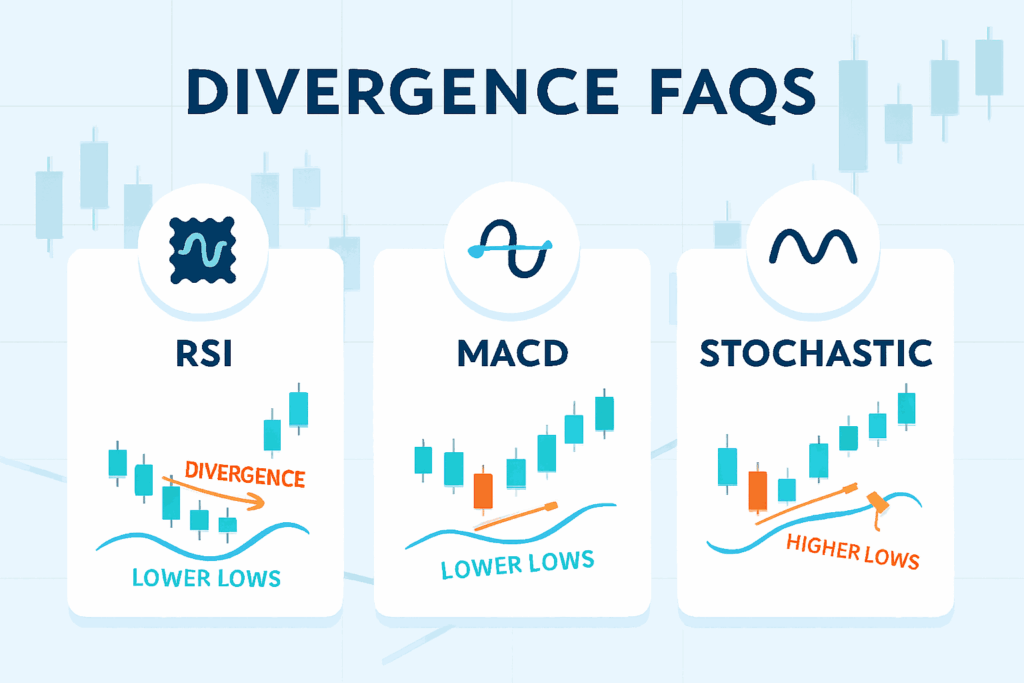
- Relative Strength Index (RSI) – Excellent for identifying overbought and oversold conditions alongside divergence.
- MACD (Moving Average Convergence Divergence) – Offers both momentum and crossover confirmation.
- Stochastic Oscillator – Ideal for short-term traders looking for quick divergence signals.
How to Trade Divergence Effectively
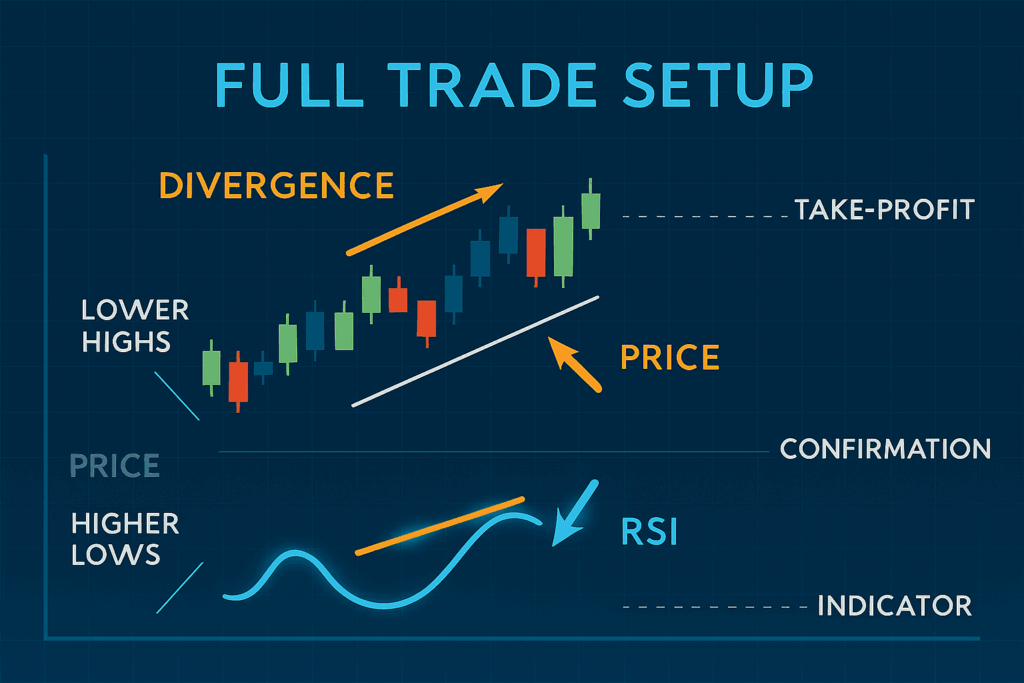
Step 1: Identify Divergence on the Chart
Compare price highs/lows with indicator highs/lows. If they move opposite to each other, you’ve spotted divergence.
Step 2: Confirm with Trend Structure
Divergence alone isn’t enough. Confirm signals with trendlines, support/resistance, or candlestick patterns.
Step 3: Choose the Right Entry
- For bullish divergence, look for confirmation with bullish engulfing candles or a break above resistance.
- For bearish divergence, wait for rejection candles or a break below support.
Step 4: Set Stop-Loss and Take-Profit
- Place stop-loss below the swing low (bullish) or above the swing high (bearish).
- Set take-profit at the next major support/resistance or use a 1:2 risk-reward ratio.
Common Mistakes to Avoid
- Trading every divergence not all signals are strong or tradable.
- Ignoring overall trend direction divergence in a strong trend may only lead to a small pullback.
- Using divergence on very short timeframes noise can lead to false signals.
Example: RSI Bullish Divergence
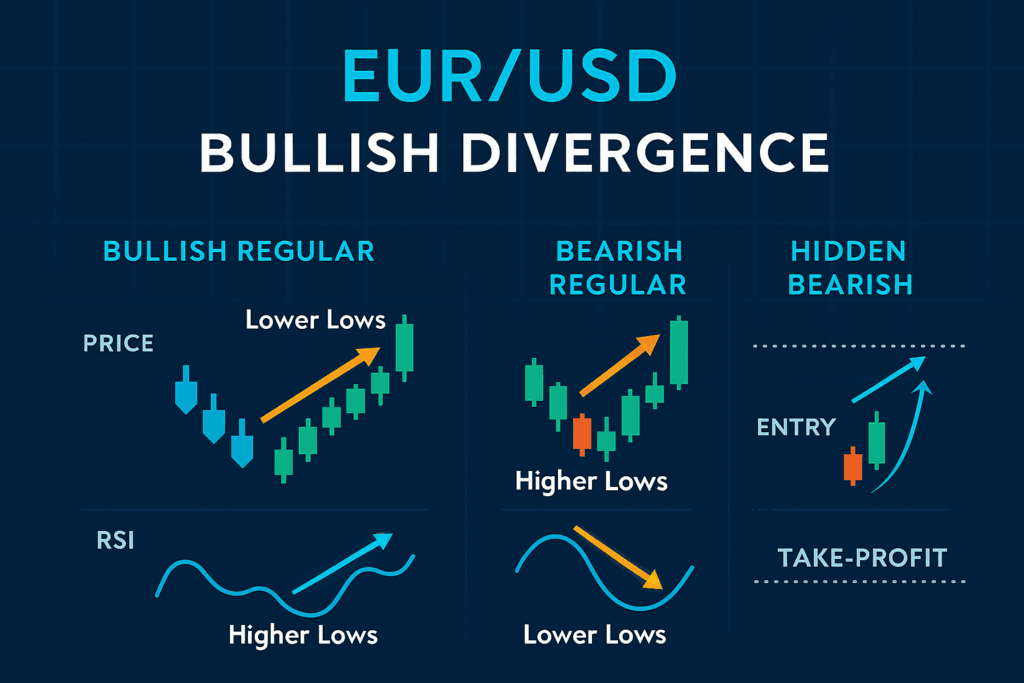
Suppose EUR/USD is making lower lows on the chart, but your RSI indicator shows higher lows. This suggests sellers are losing strength giving a potential long entry opportunity once a bullish reversal candle appears.
Conclusion
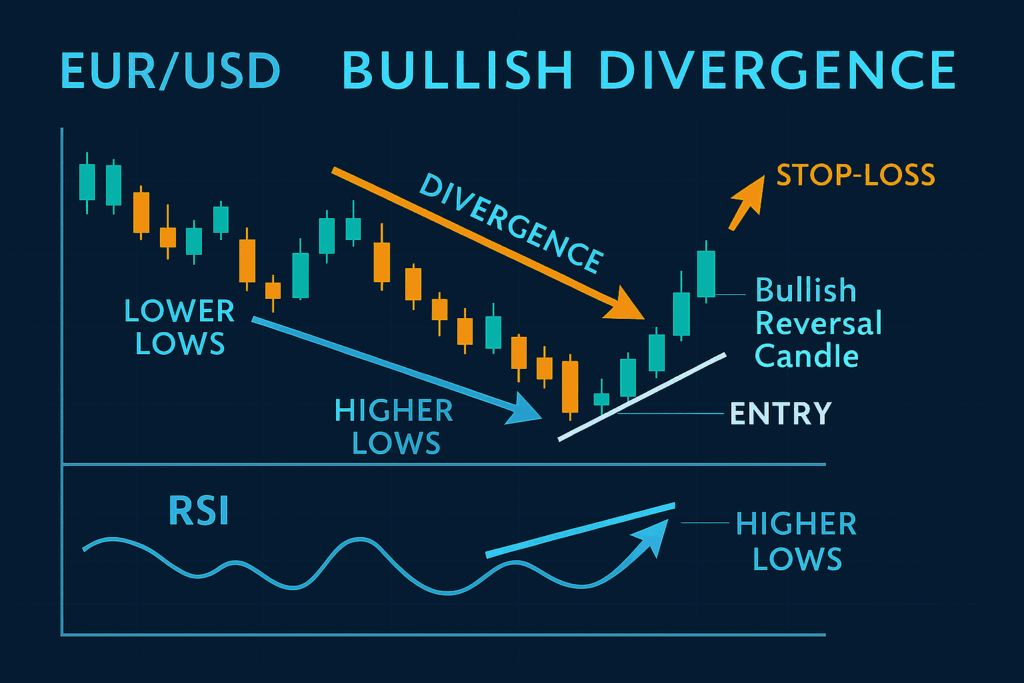
Divergence trading helps traders see beneath the surface of price action. By identifying when momentum fails to confirm price movement, you can anticipate reversals, refine your entries, and trade with higher confidence. Combine divergence with solid technical tools and disciplined risk management to unlock its full potential.
FAQ Section
Q1. Which timeframes work best for divergence trading?
A1. Divergence works well on 1-hour and 4-hour charts higher timeframes provide more reliable signals.
Q2. Is divergence enough to enter a trade?
A2. Not by itself. Always confirm divergence signals with support/resistance or candlestick patterns.
Q3. Can I use divergence in trending markets?
A3. Yes , hidden divergence is ideal for identifying trend continuation setups.
👉 Start your journey today—subscribe to our forex pip tips service and see the difference for yourself! Sign Up to get Exclusive Offers