The Art of Backtesting Your Forex Strategy
Posted On - December 12, 2025 | By - FXProfitBuilder | Categories - Advanced Trading Concepts
Backtesting is one of the most powerful tools in a trader’s arsenal. It helps you validate a strategy, understand its strengths and weaknesses, and build confidence before risking real money.
If you want long-term success in Forex trading, mastering the art of backtesting is non-negotiable.
🔍 What Is Backtesting?
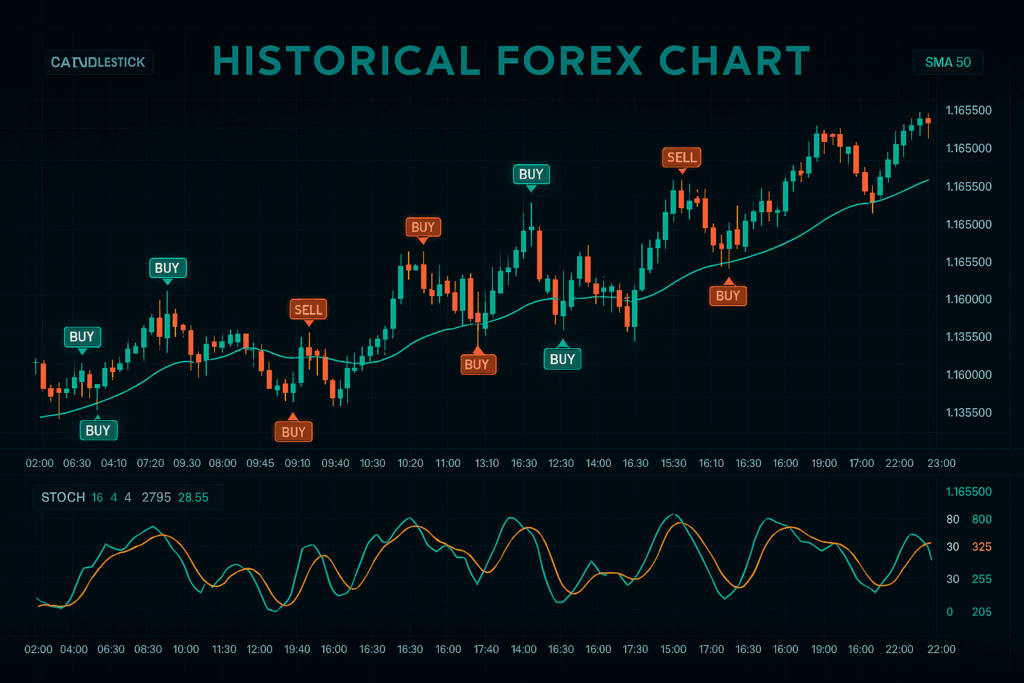
Backtesting is the process of applying your trading strategy to historical market data to see how it would have performed.
It answers critical questions like:
- Is this strategy profitable?
- How often does it win or lose?
- What type of drawdowns should I expect?
- Can I trust this strategy with real capital?
Backtesting transforms guesswork into data-driven decisions.
🎯 Why Backtesting Matters
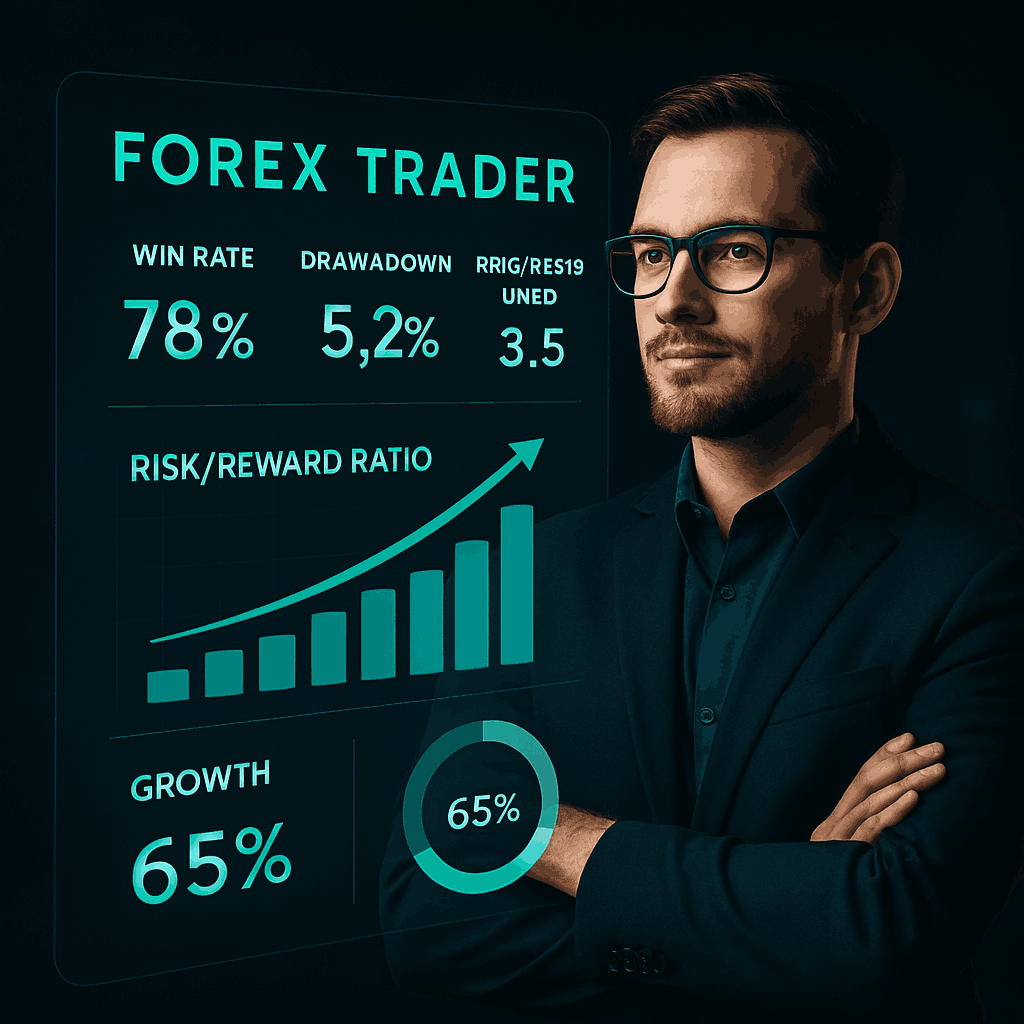
1. Builds Confidence
When you see your strategy perform well over years of historical data, you trade with more discipline and less fear.
2. Reveals Weaknesses
Every strategy has limitations. Backtesting exposes them before real money is at risk.
3. Helps You Optimize
You can test different stop-losses, timeframes, entry rules, and take-profit levels to refine your edge.
4. Removes Emotional Bias
Backtesting provides evidence not emotions as the basis for executing a trade.
🧪 How to Backtest a Forex Strategy (Step by Step)
Step 1: Define Clear Rules
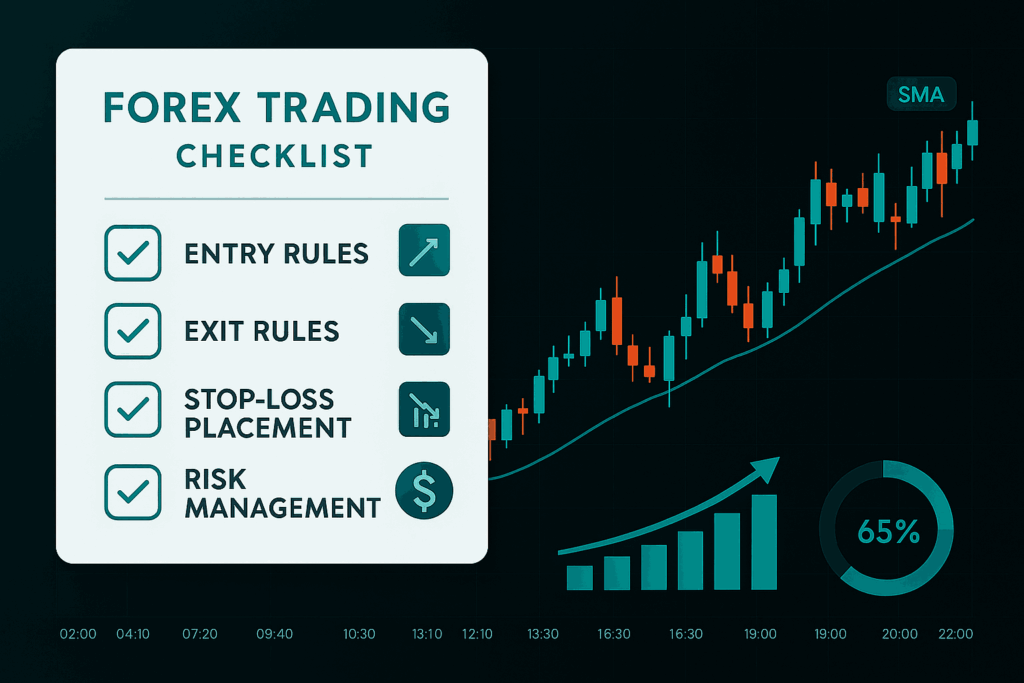
Your strategy should have:
- Entry rules
- Exit rules
- Stop-loss placement
- Take-profit method
- Risk-per-trade guideline
If it’s not rule-based, you can’t backtest effectively.
Step 2: Choose Historical Data
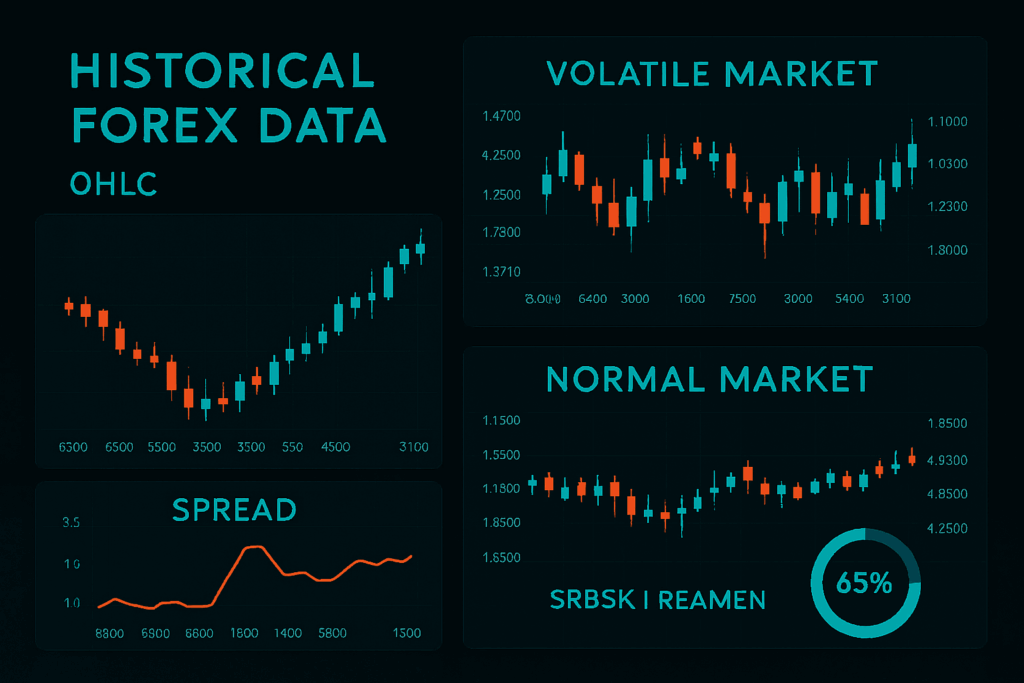
Use data from:
- Your trading platform
- MT4/MT5 history
- Paid historical market data feeds
Make sure the data includes:
- High/Low/Close prices
- Spread variations
- Different market conditions (volatile + normal)
Step 3: Select a Meaningful Time Period
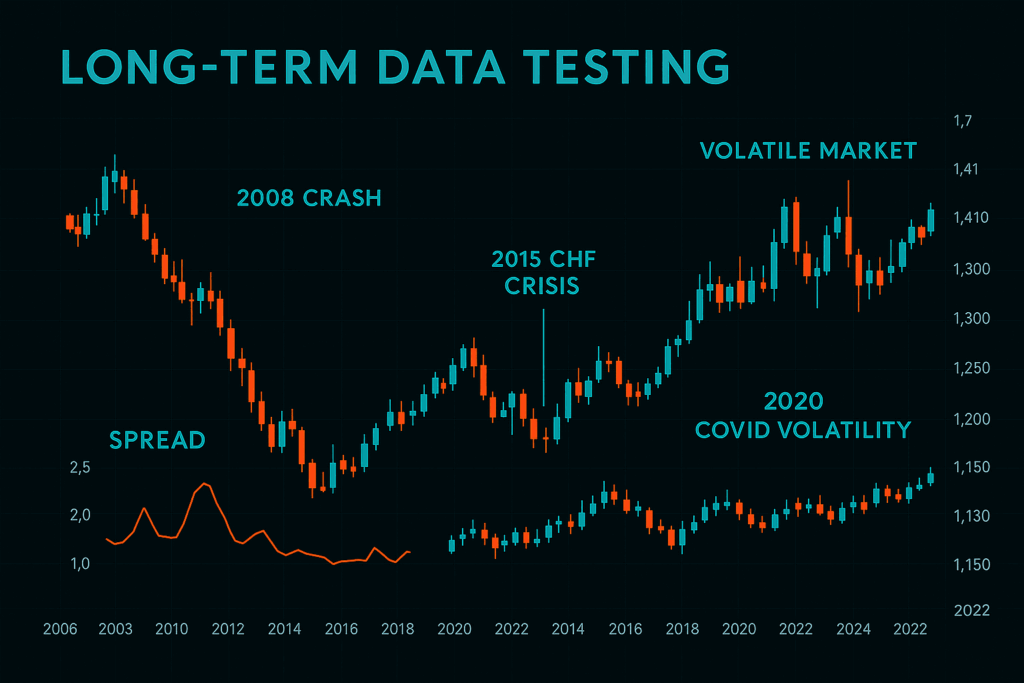
A minimum of 2–5 years is recommended.
Even better: include crisis periods like
- 2008
- 2015 CHF Crisis
- 2020 COVID volatility
This shows how your strategy handles extreme conditions.
Step 4: Execute the Strategy on Charts
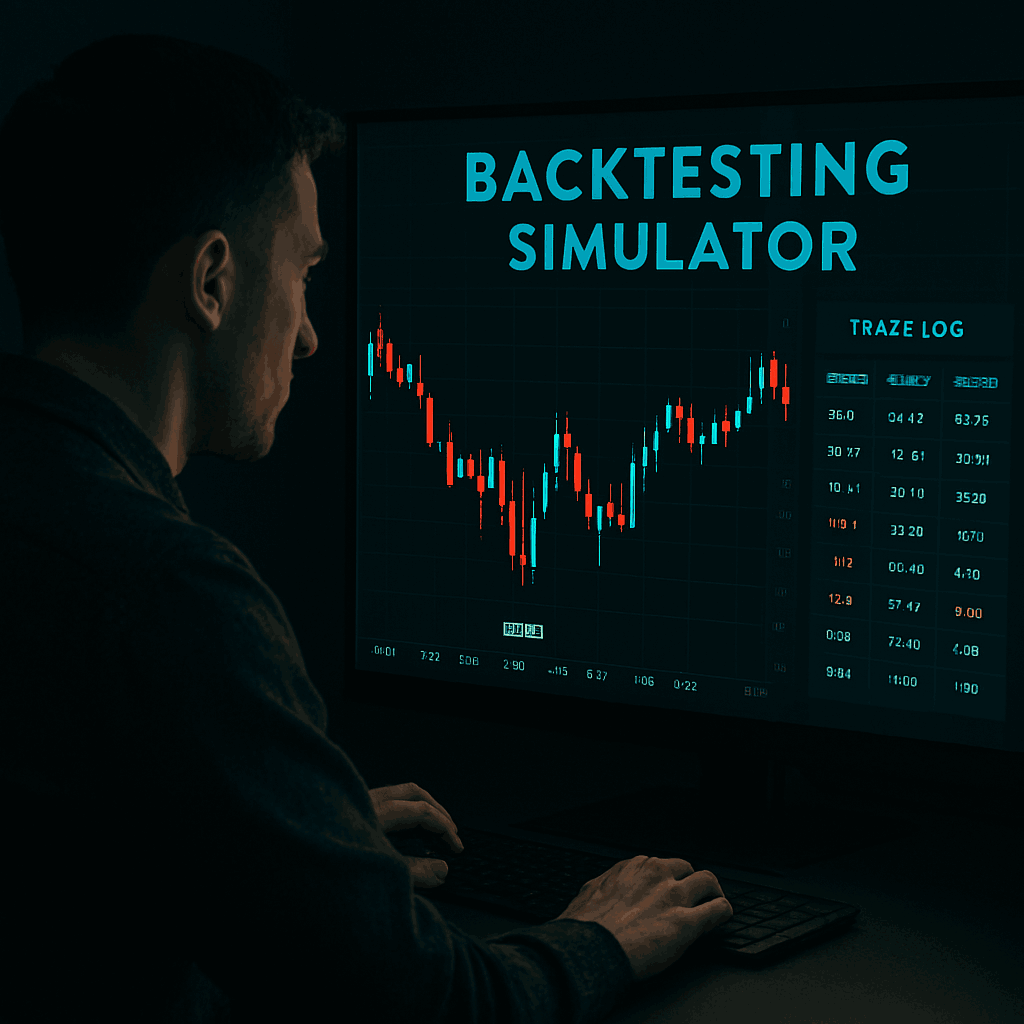
Replay historical charts candle-by-candle and apply your rules with zero bias.
Record each trade including:
- Date
- Entry price
- Stop-loss
- Target
- Result
- Notes on unusual conditions
Step 5: Analyze Performance Metrics
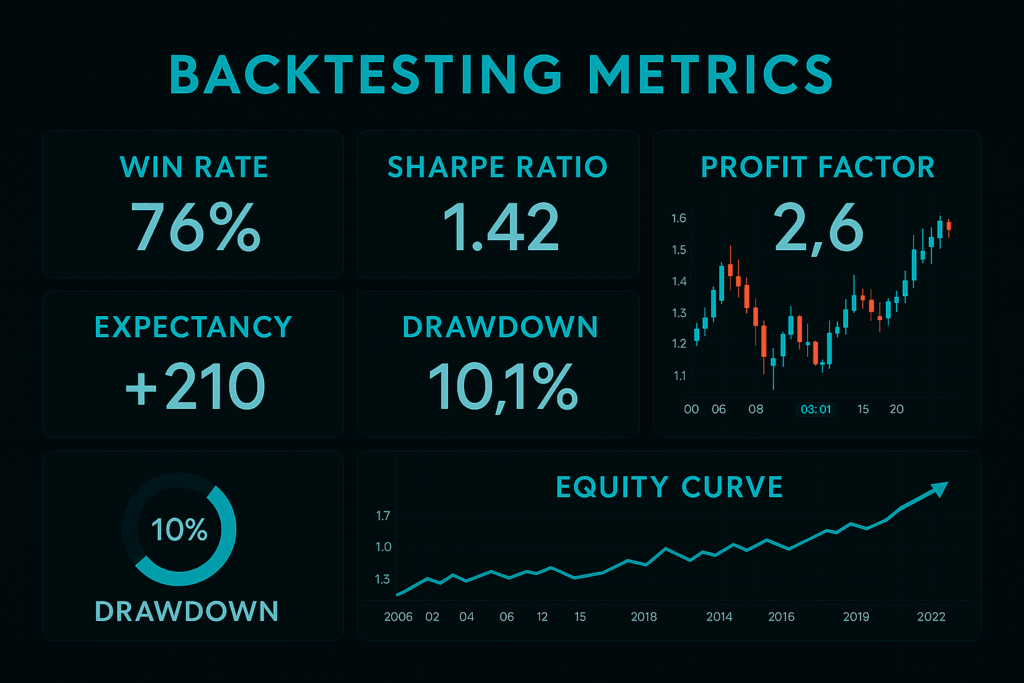
After testing 100+ trades, evaluate:
- Win rate
- Risk-to-reward ratio
- Maximum drawdown
- Sharpe ratio
- Profit factor
- Expectancy
- Worst losing streak
These metrics reveal the real efficiency of your strategy.
Step 6: Optimize (But Avoid Overfitting)
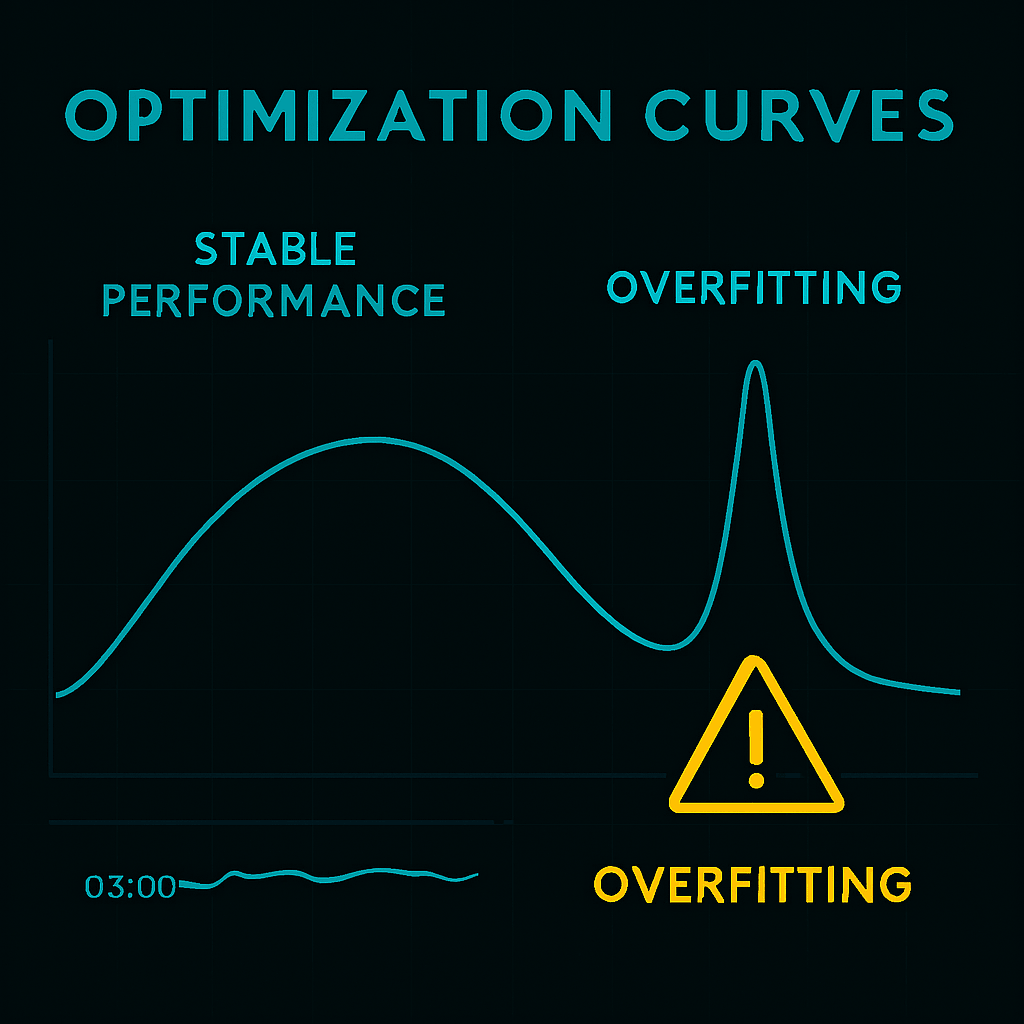
Adjust variables slightly to improve performance, but avoid making a strategy too perfect for past data.
A strategy that is over-optimized fails in real markets.
⛔ Common Backtesting Mistakes
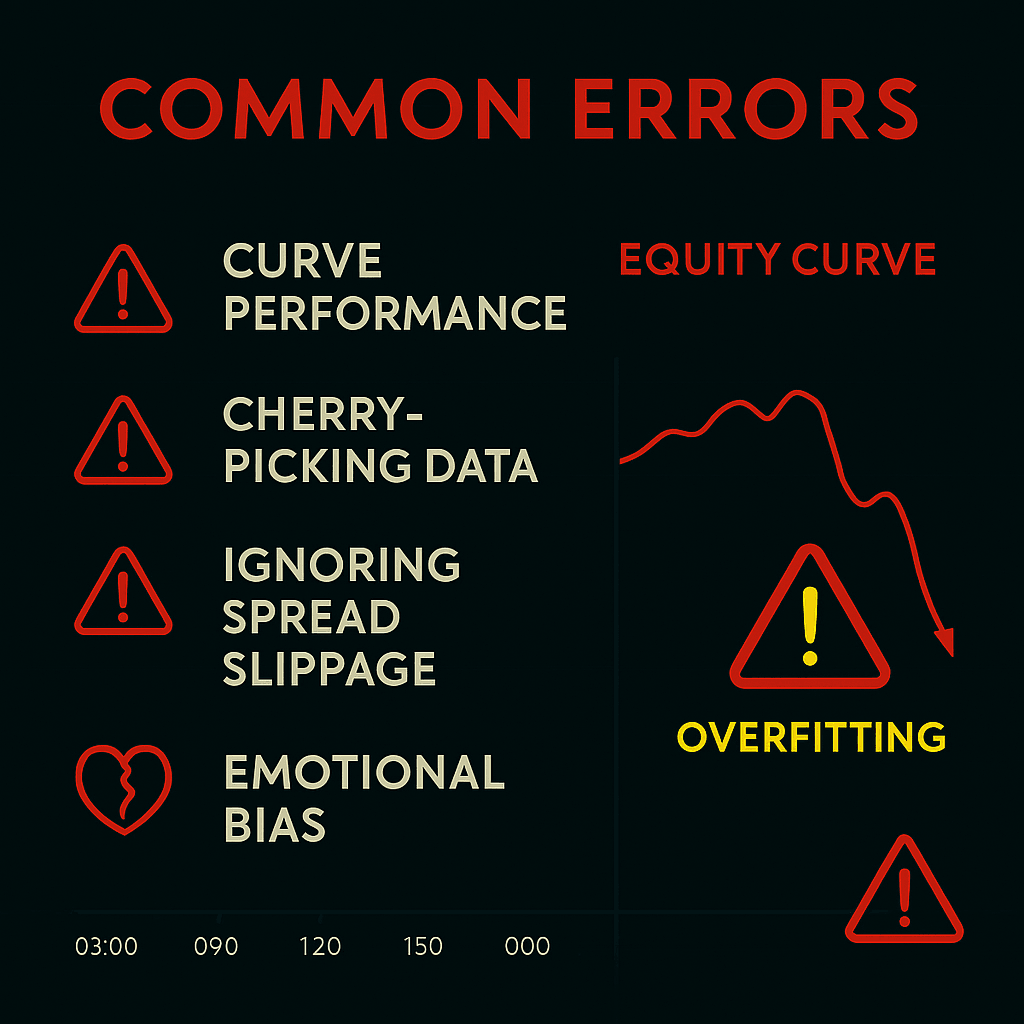
1. Curve Fitting
Adjusting rules to perfectly match past price movement this destroys future performance.
2. Cherry-Picking Market Conditions
Testing only trending or only ranging periods gives false confidence.
3. Ignoring Spread & Slippage
Especially harmful for scalping strategies.
4. Not Considering Psychological Factors
Backtesting doesn’t simulate emotions but live trading will.
📌 Best Tools for Backtesting Forex Strategies
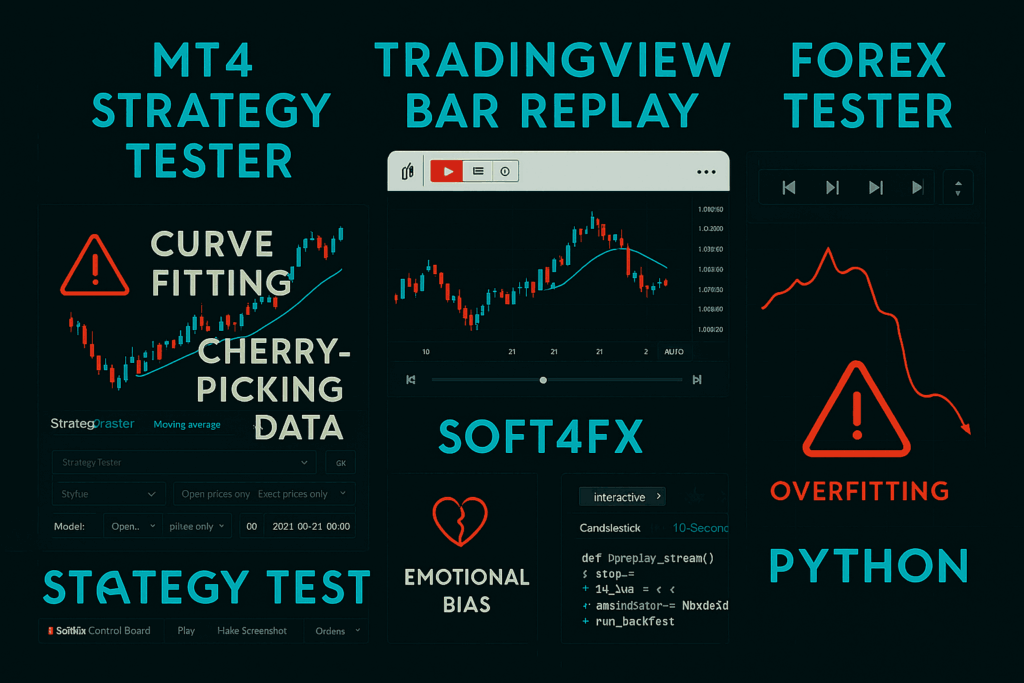
- MT4 Strategy Tester
- TradingView Bar Replay
- Forex Tester 5
- Soft4FX Backtesting Simulator
- Python backtesting frameworks (for advanced traders)
🔚 Final Thoughts
Backtesting is not just analysis, it’s an art.
It gives you clarity, confidence, and a realistic understanding of your strategy’s performance.
If you want to trade like a professional, mastering backtesting is one of the biggest steps toward long-term success.
🧠 FAQs
Q1. How many trades should I backtest?
At least 100–200 trades for reliable statistical accuracy.
Q2. Which timeframe is best for backtesting?
Higher timeframes (H1, H4, Daily) produce more reliable data and fewer false signals.
Q3. How long should a backtesting period be?
At least 3 years ideally 5 to 10 years if possible.
Q4. Does a high win rate mean a strategy is good?
Not necessarily. Many profitable strategies have win rates of 40–60% but great risk-to-reward ratios.
Q5. Can backtesting guarantee future results?
No, but it dramatically improves the probability of success.
👉 Start your journey today—subscribe to our forex pip tips service and see the difference for yourself! Sign Up to get Exclusive Offers