Top 5 Indicators Every Forex Trader Should Know
Posted On - February 20, 2026 | By - FXProfitBuilder | Categories - Tools and Technology
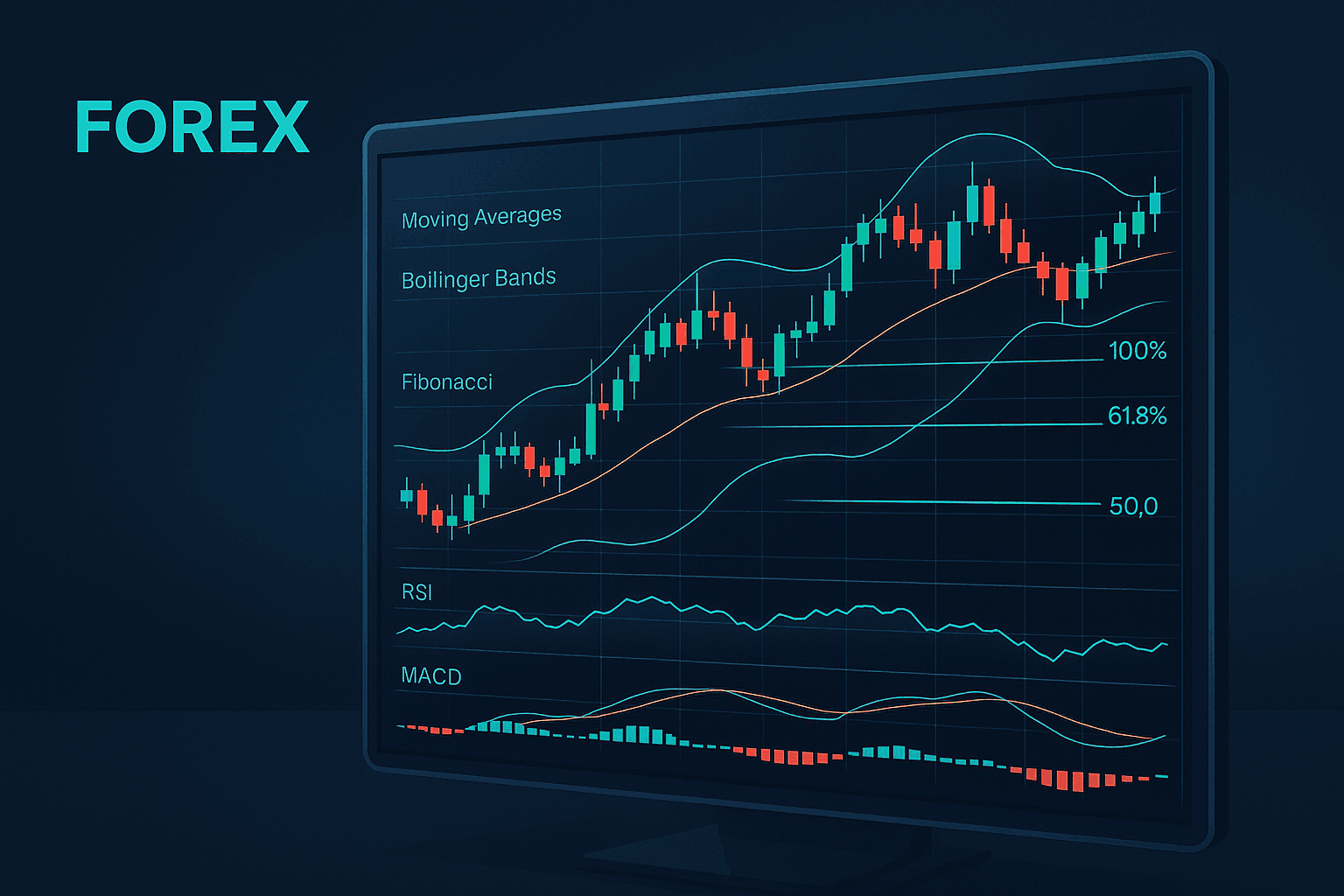
In Forex trading, indicators help transform raw price data into meaningful insights. While no indicator guarantees success, the right ones can improve decision-making, identify trends, and refine entry and exit points.
Let’s explore the five essential indicators every Forex trader should understand and how they support structured trading.
1️⃣ Moving Averages (MA)
What it does:
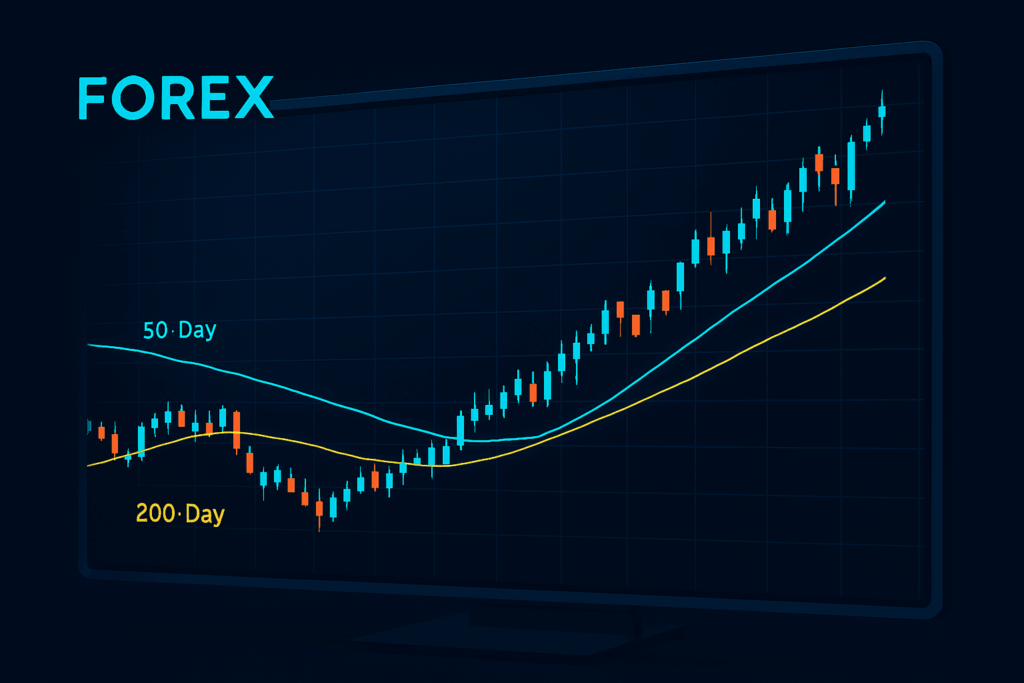
Moving averages smooth price data to show the overall trend direction.
Why it matters:
- Identifies trend direction (uptrend or downtrend)
- Acts as dynamic support or resistance
- Helps filter out market noise
Common types:
- Simple Moving Average (SMA)
- Exponential Moving Average (EMA)
Many traders use the 50-day and 200-day moving averages to identify long-term trends.
2️⃣ Relative Strength Index (RSI)
What it does:
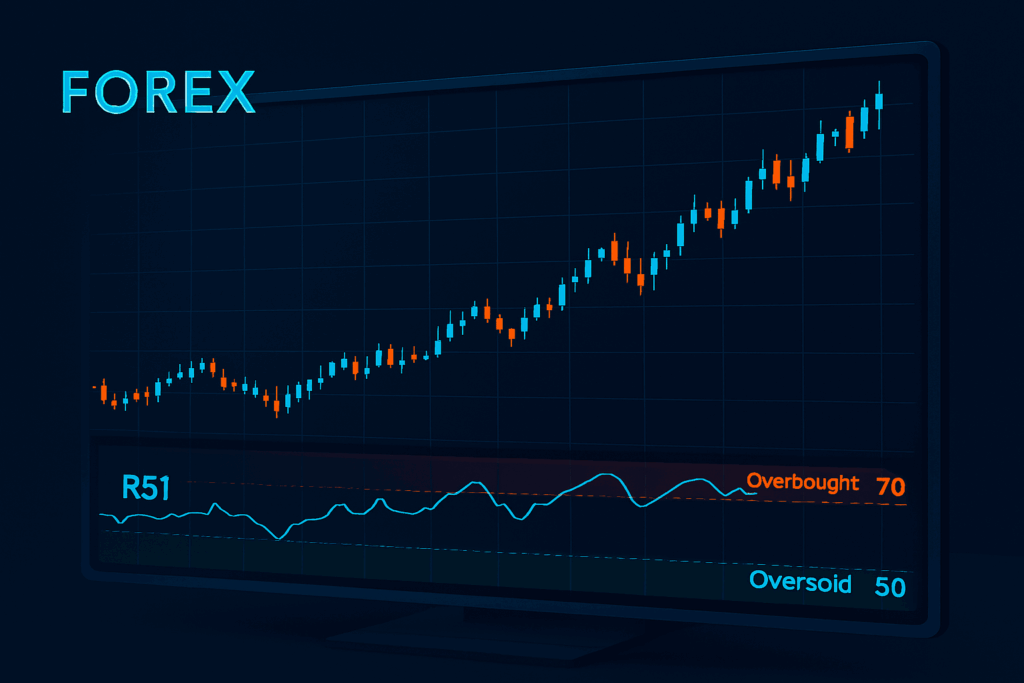
RSI measures market momentum and shows whether a currency pair is overbought or oversold.
Key levels:
- Above 70 → Overbought
- Below 30 → Oversold
Why it matters:
- Helps identify potential reversals
- Confirms trend strength
- Prevents buying at market peaks or selling at bottoms
3️⃣ MACD (Moving Average Convergence Divergence)
What it does:
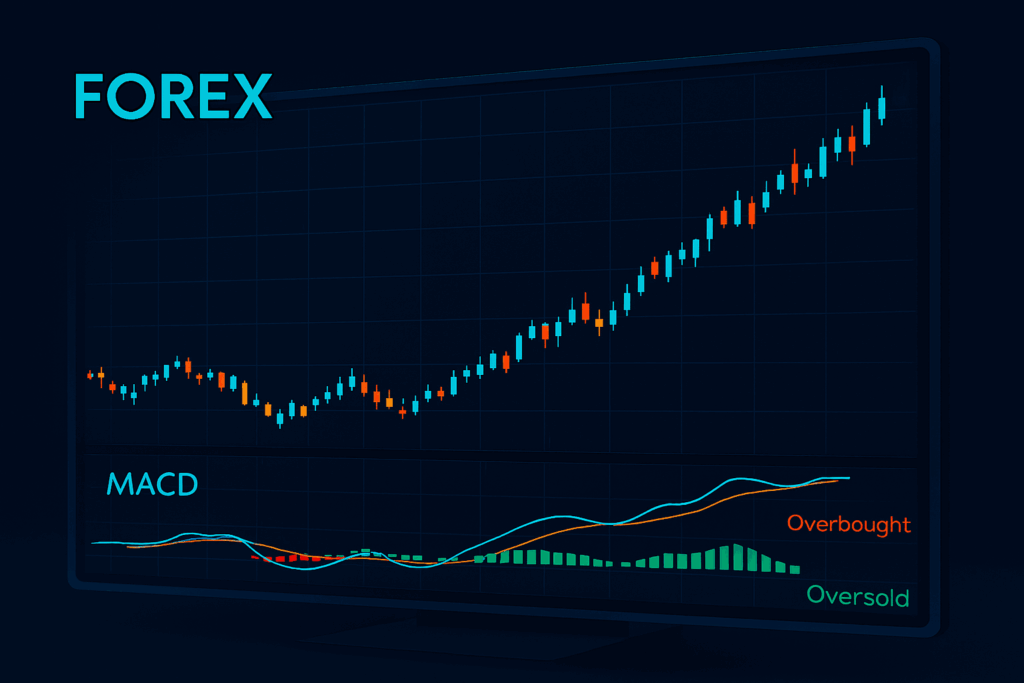
MACD measures momentum and trend changes by comparing two moving averages.
Why it matters:
- Identifies trend shifts
- Confirms breakout strength
- Helps detect divergence
When the MACD line crosses above the signal line, it may signal bullish momentum.
4️⃣ Bollinger Bands
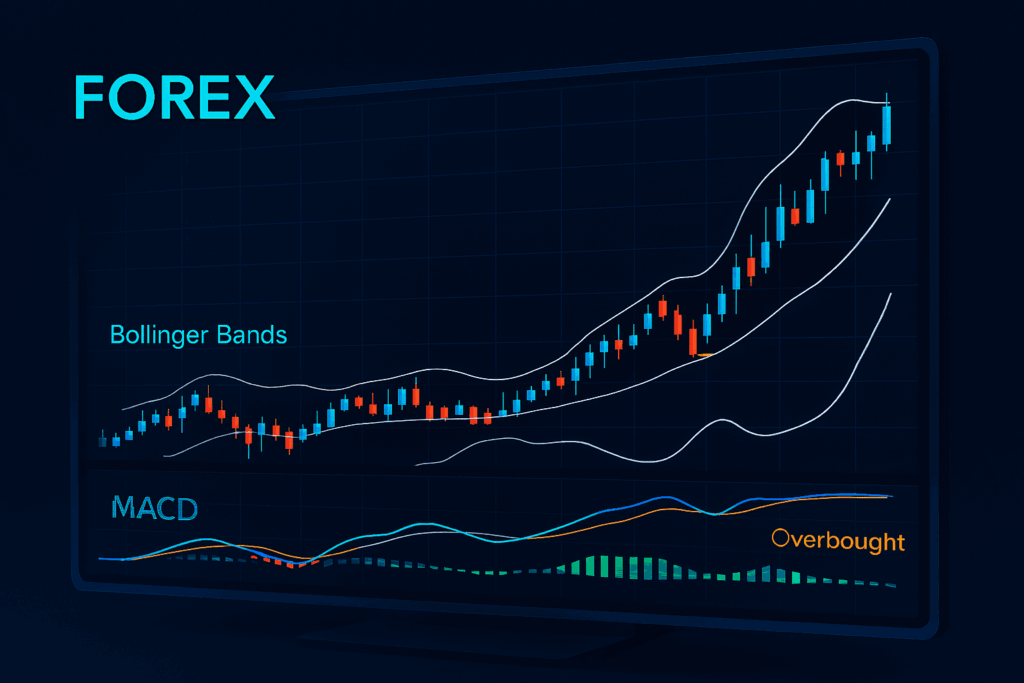
What it does:
Bollinger Bands measure market volatility.
They consist of:
- A moving average (middle band)
- An upper band
- A lower band
Why it matters:
- Identifies volatility expansion or contraction
- Helps detect overbought/oversold conditions
- Useful in range-bound markets
When price touches the outer bands, volatility is high.
5️⃣ Fibonacci Retracement
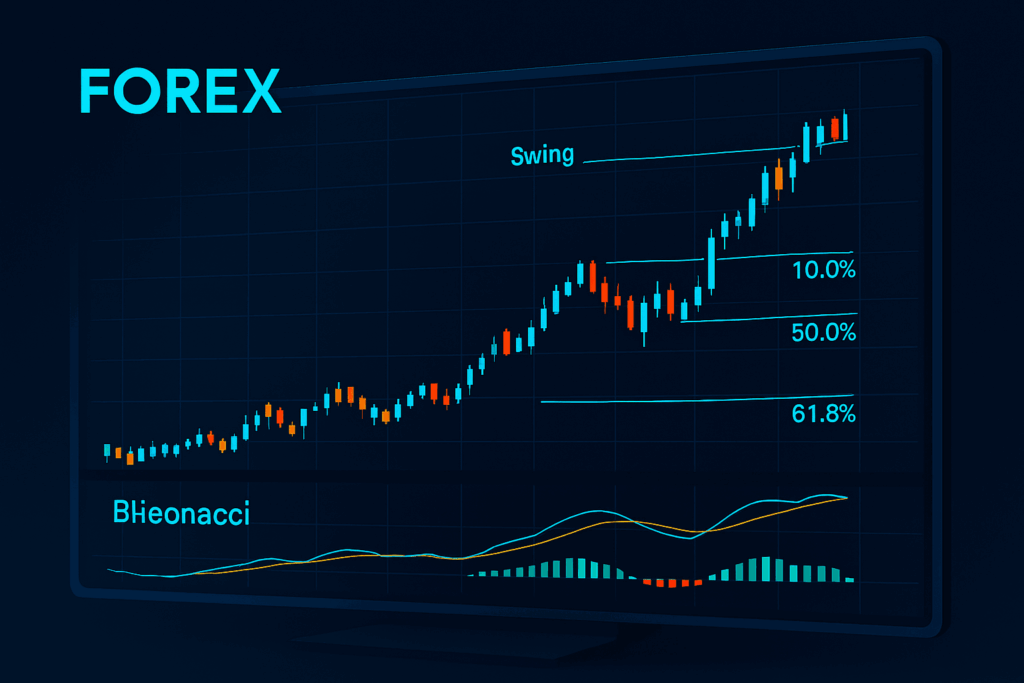
What it does:
Fibonacci levels identify potential support and resistance zones based on retracement percentages.
Common levels:
- 38.2%
- 50%
- 61.8%
Why it matters:
- Helps identify pullback entry points
- Works well in trending markets
- Supports risk-to-reward planning
⚖️ Important Reminder

Indicators are tools not guarantees.
The mistake many traders make:
- Using too many indicators
- Waiting for perfect alignment
- Overcomplicating simple strategies
Professional traders combine:
- Clear structure
- Risk management
- Consistency
FXProfitBuilder signals are built using structured analysis methods, helping remove guesswork and emotional bias from trading decisions.
🔚 Final Thoughts

Mastering a few reliable indicators is far more powerful than using dozens.
Focus on:
- Trend direction
- Momentum
- Volatility
- Risk control
Simple systems executed consistently outperform complicated systems executed emotionally.
❓ FAQs
Q1: Which indicator is best for beginners?
Moving averages and RSI are usually easiest to understand.
Q2: Can I use all five indicators together?
You can, but avoid clutter. Choose 2–3 that complement each other.
Q3: Do indicators work in all market conditions?
Some work better in trends (like moving averages), while others perform well in ranging markets (like RSI).
Q4: Are indicators enough to trade successfully?
No. Risk management and discipline are equally important.
Q5: Should I change indicators frequently?
No. Consistency is key. Master a few before experimenting.
👉 Start your journey today—subscribe to our forex pip tips service and see the difference for yourself! Sign Up to get Exclusive Offers