Understanding Market Microstructure in Forex Trading
Posted On - November 9, 2025 | By - FXProfitBuilder | Categories - Advanced Trading Concepts

Introduction

Forex trading isn’t just about analyzing charts or following macroeconomic news, it’s also about understanding how the market actually works beneath the surface. Market microstructure delves into the mechanics of order flow, liquidity, and price formation elements that shape every tick on your chart. For traders aiming to gain an edge, understanding these dynamics is essential.
What Is Market Microstructure?

Market microstructure refers to the inner workings of the financial markets how trades are executed, how liquidity providers and market makers operate, and how prices are formed in real-time. In Forex, it explores how the decentralized market structure impacts spreads, slippage, and price movements.
Unlike centralized stock exchanges, the Forex market relies on a network of banks, brokers, and institutions meaning that liquidity and price quotes can vary slightly across platforms.
Key Components of Forex Market Microstructure

1. Order Flow
Order flow represents the total buy and sell orders in the market. Institutional traders often analyze order flow to anticipate short-term price moves. A surge in buy orders can push prices up, while an imbalance in sell orders can lead to a quick drop.
2. Liquidity Providers
Liquidity providers are large institutions (like banks) that supply bid and ask quotes, ensuring continuous trading. The depth of liquidity affects spreads tighter liquidity means narrower spreads and smoother price action.
3. Spreads and Slippage
Spreads are the difference between the bid and ask price. During high volatility or low liquidity periods (such as news releases), spreads widen, and slippage the difference between the expected and actual execution price increases.
4. Market Makers and ECNs
- Market Makers: They provide fixed spreads and act as counterparties to traders’ orders.
- ECN (Electronic Communication Network) Brokers: These connect traders directly to liquidity providers for variable spreads and faster execution.
Understanding the type of broker you use can help you minimize execution-related losses.
Why Market Microstructure Matters to Traders

- Improved Entry and Exit Timing – Knowing how liquidity flows helps you avoid entering during thin market conditions.
- Reduced Trading Costs – Recognizing spread dynamics can help you choose better trading hours.
- Better Risk Management – Understanding slippage and execution types can help you size positions wisely.
- Sharper Short-Term Analysis – Order flow and tick data can reveal short-term momentum before it’s visible on traditional indicators.
Common Microstructure Patterns Traders Can Use
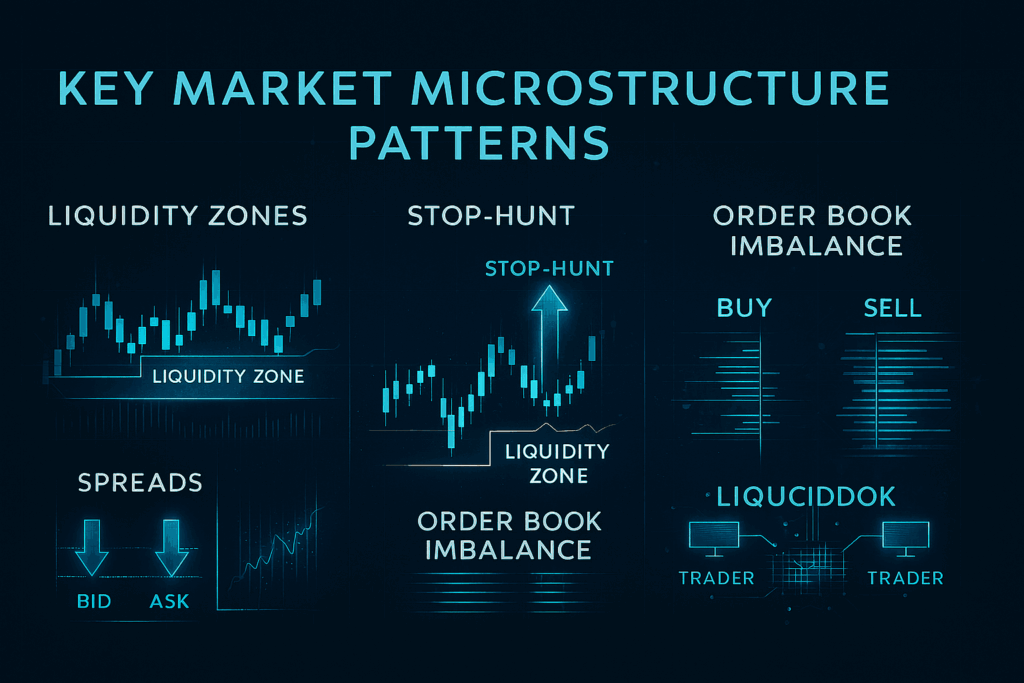
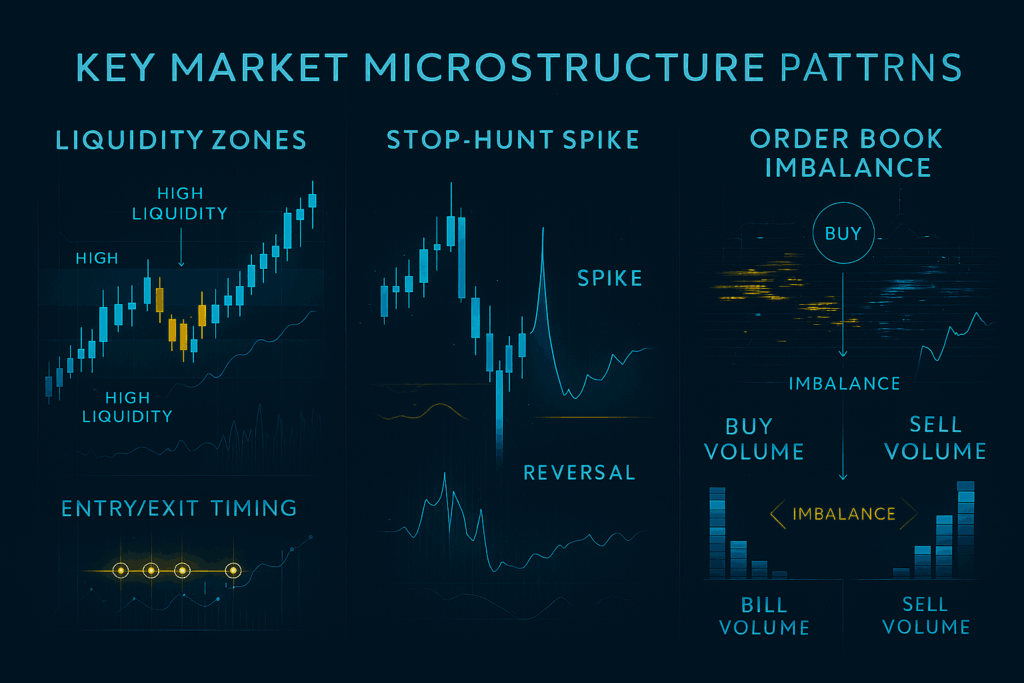
- Liquidity Zones: Areas where large orders cluster (often near support/resistance).
- Stop-Hunt Patterns: Price briefly breaks a level to trigger stops before reversing.
- Order Book Imbalances: Can signal potential reversals when one side dominates.
These patterns are especially valuable for scalpers and day traders.
Practical Tips for Applying Market Microstructure Concepts
- Trade during high-liquidity sessions (London and New York overlap).
- Avoid major news releases unless you specialize in volatility trading.
- Watch volume spikes they often reveal institutional activity.
- Use ECN accounts if precision and tight spreads matter to your strategy.
Conclusion

Mastering market microstructure means understanding why prices move the way they do not just that they move. By studying the interplay between liquidity, order flow, and execution, Forex traders can make smarter, data-driven decisions and improve their consistency in every market condition.
FAQ Section

Q1. What’s the biggest benefit of studying market microstructure for Forex traders?
A1. It helps traders better understand short-term price movements and identify optimal times to enter or exit trades.
Q2. Can retail traders really access order flow data?
A2. While full institutional order books aren’t available, many platforms offer “depth of market” tools and tick volume as useful proxies.
Q3. Does market microstructure affect long-term traders too?
A3. Yes. Even swing and position traders benefit by knowing when spreads widen or execution risks increase, particularly around major events.
👉 Start your journey today—subscribe to our forex pip tips service and see the difference for yourself! Sign Up to get Exclusive Offers