What a Good Forex Signals Service Should Include
Posted On - October 20, 2026 | By - FXProfitBuilder | Categories - Choosing & Buying Signals (High Intent)

Introduction

Choosing a Forex signals service can make trading feel more organised, especially if you are new to the currency markets or have limited time to analyse charts. Instead of searching for every potential trading opportunity yourself, you receive alerts that outline possible trades and the levels you may need to consider.
However, not all Forex signals services provide the same level of information, transparency or support.
Some services send only a currency pair and a direction, while others provide entry levels, stop-loss instructions, take-profit targets, market context and guidance on managing risk. These differences can affect how easily you understand a signal and decide whether it suits your trading plan.
So, what should a good Forex signals service actually include?
A quality service should offer clear and actionable trade information, explain the risks involved, communicate updates promptly and provide transparent subscription terms. It should also help users understand what they are receiving rather than encouraging them to follow alerts blindly.
In this guide, we will explore the essential features to look for, the warning signs to avoid and how to evaluate whether a Forex signals service fits your trading needs.
What Is a Forex Signals Service?
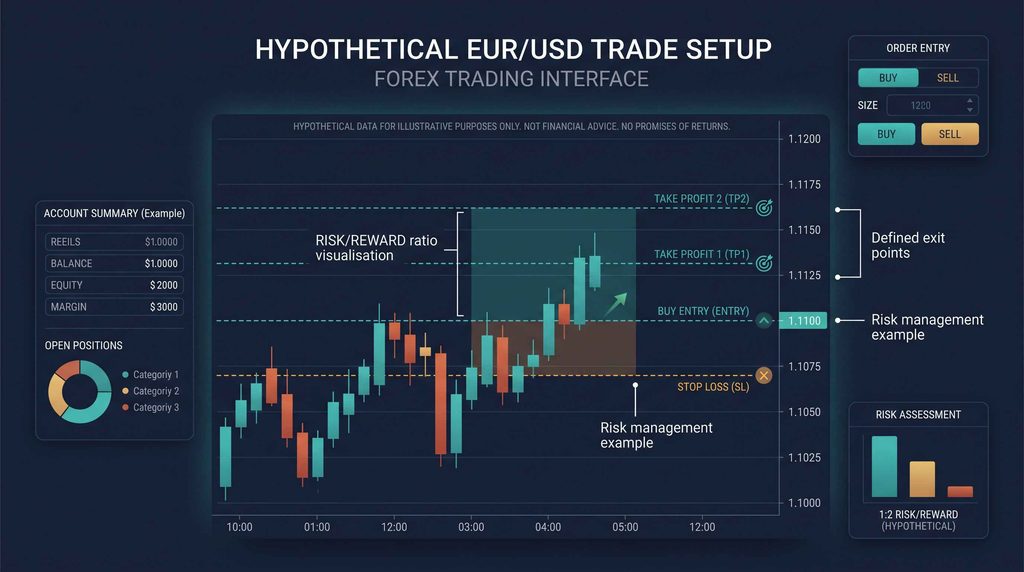
A Forex signals service provides trading alerts that identify potential opportunities in the foreign exchange market.
A typical signal may suggest buying or selling a currency pair at a particular price level, with a proposed stop-loss and one or more take-profit targets.
For example, a hypothetical signal might include:
| Signal detail | Example |
| Currency pair | EUR/USD |
| Direction | Buy |
| Entry level | 1.0850 |
| Stop-loss | 1.0820 |
| Take-profit | 1.0910 |
| Timeframe | Short-term trade |
| Risk information | Review position size before entering |
This is an illustrative example, not a live trading recommendation.
The purpose of a signal is to provide structured information about a potential trade. Depending on the provider, signals may be based on technical indicators, price action, support and resistance, volume analysis, fundamental factors or a combination of methods.
Some services focus only on sending alerts. Others also offer educational resources, market commentary and explanations of their trading approach.
Understanding exactly what a service includes is the first step towards choosing one that meets your needs.
1. Clear Entry Points
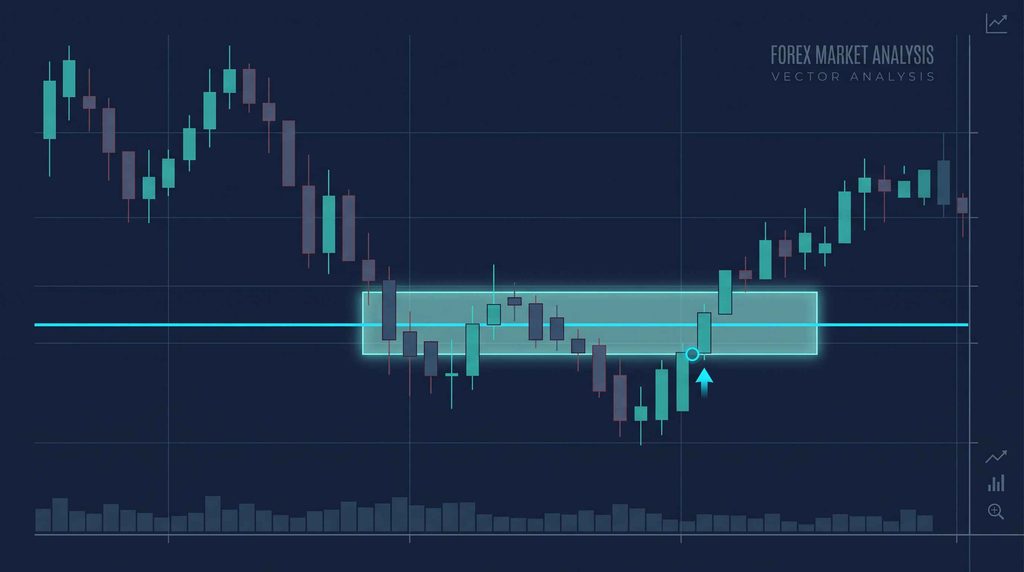
One of the most important features of a Forex signals service is a clearly defined entry point.
An entry point indicates the price level at which the provider considers a potential trade worth evaluating. Without this information, a signal may be difficult to use consistently.
For example, an alert that simply says “Buy GBP/USD” leaves several questions unanswered:
- Should you enter immediately or wait for a particular price?
- Is the opportunity still valid if the market has already moved?
- Should you use a market order or consider a pending order?
- What should you do if the price moves away before you can act?
A more useful signal specifies the intended entry level or clearly explains the conditions under which the trade should be considered.
A good service should also communicate whether a signal is still valid after the market moves. Entering late can significantly change the potential reward relative to the risk.
What to look for: Entry instructions should be clear, timely and easy to understand. The service should explain what happens if the specified entry is missed.
2. Stop-Loss Guidance and Risk Management
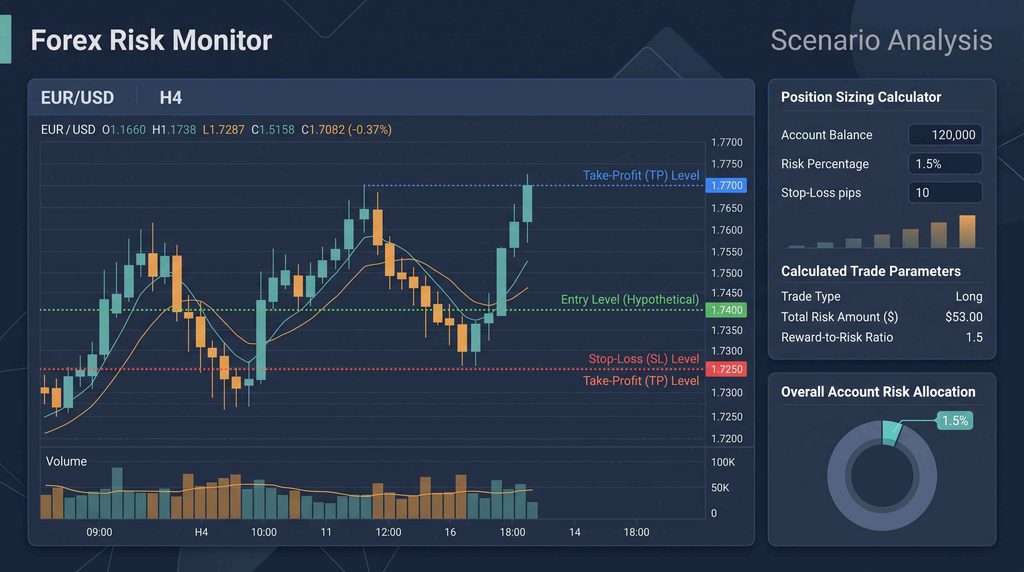
A good Forex signals service should communicate risk as clearly as it communicates potential opportunities.
A stop-loss level identifies a price at which a trade is intended to close if the market moves against the position. It is an important risk-management tool, although execution can differ from the requested price during gaps or periods of poor liquidity.
A service that provides entry levels but gives no meaningful guidance about limiting losses leaves an important part of the trading decision unresolved.
Before subscribing, check whether the provider:
- Supplies a stop-loss level where appropriate.
- Explains how risk relates to the proposed entry.
- Encourages users to choose position sizes responsibly.
- Makes the risks of leverage clear.
- Explains whether stop-loss levels can change.
- Communicates any changes to an active signal.
Position sizing matters because the same price movement can produce very different financial outcomes depending on the trade size and account balance.
For example, two traders might follow the same signal but risk different amounts because their account sizes and position sizes differ.
A signal service should not encourage you to risk more than you can afford to lose, double your position after a loss or increase leverage to recover previous losses.
Remember that a stop-loss does not eliminate all trading risk, and no signal can guarantee a profitable result.
3. Clear Take-Profit Targets
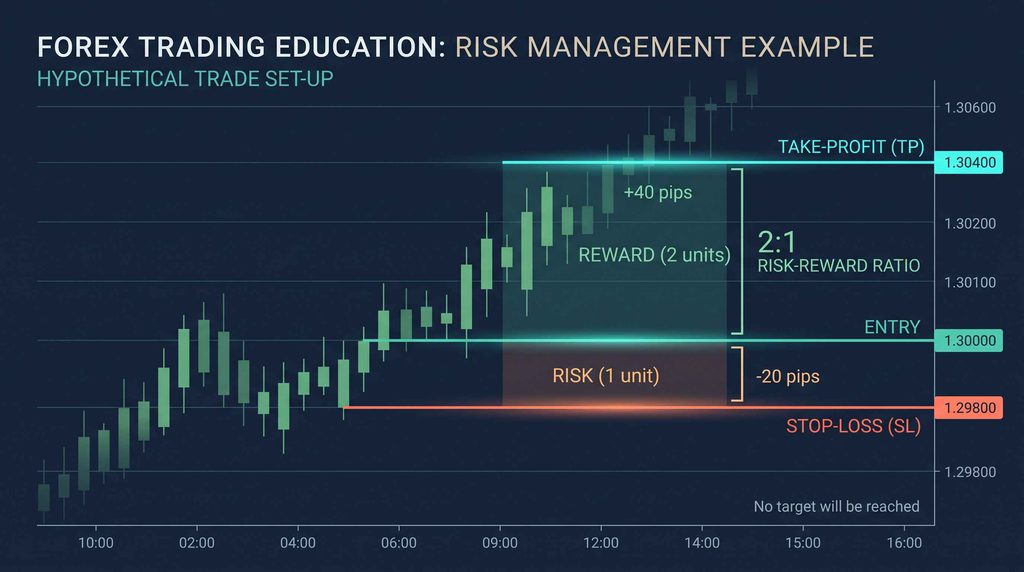
Take-profit targets help explain where a provider expects a trade might reach a potential exit level.
A signal may contain one target or several targets, depending on the provider’s approach. Some strategies use a single exit, while others allow partial exits or different targets.
Clearly communicated targets help traders understand the proposed trade before deciding whether to participate.
For example, if a hypothetical EUR/USD signal has an entry at 1.0850, a stop-loss at 1.0820 and a take-profit at 1.0910, the distance to the target is twice the distance to the stop-loss. This is a planned reward-to-risk ratio of 2:1 before costs and execution differences.
That ratio does not mean the trade has a two-thirds chance of winning, nor does it guarantee a profit. The actual outcome depends on market movement, execution, costs and the strategy’s performance.
When evaluating a service, ask:
- Are take-profit targets included?
- Are multiple targets explained clearly?
- Are partial exits part of the strategy?
- Are changes to targets communicated promptly?
- Are performance claims calculated after relevant trading costs?
A useful signal should help you understand both the potential opportunity and the possible downside.
4. Accurate and Timely Alerts

Forex markets operate around the clock during the trading week, and prices can change quickly when important economic news is released or market liquidity shifts.
That makes timely communication an important feature of a signals service.
An alert may be well researched, but it can become less useful if it arrives after the market has already moved substantially.
A good provider should aim to deliver signals promptly and include enough information for users to identify the relevant trade.
It should also communicate important updates, such as:
- When a signal becomes active.
- When the entry opportunity has passed.
- When a stop-loss or target changes.
- When a trade is closed.
- When a signal is cancelled or no longer valid.
The service should make it easy to distinguish a new signal from an update to an existing one.
Before subscribing, consider how alerts are delivered. They might arrive through a website, email, a messaging platform or another notification system. The important thing is that the delivery method is reliable and that you understand how to interpret the messages.
Timely delivery can help you respond more efficiently, but it cannot guarantee the same execution price for every subscriber.
5. Coverage of Clearly Defined Currency Pairs
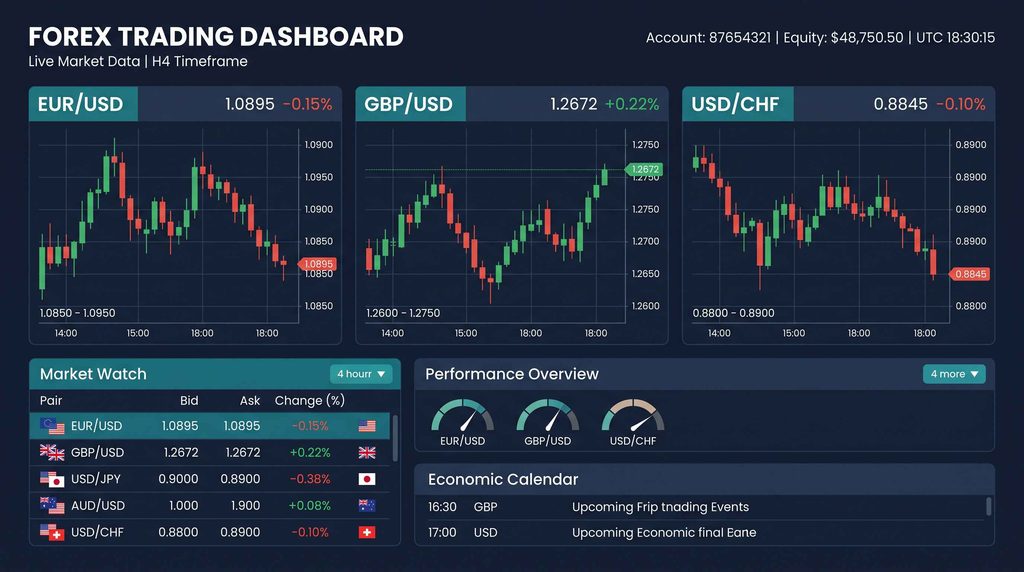
A signals service should explain which currency pairs it covers and why those pairs are included.
Forex providers differ in their approach. Some focus on a small selection of major currency pairs, while others offer alerts across a much larger range of markets.
Neither approach is automatically better. The right choice depends on the strategy, the provider’s expertise and the trader’s ability to monitor the opportunities.
Before choosing a service, find out:
- Which currency pairs are included?
- Are all pairs covered by the same methodology?
- Are signals sent throughout the trading day or only during particular sessions?
- Are there periods when the service does not trade?
- Does the provider explain the characteristics and risks of the selected pairs?
A smaller list of pairs can make a service easier to follow, especially for beginners who want to concentrate on a manageable number of markets.
However, the number of pairs alone is not evidence of quality. What matters is whether the service explains its coverage and delivers the information it promises.
6. A Clear Explanation of the Trading Method

A good Forex signals service should provide a reasonable explanation of how its trading opportunities are identified.
Some providers use technical indicators. Others analyse support and resistance levels, price action, volume, economic developments or a combination of factors.
A provider may have a proprietary model and may not disclose every calculation. That is understandable. However, it should still explain the general approach behind its service in terms users can understand.
For example, a provider could explain whether its signals are primarily based on technical analysis, whether economic announcements are considered and how it identifies potential entry and exit levels.
Look for answers to questions such as:
- What type of analysis informs the signals?
- Which markets and timeframes are covered?
- Are signals generated automatically, manually or through a combination?
- How are changing market conditions handled?
- Are there circumstances in which no signal is issued?
You do not need to become an expert in the provider’s methodology before evaluating the service. You should, however, understand enough to know what you are paying for.
Be cautious of claims that a secret algorithm can predict every market movement or eliminate trading losses.
7. Transparent Performance Information
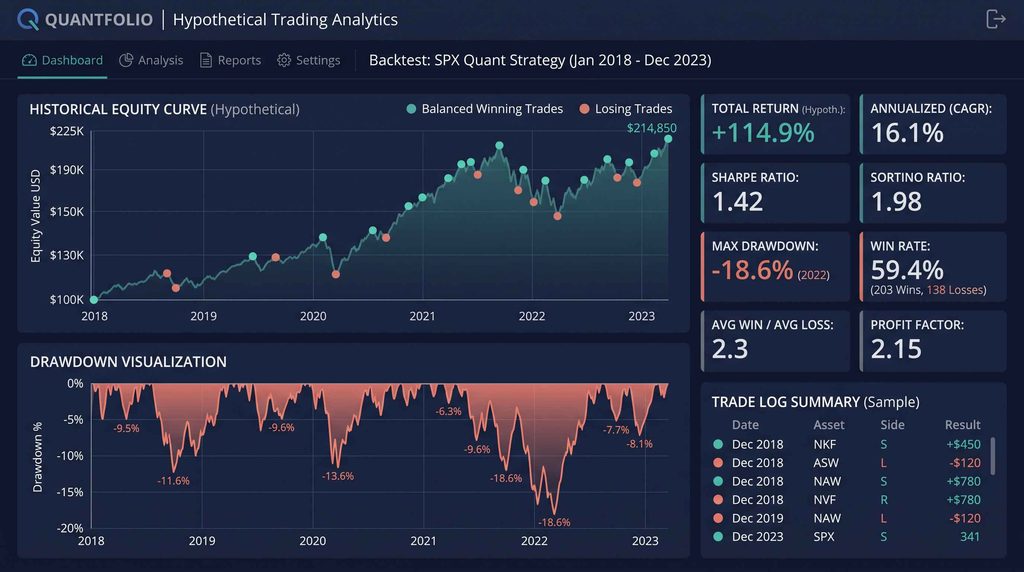
Performance transparency is one of the most important factors when comparing Forex signals services.
A provider may advertise a high win rate, a large number of pips or an impressive account balance. Those figures can attract attention, but they are not enough on their own to establish the quality of a service.
A useful performance record should provide meaningful context.
Where available, look for:
- The period covered by the results.
- The total number of signals or trades.
- Both winning and losing trades.
- Maximum drawdown or other relevant risk information.
- Whether the results are live, demo or hypothetical.
- How spreads, commissions and slippage are treated.
- How open trades and cancelled signals are counted.
- Whether the record has been independently verified.
For example, a service reporting a high win rate may still lose money if its losing trades are substantially larger than its winning trades.
Similarly, a provider reporting a large number of pips should explain how those pips were calculated and whether the figures reflect realistic execution.
Past performance does not guarantee future results, even when a record is complete and independently verified.
A trustworthy evaluation process looks beyond headline numbers and considers both performance and risk.
8. Realistic Claims About Results

A quality Forex signals provider should set realistic expectations about trading.
Be wary of promises such as guaranteed monthly profits, risk-free returns or a fixed income regardless of market conditions.
Forex trading involves uncertainty. Economic announcements, unexpected events, liquidity changes and execution differences can affect trade outcomes.
Even a strategy that has performed well over a long period can experience losing trades or periods of drawdown.
Before subscribing, ask yourself whether the provider explains these limitations clearly.
Responsible communication should make it clear that:
- Signals identify potential opportunities, not guaranteed outcomes.
- Losses are possible.
- Results can vary between traders.
- Trading costs affect net returns.
- Leverage can magnify losses as well as gains.
- No subscription removes market risk.
A provider that discusses risk openly gives you a more useful basis for making an informed decision than one that focuses exclusively on potential profits.
9. Regular Updates and Clear Trade Management
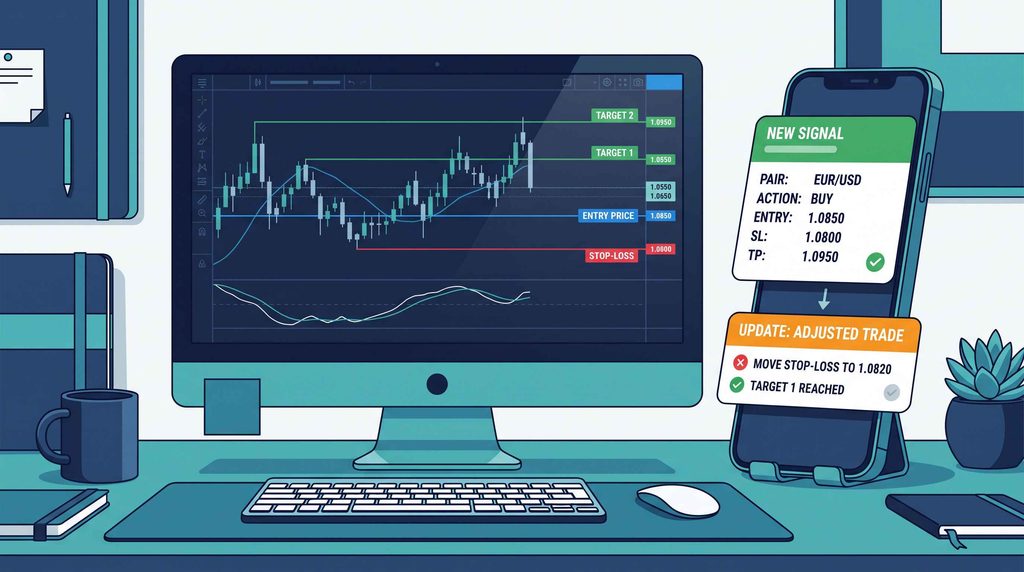
A signal is not always a one-time message.
Depending on the strategy, a provider may need to communicate changes to entry conditions, stop-loss levels, take-profit targets or the status of an active trade.
A good service should explain how these updates work.
For example, subscribers should be able to distinguish between an initial entry alert and a later message that changes the trade plan. If a signal is cancelled, the provider should communicate that clearly rather than leaving users to guess.
The service should also explain whether users are expected to manage open trades themselves and what happens when they cannot act immediately.
These details are particularly important for people who cannot monitor the market continuously.
If the provider uses messaging alerts, clear formatting and identifiable updates can help prevent confusion. Users should still verify that they are following the correct signal and understand the consequences before placing or modifying an order.
10. Educational Resources for Beginners

A good Forex signals service should ideally help users understand the information they receive.
Signals can reduce the amount of independent market research a subscriber needs to perform for each potential trade, but they do not automatically teach someone how the Forex market works.
Beginners benefit from educational material covering subjects such as:
- Currency pairs and exchange rates.
- Entry, stop-loss and take-profit levels.
- Position sizing and leverage.
- Risk-to-reward ratios.
- Spreads and trading costs.
- Market volatility and economic news.
- The difference between a signal and a guaranteed result.
Some services provide glossaries, tutorials, chart explanations, frequently asked questions or guidance on reading alerts.
This information can help users make more informed decisions rather than following every signal without understanding it.
Educational support does not need to be an extensive course. Even clear explanations of the service’s alert format and risk considerations can be valuable.
The key is that subscribers should understand what the signal means, what it does not mean and what decisions remain their responsibility.
11. Flexible Ways to Follow Signals
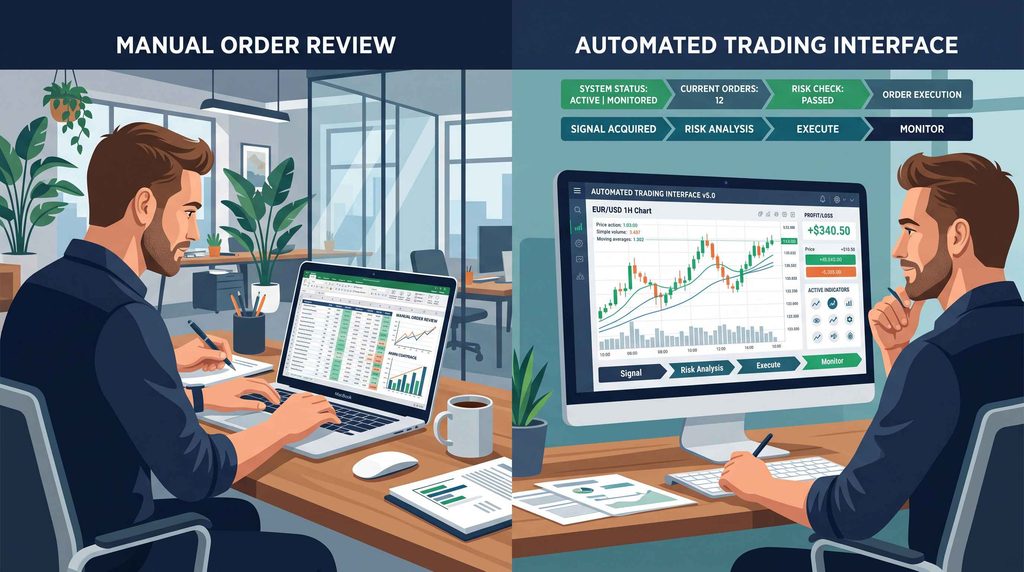
Different traders have different levels of experience, schedules and technical knowledge.
Some prefer to review every signal and place orders manually. Others may use compatible trading tools to automate parts of their workflow.
A signals service should explain which methods it supports and what users need to do.
For manual trading, the service should make its instructions understandable and accessible. For automated use, it should explain any compatibility requirements, setup steps, limitations and risks.
Before choosing a service, consider:
- Can signals be followed manually?
- Is automation supported, and under what conditions?
- Are additional software or broker requirements involved?
- Is technical support available for the advertised workflow?
- Can users understand and supervise what the system is doing?
Automation can make trade execution more consistent with predefined instructions, but it also introduces technical risks. Software errors, connectivity problems, broker differences and changing market conditions can affect results.
Never assume that automated execution means a strategy is risk-free or that you can safely ignore your account.
12. Transparent Pricing and Subscription Terms

A good signals service should make its costs easy to understand before you pay.
The price is only one part of the decision. You should also understand what the subscription includes and whether additional charges apply.
Check the following details:
- Monthly or annual subscription price.
- What features are included in the plan.
- Whether payments renew automatically.
- How to cancel a subscription.
- Whether a free trial converts into a paid plan.
- Refund eligibility and conditions.
- Whether separate software or broker fees may apply.
Do not assume a more expensive service is better simply because it charges a premium price.
Likewise, a free service is not necessarily unreliable. Compare the information, transparency and terms rather than judging quality by price alone.
If a provider offers a trial, use it to assess the clarity of the alerts, delivery method, support and usability. A short trial cannot establish long-term profitability or prove that a provider is legitimate.
13. Responsive Customer Support

Customer support is another useful feature to consider.
Before subscribing, you may have questions about the signal format, subscription terms, supported currency pairs or how to access the service. After joining, you may need help understanding a message or resolving a technical issue.
A provider should explain how to contact support and what type of assistance is available.
Look for clear information about:
- Contact methods.
- Support availability and expected response times.
- Subscription and billing assistance.
- Technical setup guidance, if offered.
- Help with understanding signal terminology.
Good support should explain the service without pressuring you to deposit more money or promising to recover trading losses.
It is also important to understand the limits of the support offered. Help with interpreting a signal is not necessarily personalised financial advice, and a provider should be clear about that distinction.
14. Clear Business Information and Honest Marketing

Before trusting a provider with your money, check that you can identify the business behind the service.
A professional website alone does not prove that a company is reliable. You should look for consistent business details, accessible terms and conditions, a clear privacy policy and a description of the service.
If a provider claims to be regulated or authorised, verify the claim using the relevant regulator’s official resources. Requirements depend on the jurisdiction and the activities the business carries out, so do not assume that every signals service has identical regulatory obligations.
Also be cautious if the provider:
- Guarantees profits.
- Uses pressure tactics to force immediate payment.
- Refuses to explain its subscription terms.
- Publishes performance figures without meaningful context.
- Insists you use an unfamiliar broker without a clear explanation.
- Requests your passwords or unrestricted access to financial accounts.
These are reasons to investigate further before making a payment. A provider’s transparency should be evaluated alongside the quality of its actual service.
15. A Trial or Demonstration Option

A trial or demonstration option can help you understand how a service works before committing to a longer subscription.
During a trial, you can assess whether the alerts arrive in a format you understand, whether the service covers the currency pairs you are interested in and whether the delivery method fits your routine.
You can also observe how the provider communicates losing trades, signal updates and changes in market conditions.
A practical trial checklist includes:
- Check whether the trial is genuinely free and whether payment details are required.
- Read the cancellation and renewal conditions.
- Observe how clearly entry, stop-loss and take-profit information is presented.
- Check whether updates are timely and understandable.
- Record the signals consistently rather than reviewing only the successful examples.
- Avoid judging the entire strategy on a small number of trades.
A trial is an opportunity to evaluate usability and transparency. It is not proof that future trades will be profitable, and a short sample may not represent performance over different market conditions.
How FXProfitBuilder Fits Into These Considerations
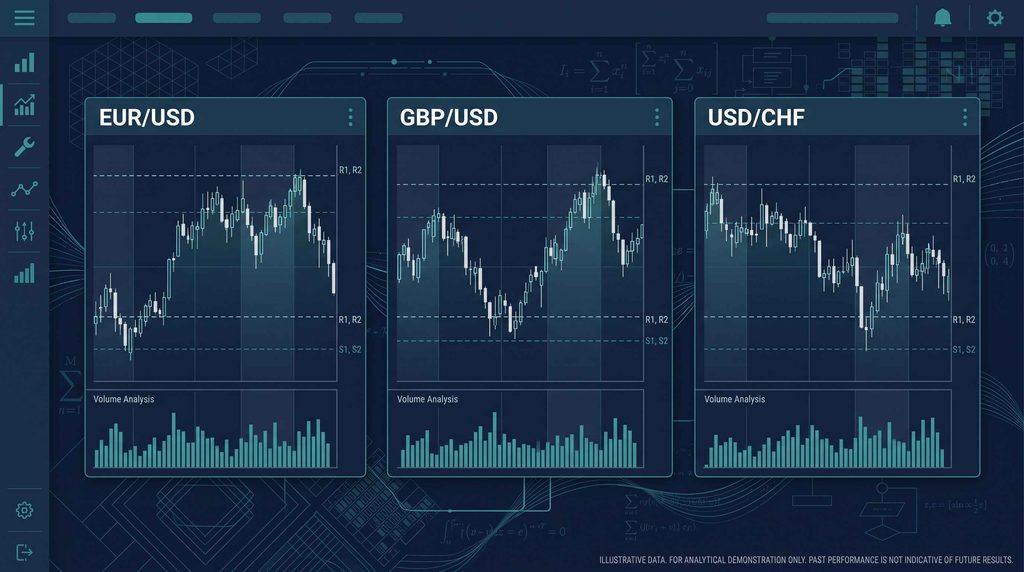
When evaluating a Forex signals service, it is useful to compare the provider’s actual offering with the features discussed in this guide.
FXProfitBuilder provides signals for three currency pairs:
- EUR/USD
- GBP/USD
- USD/CHF
The service describes its approach as using volume indicators, support and resistance analysis and a mathematical model to identify potential trading opportunities. Its alerts are intended to provide entry and exit guidance, and signals can be followed manually or mechanically.
For someone considering FXProfitBuilder, the same evaluation questions apply as they would to any other provider:
- Do the alerts include the information you need to understand a proposed trade?
- Are the signal instructions and updates clear?
- Do you understand how to manage risk when following an alert?
- Are the service’s pricing and subscription terms suitable for your budget?
- Can you evaluate performance claims using meaningful evidence?
- Does the service fit your experience level and trading routine?
FXProfitBuilder’s stated approach and currency-pair coverage describe its offering, but they should not be treated as independent proof of profitability. Prospective subscribers should review the service details and evaluate any performance claims for themselves.
The aim is to choose a service based on its features, transparency and suitability not simply on advertising or promises of results.
A Checklist for Choosing a Good Forex Signals Service

Before paying for a subscription, use this checklist to compare your options.
- Clear entry instructions.
- Stop-loss guidance and sensible risk-management information.
- Clearly defined take-profit targets where applicable.
- Timely alerts and understandable updates.
- A clearly stated list of supported currency pairs.
- An understandable explanation of the trading methodology.
- Performance information with meaningful context.
- Realistic statements about potential results and losses.
- Clear subscription prices, renewal rules and cancellation terms.
- Educational material or guidance for understanding signals.
- A clearly explained manual or automated workflow, where offered.
- Accessible customer support.
- Verifiable business details and regulatory claims where applicable.
- A trial or demo option, if available and suitable.
Not every service will offer every feature, and the importance of each one depends on your needs. However, missing risk information, misleading performance claims or unclear payment terms should never be ignored.
Final Thoughts

A good Forex signals service should offer more than a stream of buy and sell alerts. It should provide clear trade information, explain the risks, communicate updates, make its terms transparent and give subscribers enough information to understand the service they are using.
Entry points, stop-loss guidance, take-profit targets and timely notifications help make signals easier to interpret. Transparent performance information and realistic expectations help traders evaluate claims more carefully. Educational resources and responsive support can make the service more accessible, particularly for beginners.
Most importantly, no Forex signals service can guarantee profits or remove the risks of trading.
Take the time to compare providers, read the terms and assess the evidence behind their claims. If a service pressures you to pay immediately or promises risk-free returns, step back and investigate.
The right service is not necessarily the one that sends the most signals or advertises the biggest returns. It is the one whose features, communication, transparency and risk information you can understand and that fits your own trading needs and financial circumstances.
FAQ

1. What should a good Forex signals service include?
A good service should provide clear entry instructions, stop-loss guidance, take-profit targets where applicable, timely alerts, understandable updates, transparent pricing and honest information about risk. Educational resources and customer support can also be useful.
2. Are stop-loss levels essential in Forex signals?
Stop-loss guidance is an important risk-management feature because it helps define when a trade is intended to exit if the market moves against it. However, stop-loss orders cannot guarantee an exact execution price in every market condition or eliminate all risk.
3. Should Forex signals include take-profit targets?
Take-profit targets help communicate the provider’s proposed exit levels. They are useful for understanding a trade’s planned reward relative to its risk, although reaching a target is never guaranteed.
4. How can I check whether Forex signals are reliable?
Review the provider’s complete performance information where available, including losing trades, drawdowns, trading costs and the period covered. Check whether results are live or hypothetical, and look for independent verification. Past results cannot guarantee future performance.
5. Is a high Forex signals win rate a sign of quality?
Not by itself. A high win rate may hide large losses, high trading costs or an incomplete record. Consider the size of wins and losses, drawdowns, costs and the overall performance record.
6. Are free Forex signals services worth using?
They can be useful for learning about signal formats and evaluating a service’s communication. However, free access does not prove quality or reliability. Check the provider’s identity, methodology, risk information and any conditions attached to the service.
7. Do beginners need a Forex signals service with educational resources?
Educational resources can help beginners understand currency pairs, entry levels, stop-losses, take-profit targets and risk management. Signals should not replace learning the basics or understanding the risks of trading.
8. Is automated Forex signal execution better than manual trading?
Neither method is automatically better for everyone. Manual execution gives users more direct control over each order, while automation can follow predefined instructions. Both approaches carry risks, and automation introduces additional technical considerations.
9. Can a Forex signals trial prove that a service is profitable?
No. A trial can help you evaluate usability, communication and the information provided. A short trial cannot establish long-term profitability, and a small number of trades may not represent performance across different market conditions.
10. How many currency pairs should a Forex signals service cover?
There is no ideal number for every trader. A smaller selection can be easier to follow, while broader coverage may offer more opportunities but require more attention. Evaluate the provider’s methodology, your available time and the risks of each market.
11. How much should I pay for a Forex signals service?
There is no universal fair price. Compare the subscription cost with the features, support, transparency and terms provided. Never assume a more expensive service is more profitable, and do not subscribe using money you need for essential expenses.
12. Can a Forex signals service guarantee profits?
No. Forex markets are uncertain, and all trading strategies can experience losses. Be sceptical of providers promising guaranteed returns, risk-free trading or a fixed income regardless of market conditions.
👉 Start your journey today—subscribe to our forex pip tips service and see the difference for yourself! Sign Up to get Exclusive Offers