Why Trade Just 3 Currency Pairs Instead of Twenty?
Posted On - October 30, 2026 | By - FXProfitBuilder | Categories - Currency Pairs (EUR/USD, GBP/USD, USD/CHF)
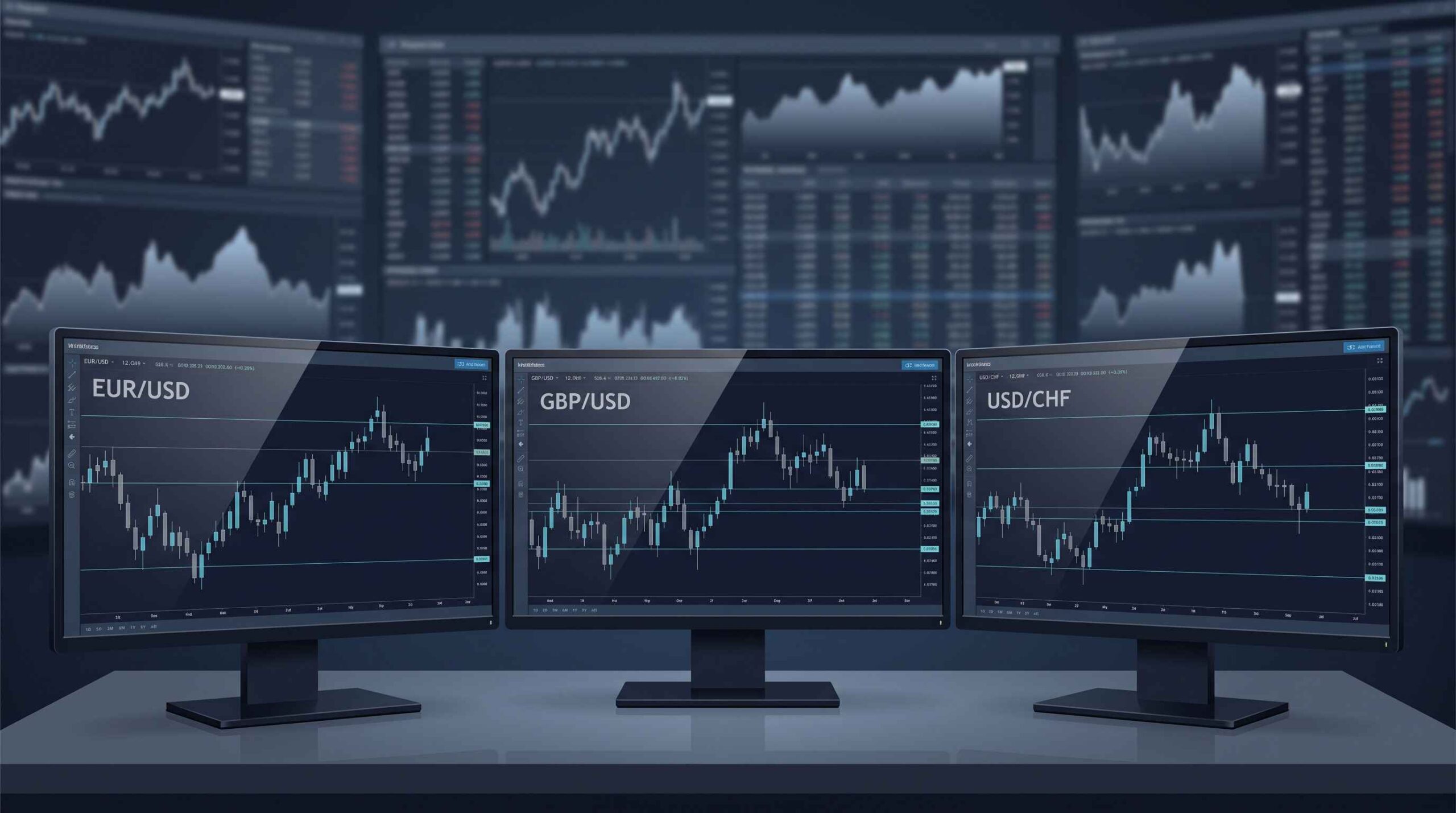
When you first discover forex trading, it can be tempting to watch every currency pair available on your trading platform. With dozens of options, it may seem that trading twenty pairs offers twenty times as many opportunities as trading just three.
But more markets do not automatically mean better trading decisions.
Monitoring too many currency pairs can make it harder to follow economic news, recognise familiar price behaviour, manage risk and stick to a consistent strategy. For many beginners and busy traders, focusing on a small group of carefully selected pairs can make the trading process more manageable.
At FXProfitBuilder, the focus is on three major currency pairs: EUR/USD, GBP/USD and USD/CHF. This focused approach gives traders a defined group of markets to monitor rather than requiring them to follow every available pair.
In this guide, we explain why trading three currency pairs may be a practical approach, what you can learn by specialising, and when it might make sense to expand your watchlist.
1. More Currency Pairs Do Not Automatically Mean More Profits

Forex platforms offer a wide range of currency pairs, from widely traded majors to less commonly traded exotic pairs. Seeing so many choices can create the impression that a successful trader should monitor as many markets as possible.
In reality, every additional pair requires attention.
You need to understand what influences its currencies, identify relevant price levels, consider economic announcements and decide whether a potential trade meets your strategy’s rules. Doing this across twenty pairs can become difficult, particularly if you have a full-time job or are still learning the basics.
A larger watchlist can also encourage overtrading. When traders constantly search for opportunities, they may begin taking weaker setups simply because they want to be active.
A smaller watchlist can help you focus on quality rather than quantity. The goal is not to trade every market movement. It is to identify opportunities that fit a defined plan and accept that sometimes there will be no suitable trade.
Remember: Trading fewer pairs does not guarantee better results. Your strategy, execution, position sizing and risk management remain essential.
2. You Can Understand Your Chosen Markets More Deeply

Every currency has its own economic influences, central bank policies and reactions to market events.
For example, the euro is affected by European Central Bank policy and economic conditions across the euro area. The British pound responds to UK economic developments and Bank of England decisions. The Swiss franc can be influenced by Swiss National Bank policy and shifts in global risk sentiment.
The US dollar is especially important because it appears in all three pairs in the FXProfitBuilder watchlist.
By following EUR/USD, GBP/USD and USD/CHF consistently, you can build familiarity with the currencies involved and the economic announcements that may affect them.
Over time, this repeated observation can help you ask more informed questions:
- Is a currency moving because of an interest-rate announcement?
- Is the price reacting to an important support or resistance level?
- Are the euro and pound moving in a similar direction against the dollar?
- Is a sudden move associated with a major economic release?
- Does the current market condition fit the strategy you are following?
You will still need to research and practise, but a focused watchlist gives you fewer markets to study in depth.
3. Three Pairs Can Make Market Analysis More Manageable
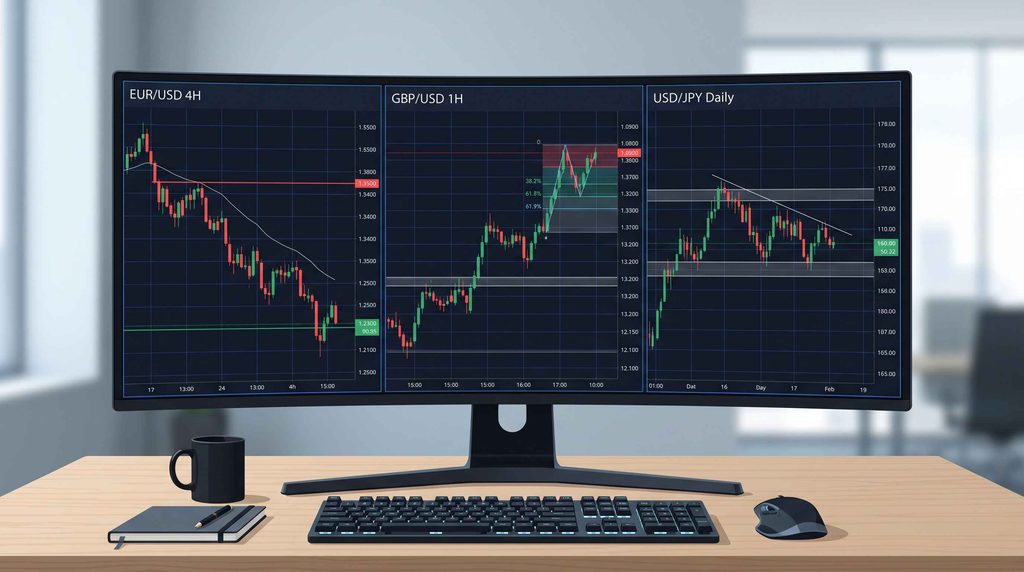
Technical analysis involves studying price behaviour, trends, support and resistance, momentum and possible entry or exit areas.
When you monitor twenty pairs, you must repeat much of this work across many different charts. Important levels can be missed, and you may feel pressure to check the markets constantly.
With three pairs, you can establish a regular analysis routine.
For example, you could:
- Check the economic calendar for important announcements affecting the euro, pound, US dollar and Swiss franc.
- Review the broader trend on each selected pair.
- Mark relevant support and resistance areas.
- Identify whether a potential setup meets your trading rules.
- Calculate the appropriate position size before entering a trade.
- Record the outcome and review your decisions later.
This process can be especially useful for beginners because it encourages repetition and consistency. Instead of jumping between charts, you can spend more time learning why a setup did or did not meet your criteria.
4. Why Focus on EUR/USD, GBP/USD and USD/CHF?
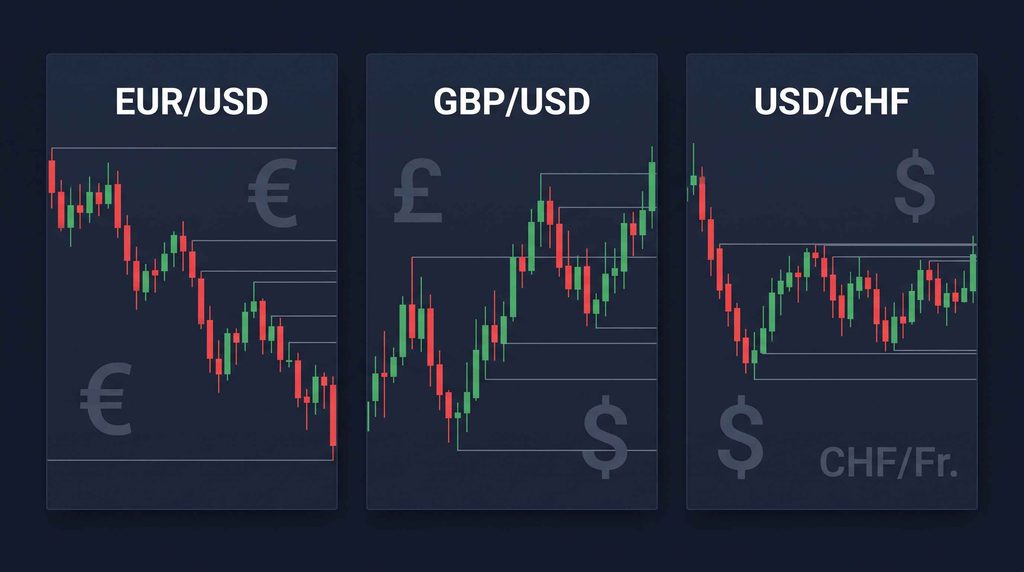
These three pairs provide exposure to several major currencies while keeping the watchlist relatively simple.
EUR/USD – The euro against the US dollar
EUR/USD measures the value of one euro in US dollars. It is one of the world’s most actively traded currency pairs.
Traders often monitor European Central Bank decisions, Federal Reserve policy, inflation figures, employment data and broader economic developments affecting the euro area and United States.
If you want to understand how economic differences between Europe and the US can influence currency prices, EUR/USD offers a useful market to study.
GBP/USD – The British pound against the US dollar
GBP/USD is commonly known as “Cable”. It is influenced by developments in the UK and US, including interest rates, inflation, economic growth and central bank announcements.
The pound can sometimes experience sharp movements around important news releases. Traders should therefore pay attention to volatility, spreads and the possibility of slippage rather than assuming that a familiar pair is always predictable.
USD/CHF – The US dollar against the Swiss franc
USD/CHF shows how many Swiss francs one US dollar can buy. The Swiss franc is often considered a safe-haven currency, although its behaviour depends on market conditions and is never guaranteed.
Swiss National Bank policy, Federal Reserve decisions, economic data and changes in global risk sentiment can all affect this pair.
Studying USD/CHF alongside EUR/USD and GBP/USD gives you another market to observe when analysing movements involving the US dollar.
Together, these pairs create a defined watchlist. However, they are not completely independent: because all three involve the US dollar, the same dollar-related event can affect several positions at once.
5. A Smaller Watchlist Can Help You Control Risk
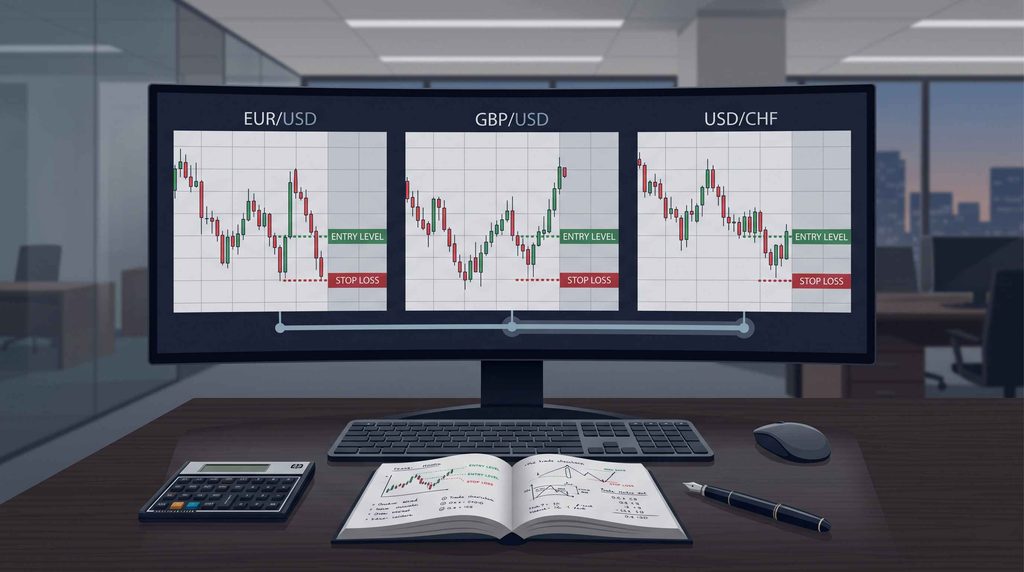
Risk management is not simply about deciding how much to risk on one trade. You also need to consider the combined exposure of all open positions.
Imagine opening a position on EUR/USD, another on GBP/USD and a third on USD/CHF shortly before a major US economic announcement.
Although these are three different pairs, each position involves the US dollar. A sharp dollar move could affect all three trades, potentially in ways that increase your total loss.
This is why traders should consider their overall exposure rather than assessing each trade in isolation.
A smaller watchlist can make it easier to keep track of:
- Total risk across open positions.
- Similar or overlapping currency exposures.
- Stop-loss placement and possible slippage.
- Upcoming economic announcements.
- Whether several trades depend on the same market assumption.
It does not remove market risk, and three positions can still create substantial exposure. The important point is to understand how each trade fits into your overall risk plan.
6. You Can Build a More Consistent Trading Routine
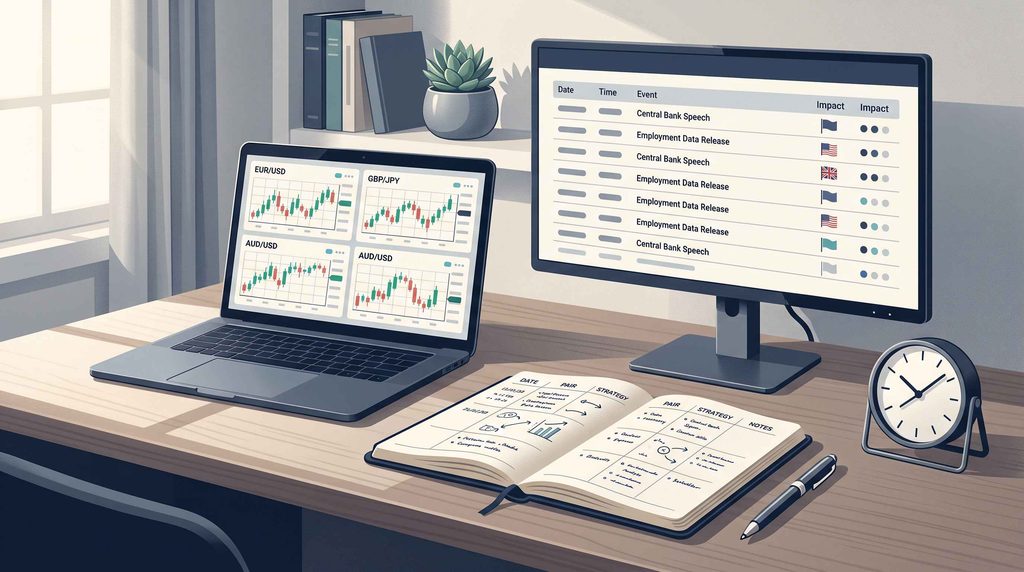
Successful trading requires more than finding entry signals. It also involves preparation, patience, record-keeping and reviewing decisions.
Following twenty pairs may be impractical if you can only dedicate a limited amount of time to trading. You could miss important announcements or feel compelled to monitor charts throughout the day.
A three-pair routine can be easier to organise around your schedule.
A simple daily routine might look like this:
- Before trading: Review the economic calendar and identify high-impact announcements.
- During analysis: Check the three selected pairs for setups that meet your rules.
- Before entry: Confirm the entry level, stop loss, take-profit plan and position size.
- After a trade: Record the outcome and whether you followed your strategy.
- When no setup appears: Stay out of the market rather than forcing a trade.
You do not need to place a trade every day on every pair. Waiting is a valid decision when conditions do not match your plan.
7. Fewer Pairs Can Make Forex Signals Easier to Follow
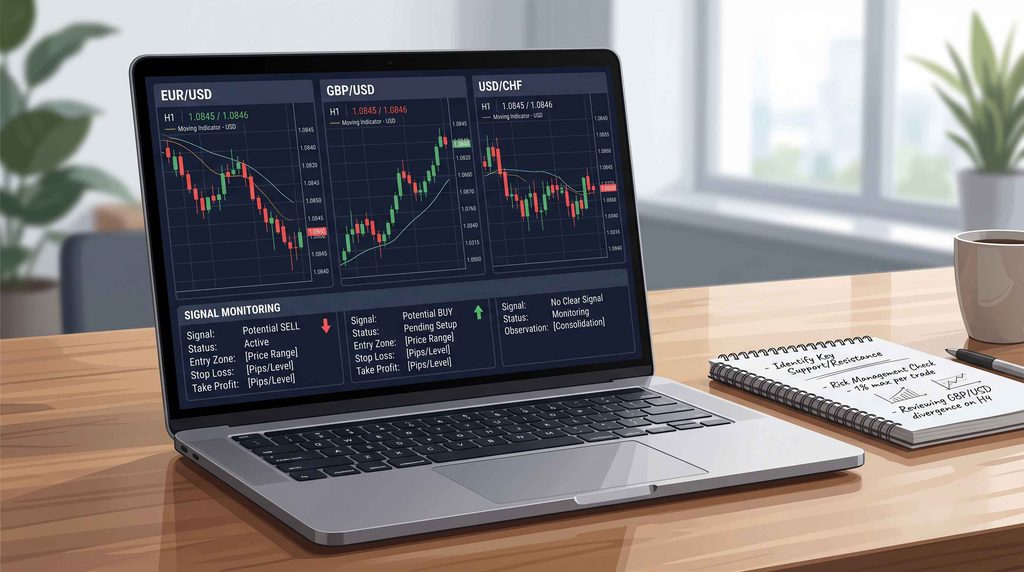
Forex signals provide trade information that may include a currency pair, direction, entry level, stop loss and take-profit targets. Some services also provide market commentary or educational material.
If a service covers twenty or more pairs, you may need to evaluate a large number of alerts and decide which ones fit your schedule and risk limits.
A service focused on three pairs can offer a more defined process. You know which markets are covered and can prepare to monitor those markets without continually switching between unrelated charts.
FXProfitBuilder focuses on EUR/USD, GBP/USD and USD/CHF. Its stated methodology combines volume indicators, support and resistance analysis, and a mathematical model to identify potential trading levels. Signals can be followed manually or mechanically, depending on the trader’s approach and the available platform setup.
However, a signal is not a guarantee of a successful trade. Before following any provider, understand its entry and exit instructions, risk controls, subscription terms and historical performance evidence. Test the process carefully, and never risk money you cannot afford to lose.
For more guidance, see our articles on what forex signals are and how they work and how to read a forex signal.
8. Does Trading Only Three Pairs Have Any Disadvantages?
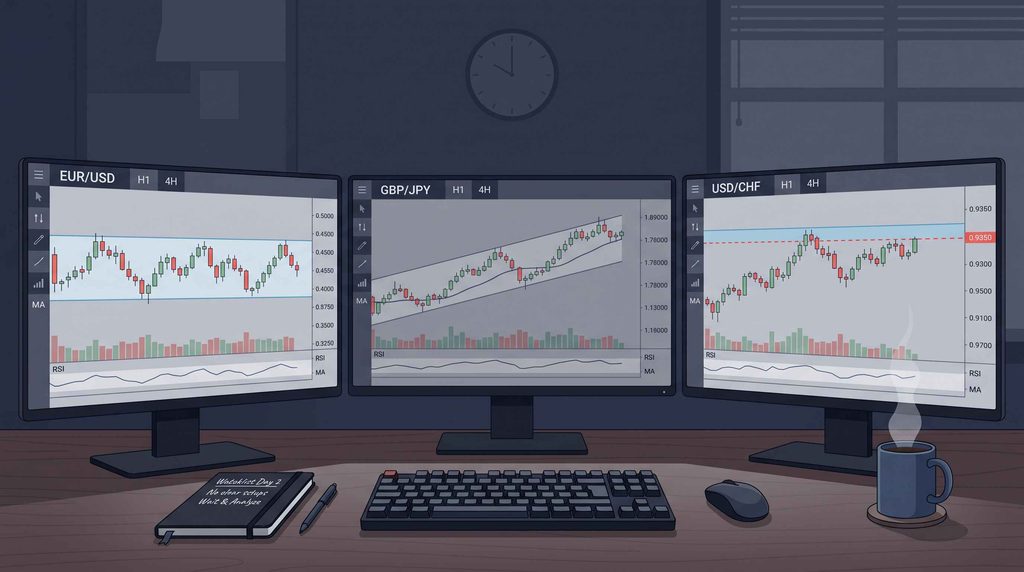
Yes. A focused watchlist is useful for many traders, but it is not the right choice for everyone.
Fewer opportunities at certain times
A selected pair may not offer a suitable setup for hours or even days. Traders who expect constant activity may find this frustrating.
Exposure to shared currency risks
When several pairs contain the same currency, positions can respond to the same economic news. Trading three pairs does not necessarily diversify your risk.
Missing opportunities elsewhere
Other pairs may offer setups that fit a particular strategy. A strict three-pair approach means choosing not to monitor those markets.
The danger of becoming overconfident
Familiarity does not make a market predictable. Currency prices can change rapidly after unexpected news, central bank decisions or shifts in market sentiment.
The answer is to treat three pairs as a practical starting point, not a universal rule. If your strategy, available time and risk-management process justify adding another pair, you can evaluate it systematically rather than expanding your watchlist impulsively.
9. How to Decide Whether Three Currency Pairs Are Enough
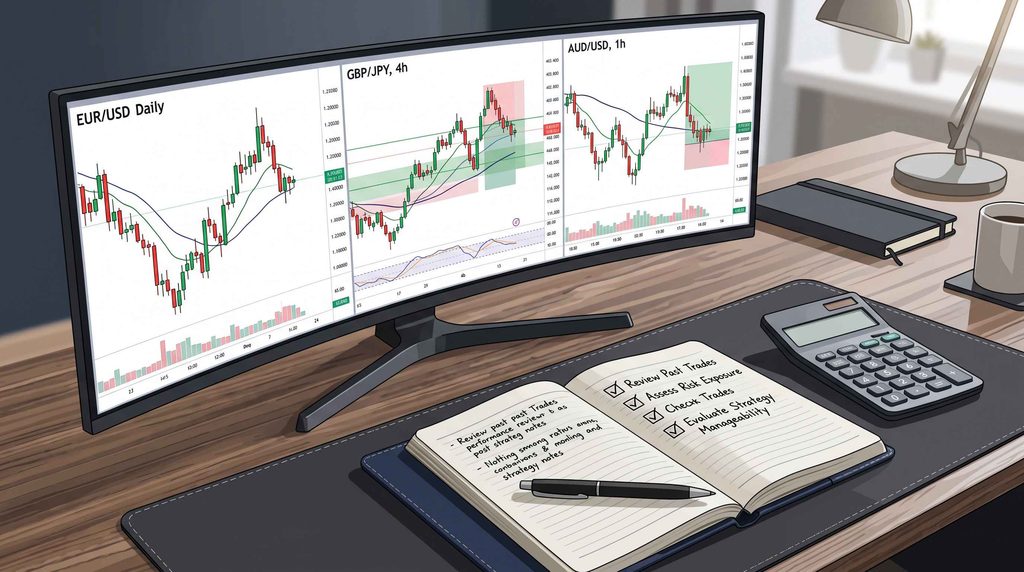
Before choosing the size of your watchlist, consider your experience, schedule and trading method.
Ask yourself:
- Can I explain the main economic influences on each pair I trade?
- Do I have clear rules for entering and exiting a trade?
- Can I monitor my positions without neglecting my other responsibilities?
- Do I understand the combined risk when multiple positions share a currency?
- Am I recording and reviewing my results?
- Am I adding pairs for a clear reason, or simply because I want more trades?
If you are a beginner or have limited time, starting with three pairs may make learning more manageable. If you are experienced and have a tested strategy that works across additional markets, a broader watchlist may be appropriate.
What matters most is not the number of pairs you trade. It is whether you can analyse them properly, execute your plan consistently and control your risk.
Conclusion: Focus on Your Process, Not the Number of Charts
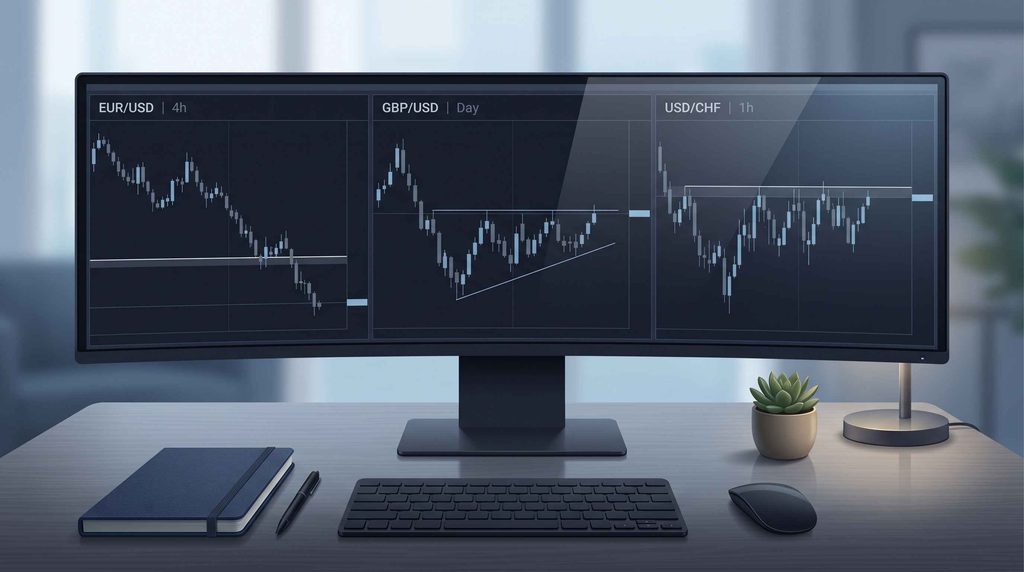
Trading twenty currency pairs may look like a way to find more opportunities, but it can also increase the time and attention required to monitor markets and manage risk.
Focusing on EUR/USD, GBP/USD and USD/CHF gives traders a clear group of markets to study. It can support a repeatable routine, improve familiarity with selected currencies and make it easier to review trading decisions.
For beginners and busy professionals, that simplicity can be valuable. But three pairs are not automatically better than twenty, and a smaller watchlist cannot eliminate losses.
Choose a manageable set of markets, understand what moves them, follow a tested strategy and make risk management part of every decision. Consistency comes from the quality of your process not from how many charts you have open.
FAQ
1. Is it better to trade three currency pairs or twenty?
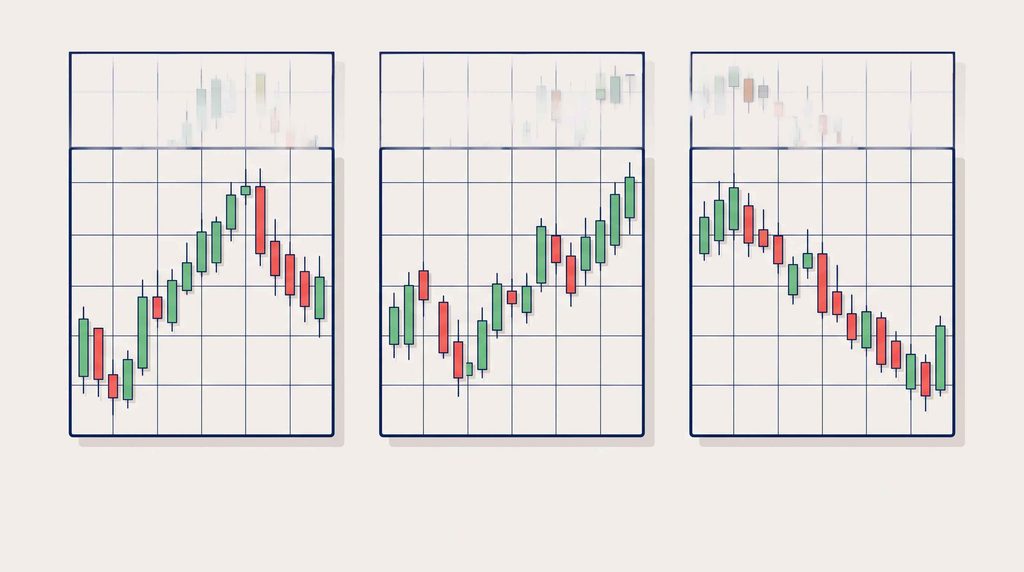
Neither approach is automatically better. Three pairs may be easier to monitor and analyse, particularly for beginners. Twenty pairs provide a wider choice of markets but require more time and careful risk management. The right number depends on your strategy, experience and available time.
2. Which three forex pairs should a beginner focus on?
EUR/USD, GBP/USD and USD/CHF are one possible combination because they involve major currencies and provide a defined group to study. Beginners should research each pair, practise their analysis and understand the risks before trading with real money.
3. Can I make money by trading only three currency pairs?
It is possible to trade a small number of pairs profitably, but the number of pairs does not determine whether you will make money. Results depend on many factors, including strategy performance, costs, execution, position sizing and market conditions. Losses are possible.
4. Do three currency pairs provide enough trading opportunities?
They may provide enough opportunities for some strategies, but there will be periods when none of the pairs offers a suitable setup. It is better to wait than to enter a trade that does not meet your rules simply to stay active.
5. Are EUR/USD, GBP/USD and USD/CHF diversified?
They are different currency pairs, but all three include the US dollar. A US dollar movement may affect multiple positions at once. Traders should consider their combined exposure rather than assuming that separate pairs automatically provide diversification.
6. How much time do I need to monitor three currency pairs?
The time required depends on your trading timeframe, strategy and whether you use alerts or signals. A planned routine may reduce unnecessary chart checking, but you still need to review important economic events, monitor relevant positions and manage risk.
7. Does FXProfitBuilder focus on three currency pairs?
FXProfitBuilder focuses on EUR/USD, GBP/USD and USD/CHF. Its stated approach uses volume indicators, support and resistance analysis, and a mathematical model to identify potential trading levels. As with any signal service, traders should assess the methodology, terms and risk before subscribing or following signals.
👉 Start your journey today—subscribe to our forex pip tips service and see the difference for yourself! Sign Up to get Exclusive Offers